
TULIP POPLARS
Liriodendron tulipifera
aka American Tulip tree / yellow poplar / Canoewood Tree
Tulip Poplar is a fast growing hardwood tree, native to the Appalachian Mtns all the way to Central Florida: zones 4-9.
Native American Indians used the tree's inner bark for cough medicine and more. They found it had anti-inflammatory properties and used it in a number of applications.
Tulip Poplars are actually part of the magnolia family, though they are not evergreen. Grows up to 160' in the mountainous areas, though ordinary height is 70-100' tall after many years. It is a valuable timber tree and perfect for fast shade.
The tulip poplar prefers deep, rich moist soil.
Grows best in full sun, but will tolerate partial shade. It is highly resistant to drought, insect pests and wind damage.
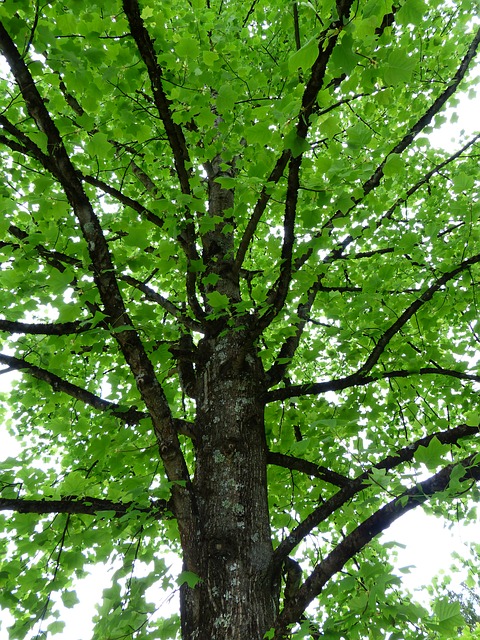
Beautiful, chartreuse green leaves will turn a clear, bright lemon yellow in the fall and then drop -- it is deciduous.
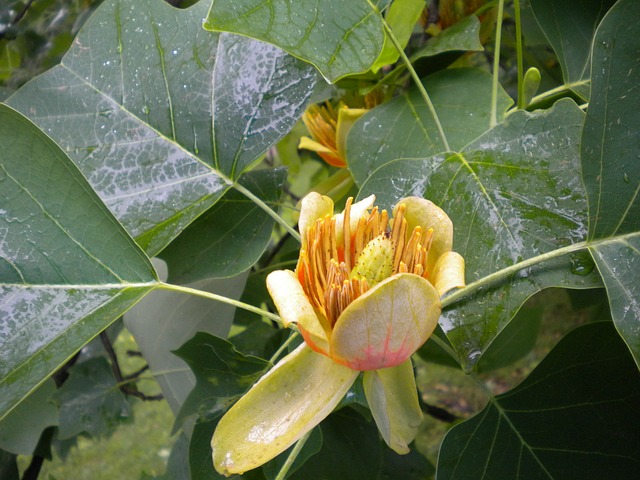
Brilliant yellow blossoms appear in spring, usually late March to early April in Florida. Female trees have larger flowers than the males, though both are pretty.
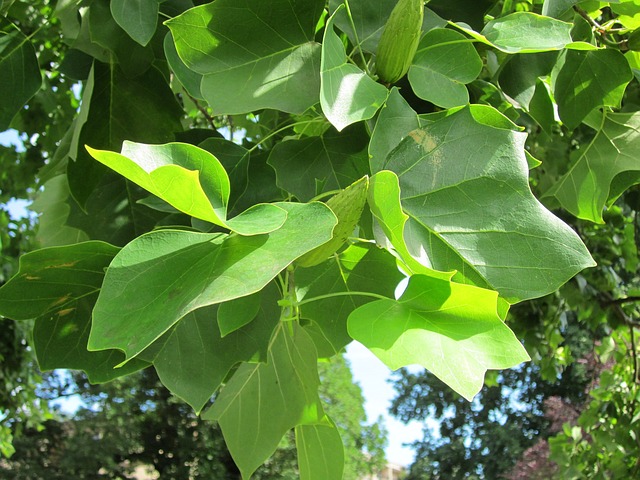
It's unique leaf shape
almost resembles a violin.
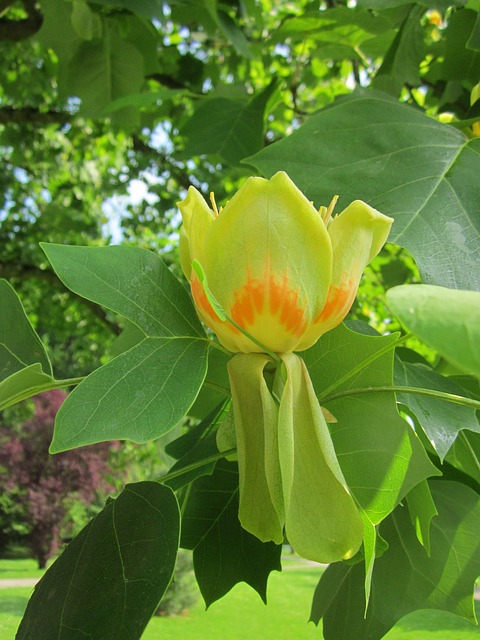
Flowers are often a source of pollen for honeybees. Flowers attract many kinds of wild birds as well as hummingbirds.
Because the Native Americans so often made their dugout canoes from the trunks of this tree, the early settlers nicknamed the tree "Canoewood". It is actually a member of the magnolia family of trees.
Tulip poplars are a long lived tree -- approximately 150-200yrs -- and as such don't begin blooming until they are about 15 yrs old.