
SASSAFRAS Trees
Sassafras albidum
Sassafras is native to the Eastern United States, and is a perennial, deciduous shrub or tree -- depending on how you prune it. It can be found growing from Maine all the way down to Central Florida!
Hardy in Zones 4-9b.
Sassafras has been cultivated in the United States since 1630 for its leaves, bark and wood. It is used for tea, root beer, oil and soap. Even the wood is used for fine construction.
They are very fast growing trees, easily reaching heights of 27-54' tall and 18-24' wide. But they can also be topped early on and shaped into a bush.
Sassafras prefers moist, well-drained, sandy loam soils. Optimum soil pH is 6.0 to 7.0, but it tolerates lower pH soils also. Just won't grow as large if soil is more dry or pH is more acidic. Must have full sun to thrive.
FLOWERS
Sassafras is dioecious: meaning male & female trees. Females have larger flowers -- both are greenish-yellow and appear in early to mid-spring: Mar-Apr-May.
Trees generally don't start flowering until about 10 yrs old. While both male and female trees bloom, only the female trees produce fruits.
Dark, shiny, blue fruit barely 1/3" long appear by mid-summer or early fall and are largely exploited by birds and small animals.
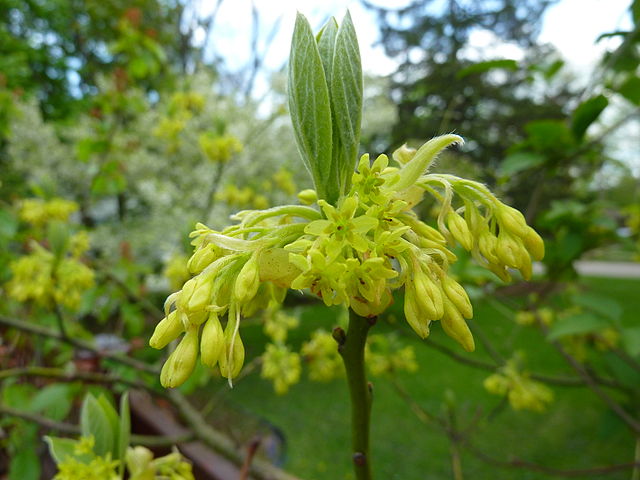
Sassafras flowers
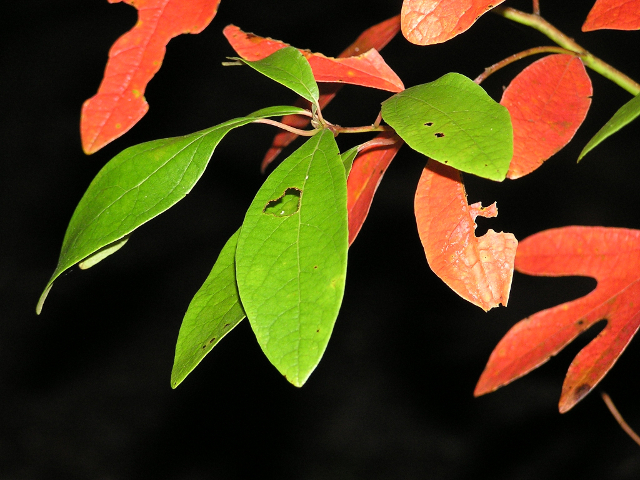
LEAVES
Sassafras trees have 3 distinctly different leaves on the same plant.
Large, bright green leaves can be either unlobed, 2-lobes (like a mitten) or 3-lobed, and may occur on the same branch or tree at random. Leaves are 3-6" long and are fragrant when crushed.
Sassafras leaves also turn a bright yellow-orange and red-orange in the fall.
BARK
The bark of young trees is green but becomes more reddish-brown and rough / ridged on more mature trees.
Bears, rabbits and squirrels love the bark, while the deer love the twigs and foliage.
Remember, sassafras trees must have full sun or they grow in a 'leggy' fashion.
no Sassafras trees this season.
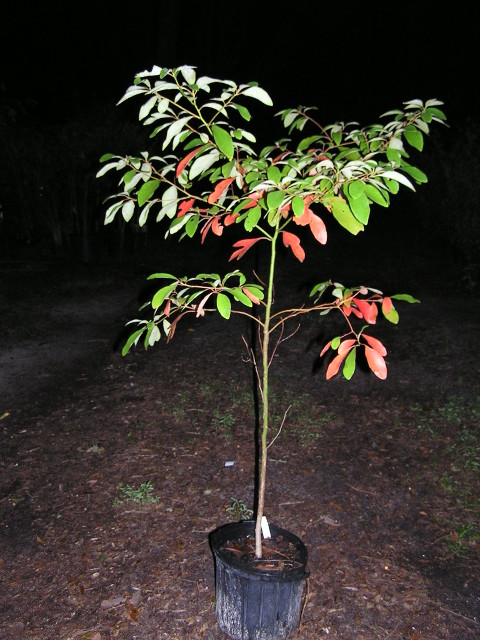
3g Sassafras tree
Sassafras bark, roots, leaves and even seeds have been used over the centuries for everything from various medicinal uses, culinary uses or even for flavoring root beer. And it's been banned / un-banned, banned again, un-banned again, re-banned and then not --- so many times it's a long story. So do your homework to know how or if to use it, and meantime enjoy this gorgeous landscape statement!