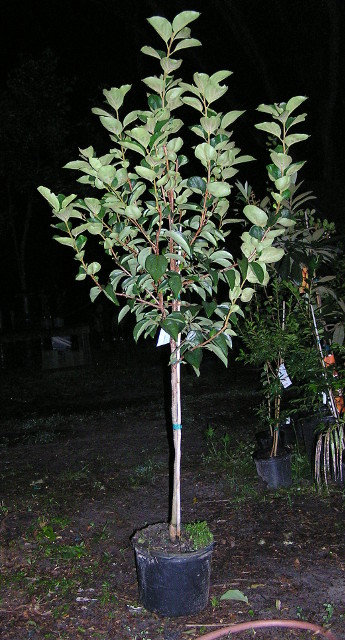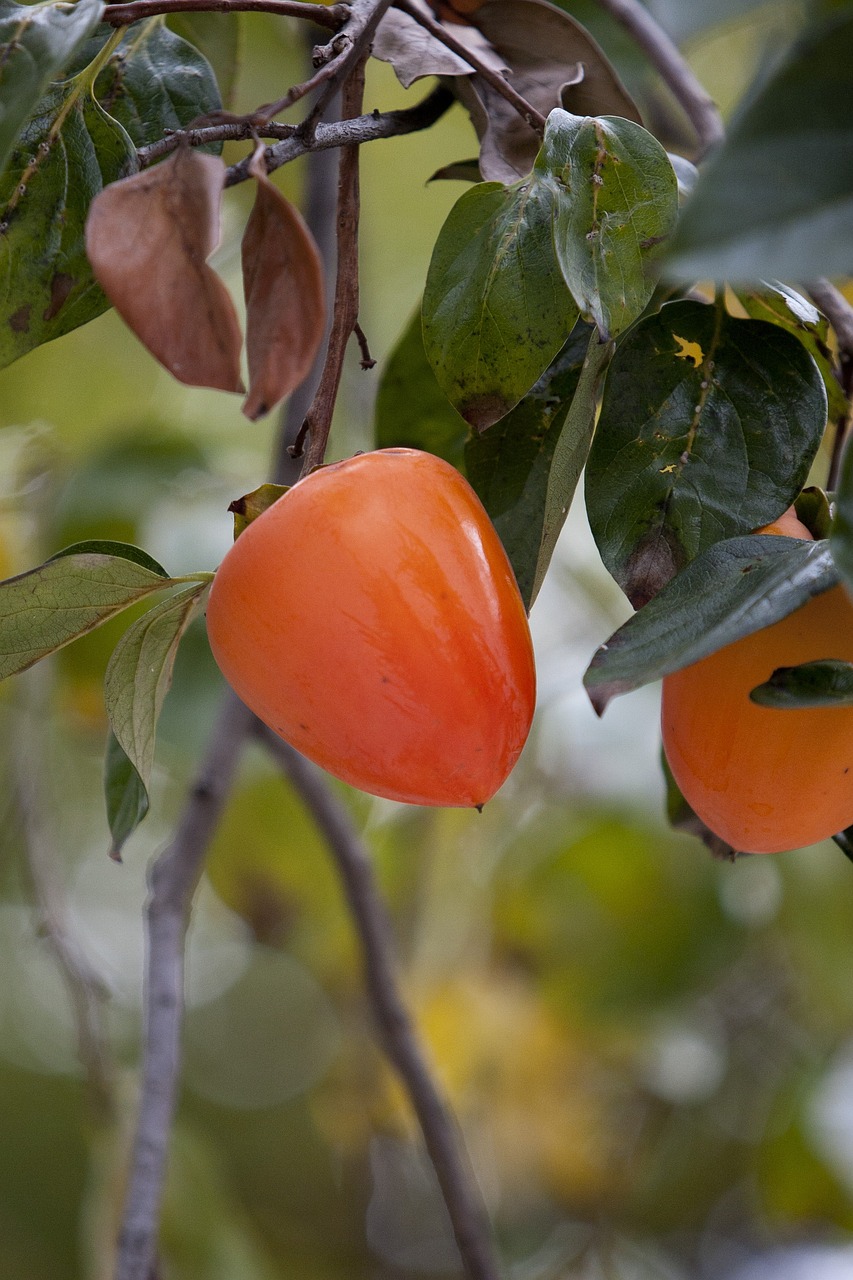
PERSIMMONS
Diospyros kaki
Astringent or Non-Astringent:
What's the Difference
The most widely cultivated species of persimmons are the Japanese persimmons, and come in 2 classes: astringent or non-astringent. Some call it "puckering" or "non-puckering".
Non-astringent persimmons can be eaten fresh right from the tree and are crisp like an apple.
Astringent persimmons are best picked and ripened for a few days until soft and nearly mushy before they are sweet enough to eat.
They are the sweetest: richer and juicier than the non-astringents.
Astringents are sweet like maple syrup when ripe, and quite interesting as a dried delicacy. Non-astringents are a more mellow sweet like cantaloupe or sugarcane.
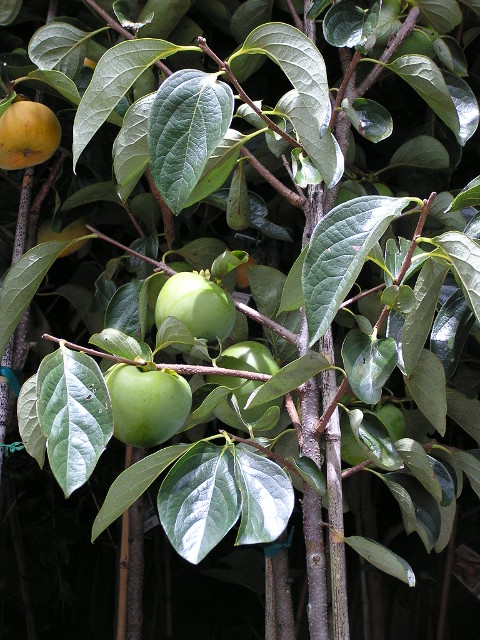
green persimmons in August
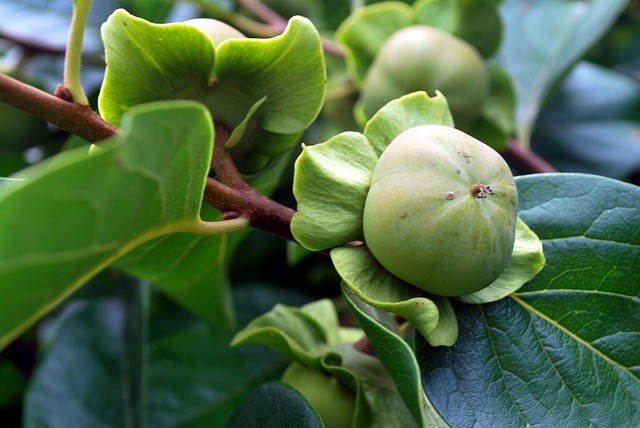
Choosing your location to plant.
Research at Stellenbosch Univ (South Africa) showed that
Persimmons are sensitive to too much wind.
Strong winds stress the fruit, causing them to produce excess ethylene which usually leads to premature ripening and a shorter shelf life.
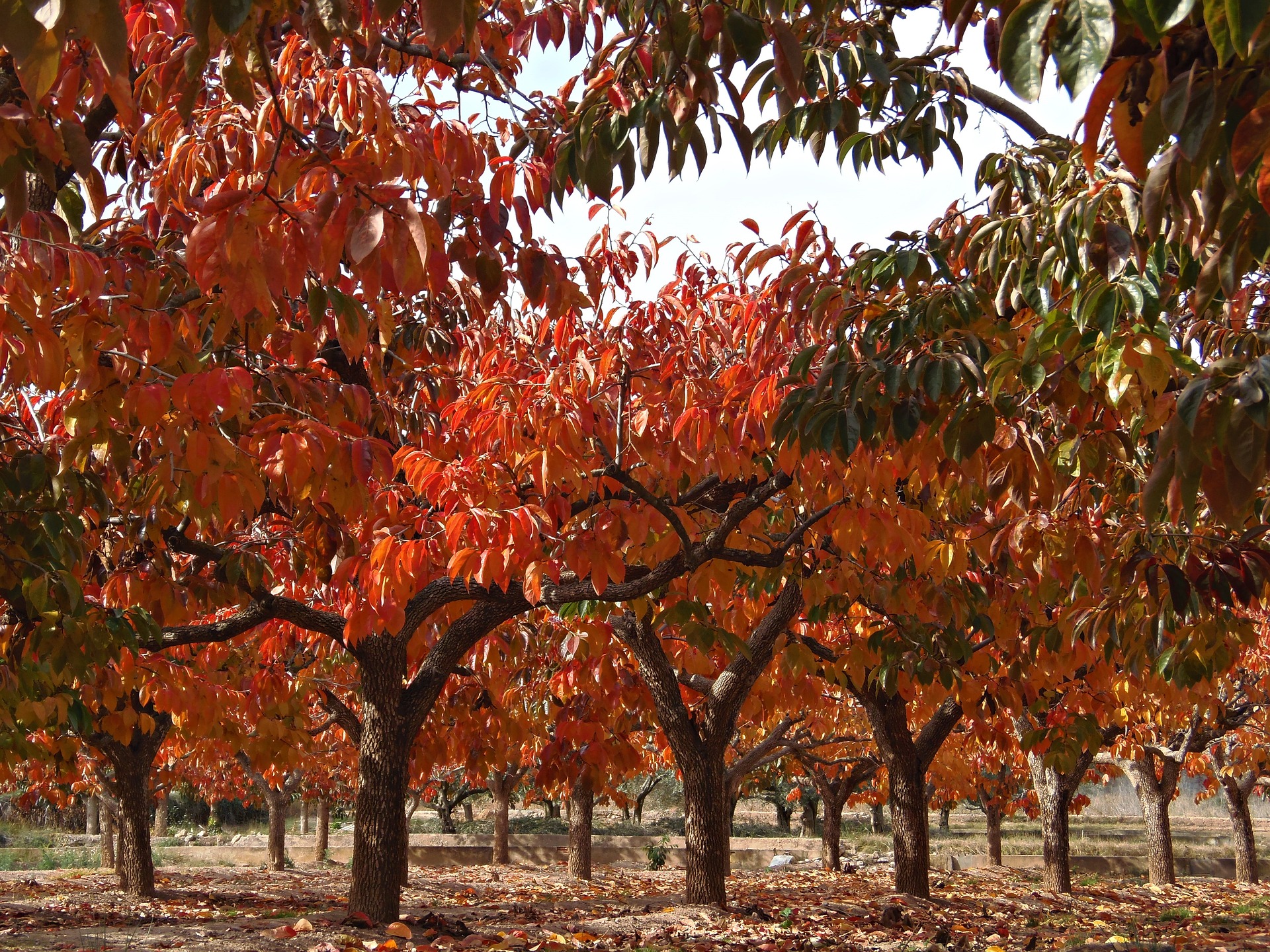
Fall leaf color is a show stopper.
Persimmon leaves will turn an array of gorgeous colors in the fall -- yellows, oranges and even some bright reds -- before dropping for winter.
Often the leaves will begin turning colors while the fruit is still on the tree. It is not uncommon to see totally bare, leaf-less trees with bright orange fruits hanging from branches throughout the tree. Trees will appear dormant for winter months.
If planted in cooler areas of the state, give full sun and wind protection. If planted in zone 9b or 10a, the non-astringent varieties like original Fuyu or the Matsumoda Fuyu will be hardier and more vigorous. Coffeecake is also a good choice for a low chill non-astringent, but you will need a pollinator.
For astringents, consider the Saijo (to zone 9b) as well as the Ormond aka Christmas persimmon (needs only about 150-200 chill hours). And for those in zones 10a or 10b, Triumph persimmons needs no chilling hours, and is thriving in Homestead!
Non-Astringent persimmons: 4 kinds of FUYUs
Non-astringent persimmons can be eaten fresh right from the tree and are crisp like an apple, making them suitable for shipping.
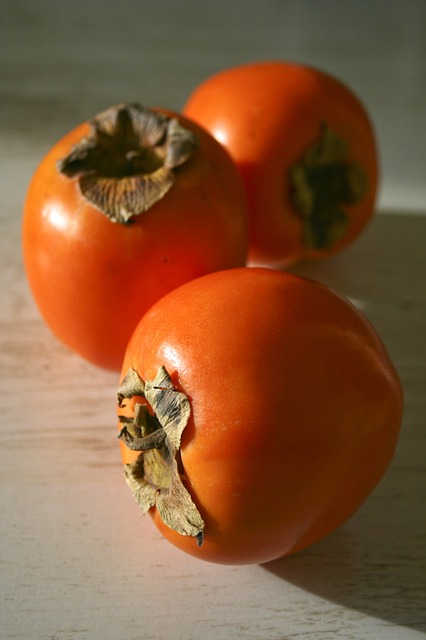
our most popular:
original FUYU
The original FUYU is the most popular of all the oriental persimmons. Hardy / vigorous growing tree, up to 15' hgt.
Consistent producer of med. sized fruit: 4.5-6 oz. Fruit is crisp, sweet and mild; many layers of flavor: reminiscent of pear, dates and brown sugar, with nuances of cinnamon.
Ripens early Oct thru Nov:
best choice for wildlife (deer) food plots.
Zones 7-9; 10a
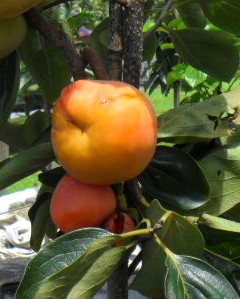
the early bird:
Matsumoda-Wase FUYU
Matsumoda-Wase FUYU is so close in flavor to the original FUYU it is difficult to distinguish the difference.
Vigorous growing trees, a little larger than the original FUYU, up to 16-18' tall. Matsumoda is a consistent heavy bearer.
Ripens 2 wks earlier than original FUYU: about mid-Sept
Zones 7-9; 10a
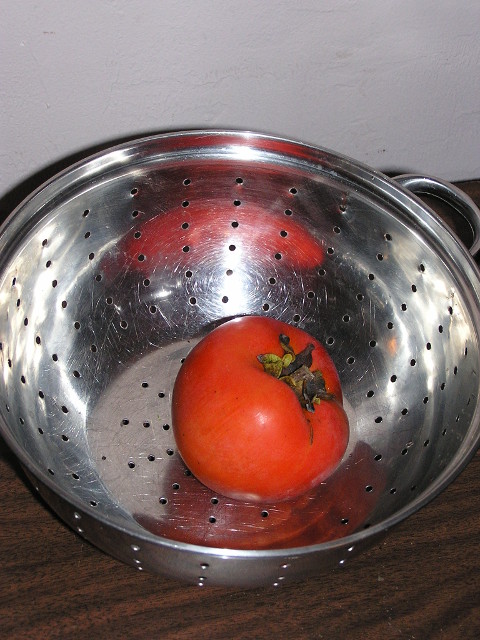
the biggest fruits:
GIANT FUYU
Giant FUYU is a much smaller tree, reaching only about 12' at maturity. Very vigorous growing.
Very large, reddish-orange fruit.
Ripens late Sept & Oct.
Zones 7-9
Not all varieties shown are available for 2026.
Please inquire before ordering.
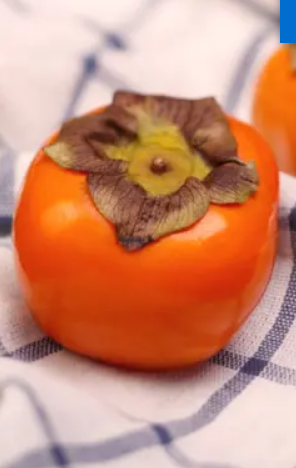
the MOST DWARF TREE:
HANA FUYU
Hana FUYU is more of dwarf persimmon tree at only 10'.
Fruit is large, reddish-orange, somewhat squarish (i.e. appears to have 4-lobes), and is slightly flattened.
Very sweet and crispy.
Ripens mid-October.
Zones 6-9
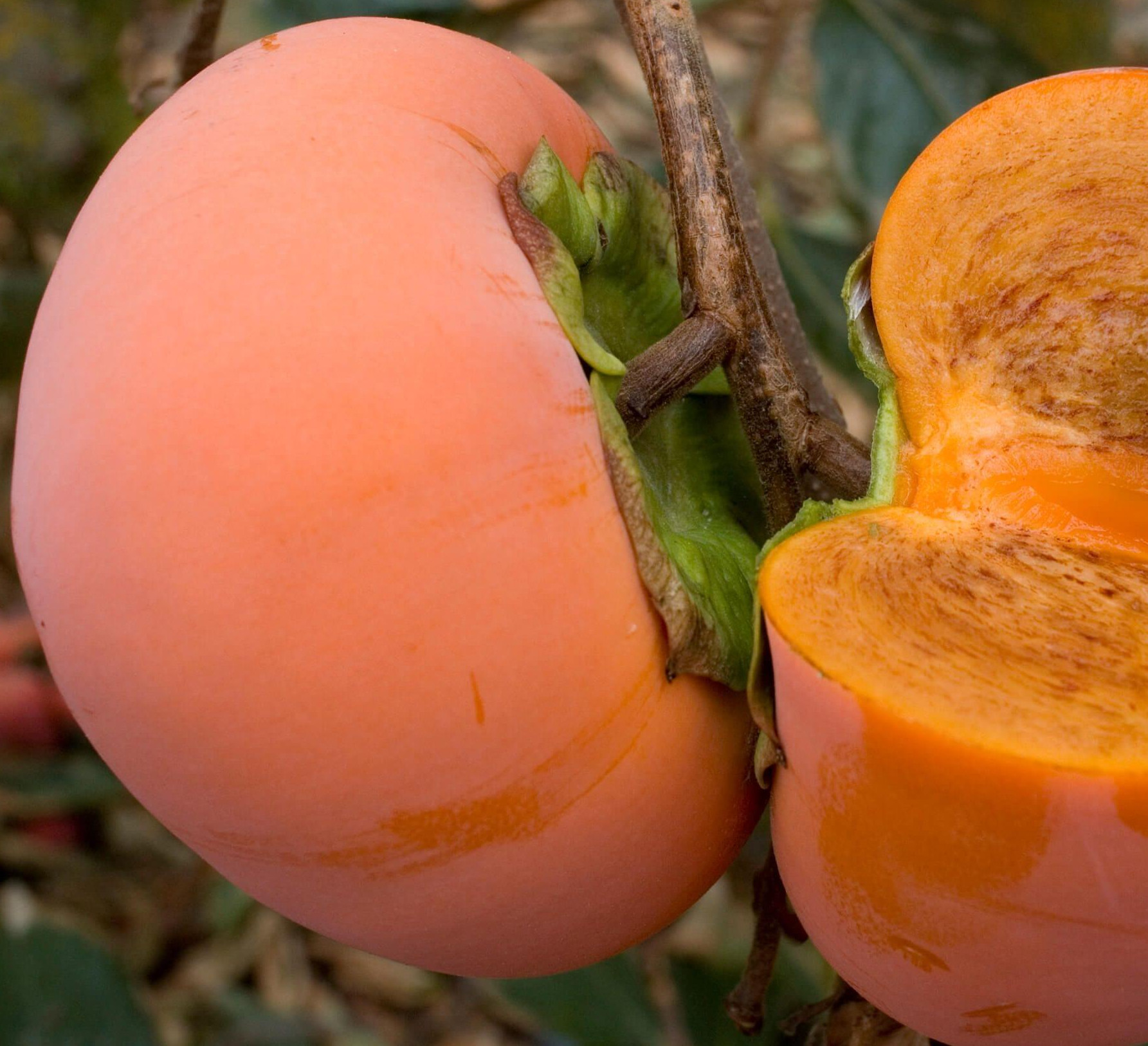
SPICY, SWEET, LOW CHILL:
COFFEECAKE
Coffeecake fruits have a unique, spicy but sweet flavor: non-astringent! Exceedingly hardy tree. Low chilling hours, requiring 200 or maybe less.
Needs Chocolate persimmon for a pollinator.
Ripens mid-Sept. to mid-Oct.
Zones 7-10
Astringent persimmons include:
Astringent persimmons can be as sweet as maple syrup if picked and allowed to ripen fully before eating. They must be entirely soft and nearly mushy to be ripe and sweet, and are therefore too fragile for shipping.
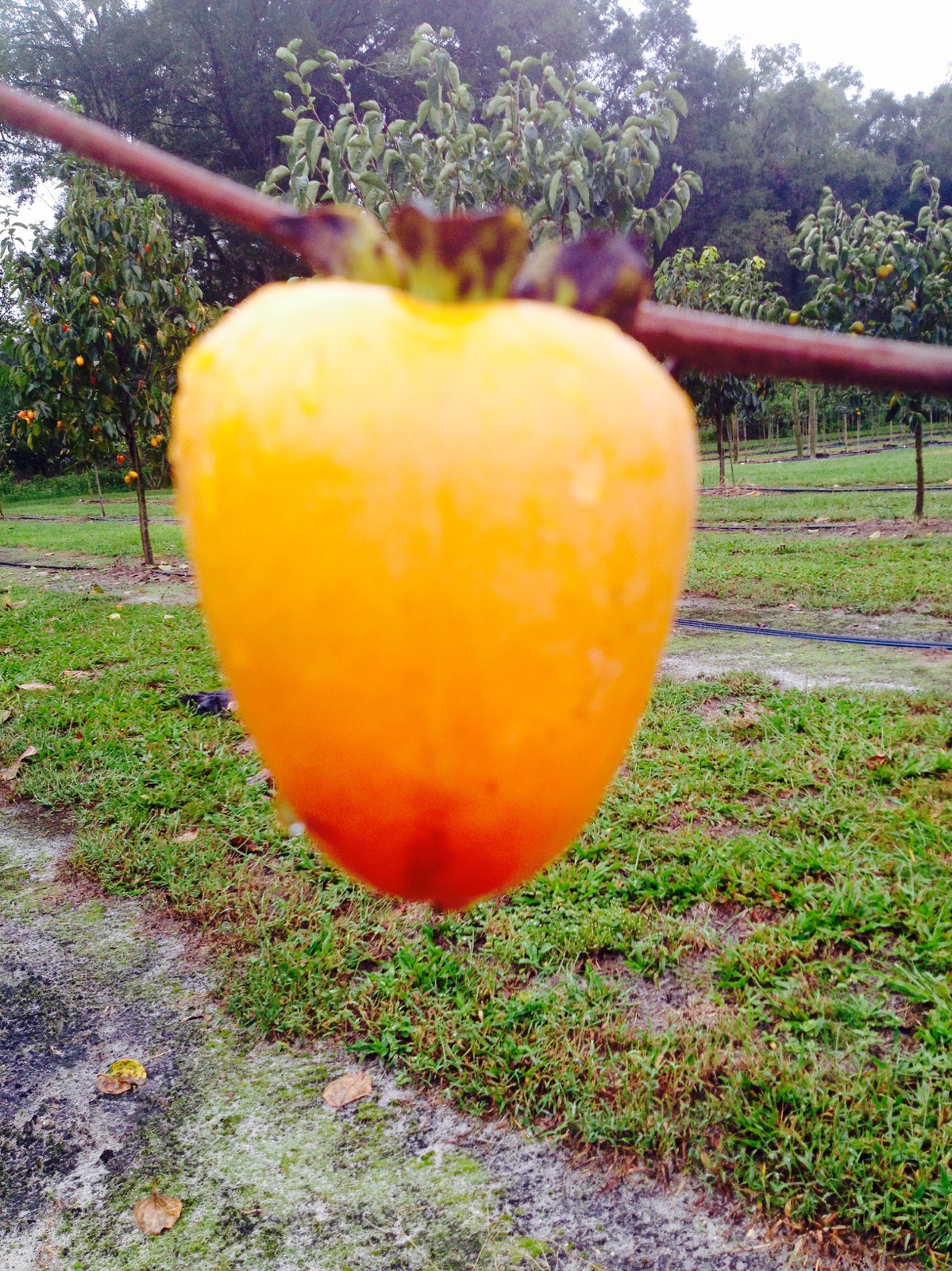
THE MOST WELL KNOWN:
TANENASHI
Tanenashi is the most highly recognized name among astringent persimmons.
The name 'Tanenashi' means seedless.
Vigorous growing trees to 12-15' tall, consistently produces good crops.
Fruit is med-large, cone-shaped, and orange-red. Flesh is yellow when ripe with a dry texture.
Ripens early Oct into Nov.
Zones 7-9
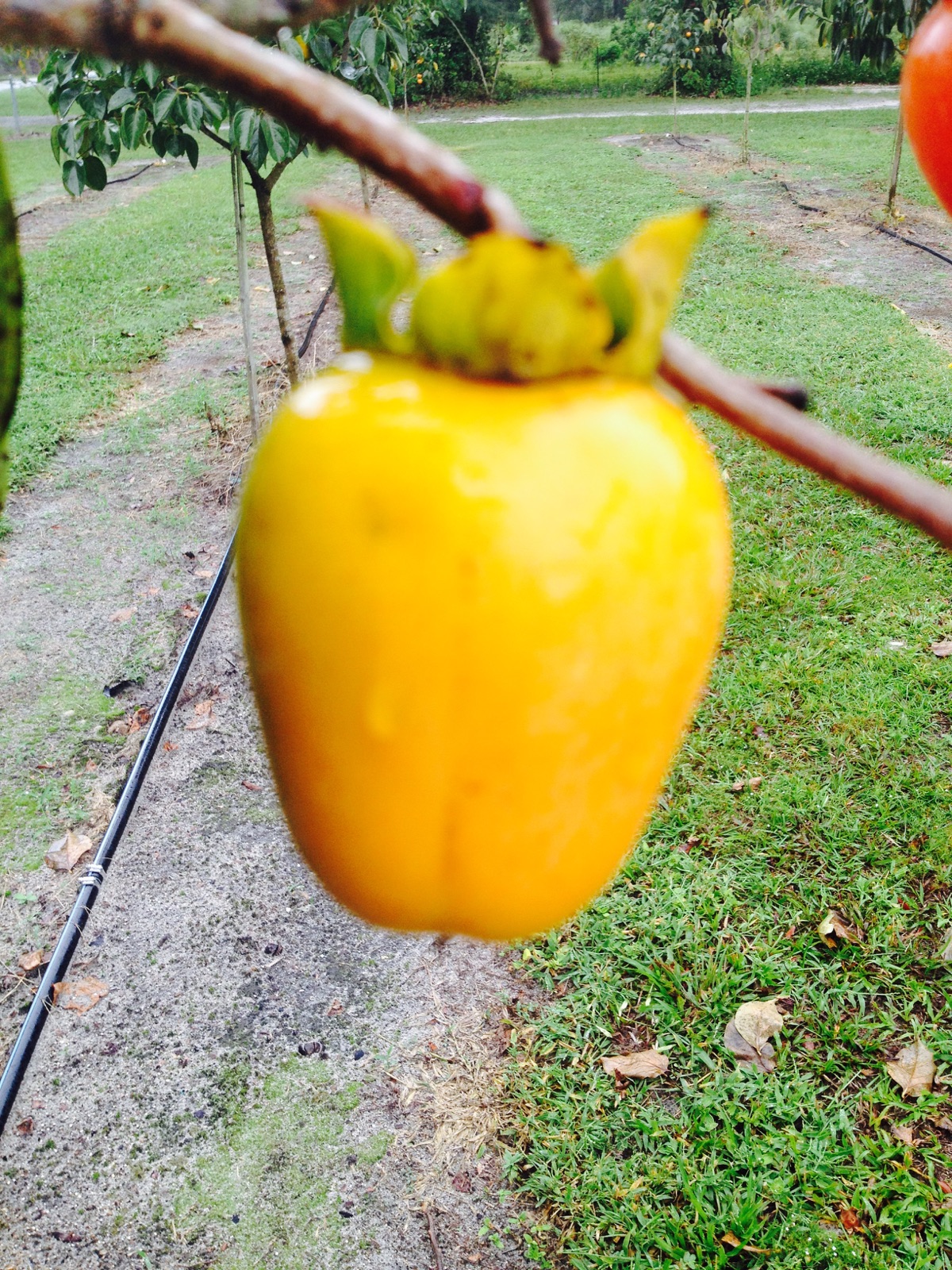
the MOST POPULAR:
HACHIYA
Hachiya is one of the best for flavor and quality: possibly the most popular astringent.
Large, deep red fruit weighing a pound or more, has a jelly-like consistency, and a sweet and spicy flavor.
Ripens mid Oct to late Nov.
Zones 7-9
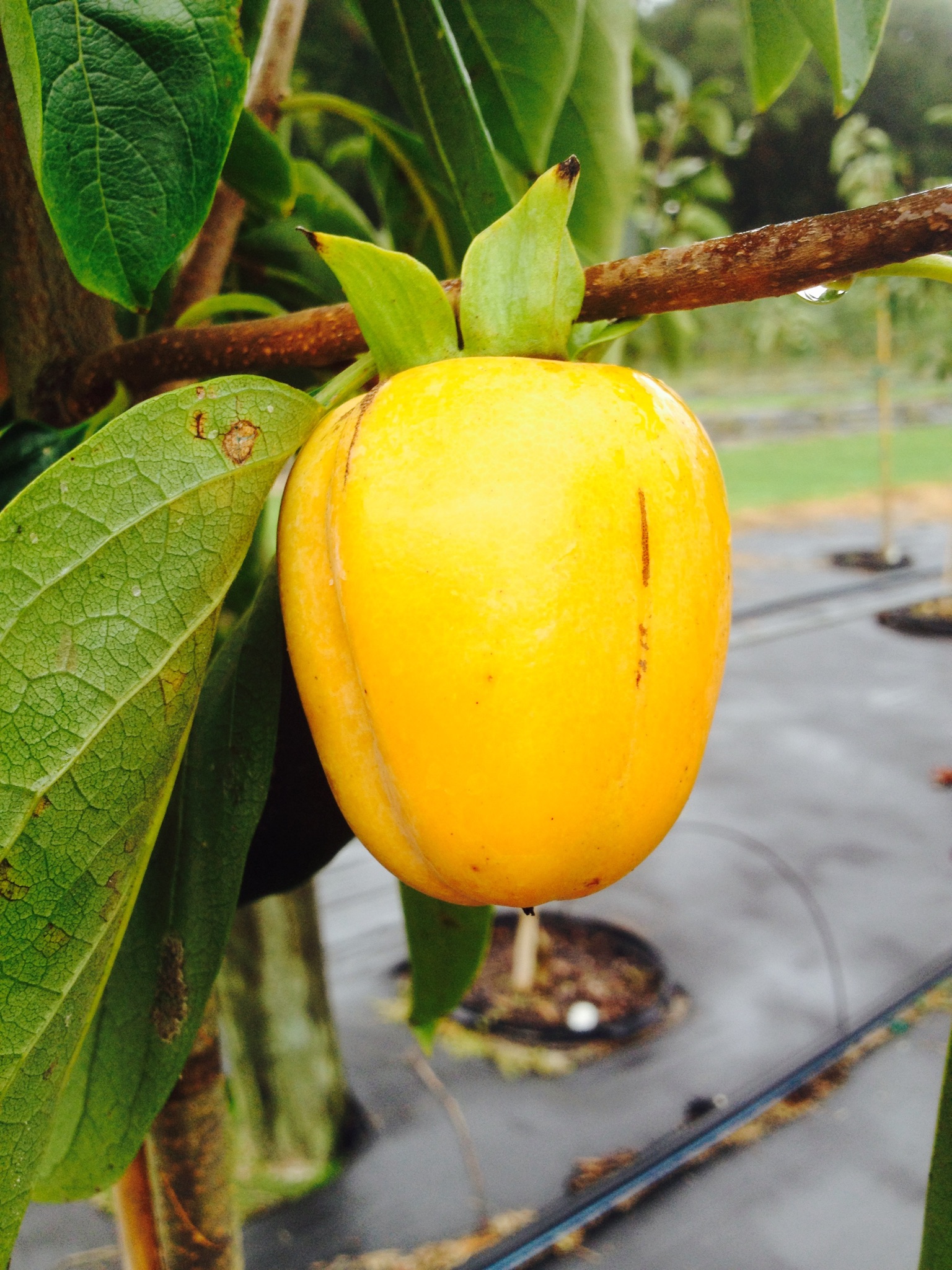
the BEST ONE / SWEETEST:
SAIJO
Saijo fruits are quite oblong: 1.5-2" long x 1" in diameter, orange when ripe and very sweet. The name 'Saijo' means 'the very best one' in Japanese.
Fruit flavor when ripe is reminiscent of a combo of mango, peach, apricot and banana, dripping in brown sugar.
Trees are vigorous, upright growers, up to 20-25' tall.
Ripens mid-Sept. to mid-Oct.
Zones 7-9
Not all varieties shown are available for 2026.
Please inquire before ordering.
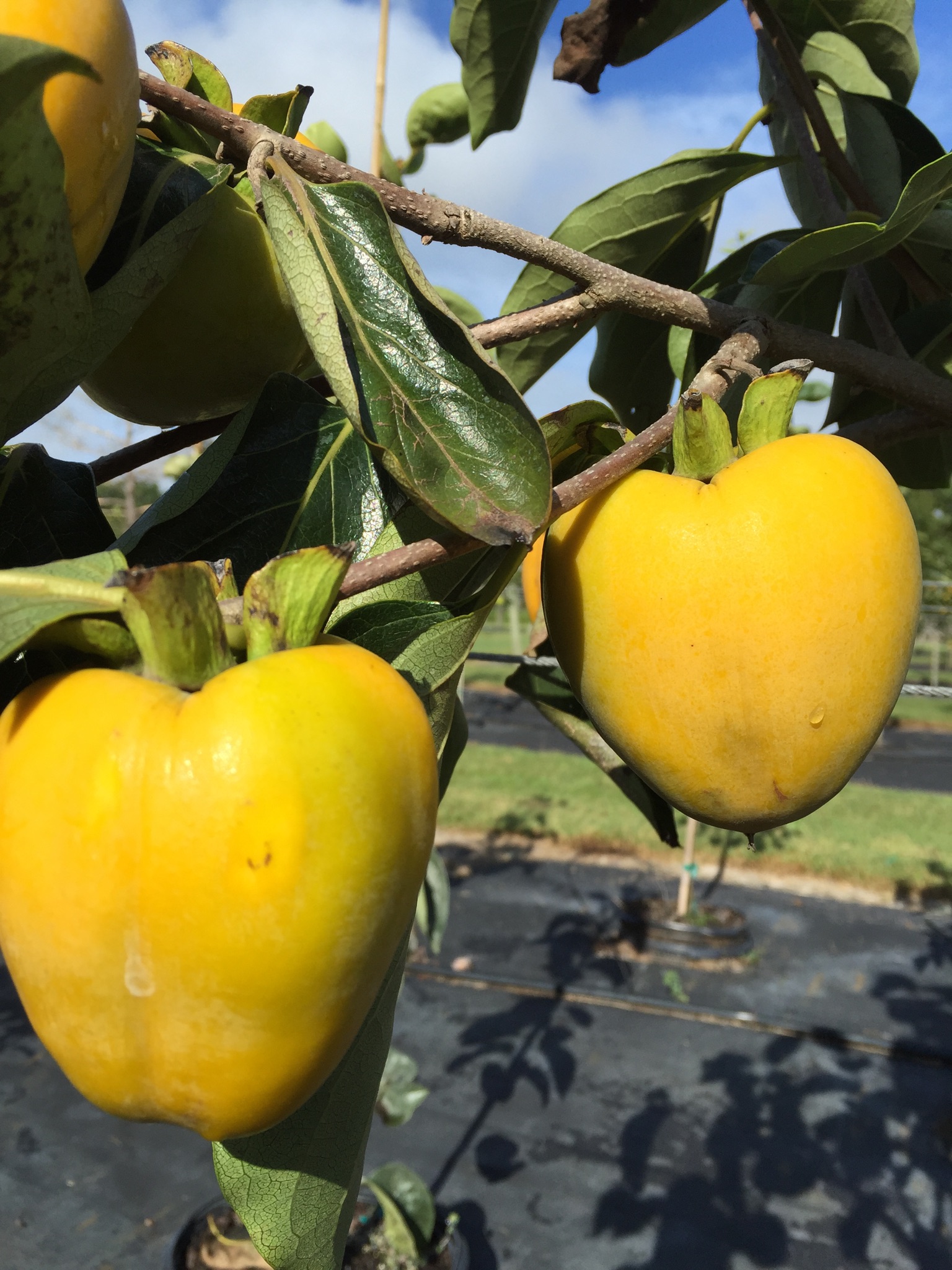
largest fruits:
GIOMBO
Giombo fruit is large, about the same size as Hachiya, but it is very sweet, much like the Saijo. Trees grow to 15'+.
Giombo is a biennial bearer when young.
Ripens mid-Oct through Nov., at least 2 wks after Saijo.
Zones 7-9
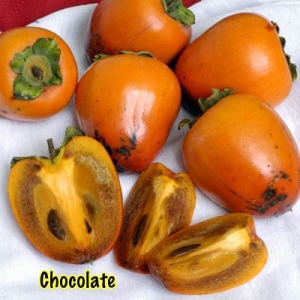
spicy brown flesh:
CHOCOLATE
Chocolate has small to med sized oblong fruit with bright red skin.
Unique, spicy brown flesh is sweet with superb flavor. Brown streaked flesh when pollinated, more orange if not pollinated and non-astringent.
Tree grows to 12-15' tall.
Ripens late Oct through Nov.
Zones 6-9
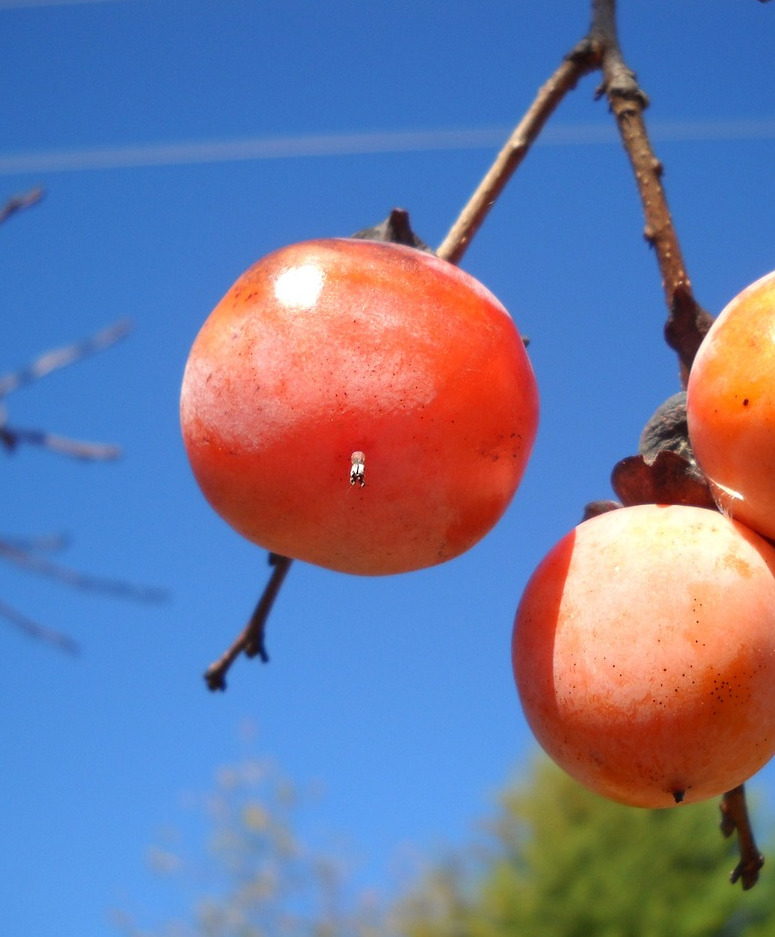
EXCEPTIONALLY SWEET:
NIKITA'S GIFT
Diospyrus virginiana x kaki
Nikita's Gift is a Russian (Ukranian) hybrid of American and Asian persimmons. Fruit is a little flat on the bottom, 2-3" across, dark reddish-orange in color, and exceptionally sweet when ripe. Self fertile.
Mature tree hgt is about 12'
very cold hardy;
Ripens late Oct through Nov.
More cold hardy than some:
Zones 6-9
Not all varieties shown are available for 2026.
Please inquire before ordering.
LOW CHILL: VERY PROLIFIC
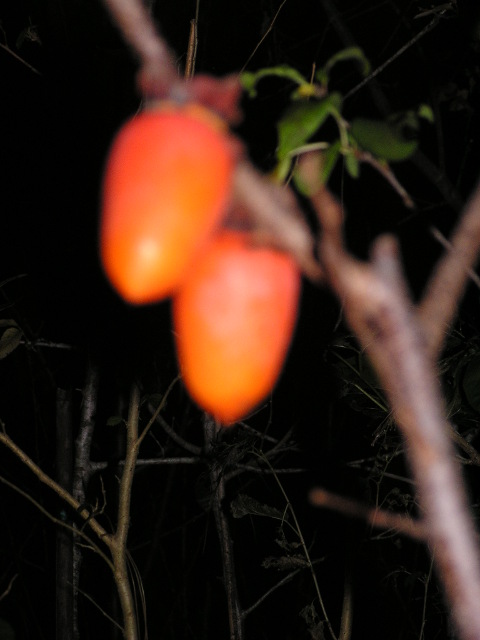
ORMOND aka 'CHRISTMAS'
Ormond is a 2.5" long fruit about 2" in diameter; fruits are reddish-yellow outside and deep orange-red inside, very sweet, moderately juicy, with large seeds. Fruits hang in clusters like grapes.
Vigorous mid-sized tree suited to warmer climates; breaks bud early in the spring, increasing chances for freeze injury in the northern parts of its growing zones.
Needs approx. 125-175 chill hours max.
Ripens very late: Nov and Dec in FL, maybe Jan.
Zones 8-9 only
EXTREMELY LOW CHILL:
TRIUMPH
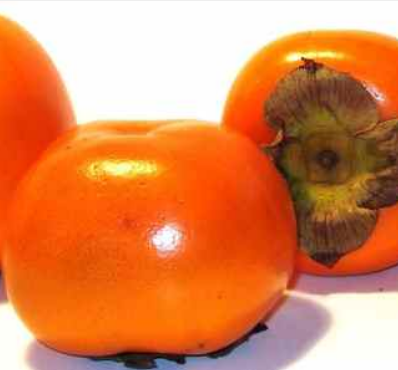
Triumph is widely grown in Israel, known there simply as "Sharon fruit". Unlike most other persimmons, Triumph doesn't need any chill hours below 45 degrees to bloom and fruit, and so it is thriving even in Homestead, FL!
Small, squarish fruit is extremely juicy with few or even no seeds. Flesh is sweet like honey. Though it is an astringent variety, it has a firm skin even when ripe, making it a good candidate for shipping.
Research at the Univ of Bonn (1984) shows very high levels of carotenoids in the skin of 'Triumph', including an increase of lycopene in the last stages of ripening.
Lengthy harvest time:
Fruit ripens Sept to Nov in FL
ripens Apr-June in S. Africa
Zones 9-10a
Update Fall 2026:
Not all varieties are available this year. At present we have 15g size for Nikita's Gift & Giombo, will be ready about Sept 1.
15g Fuyu will be ready about Oct 1. Ltd 7g available, usually Aug to Nov.
Trees in the works for Ormond, Triumph, Coffeecake, Tanenashi, and Suruga for 2027.