
Successful hedges start with determining your sun, soil and water conditions.
A sun-loving hedge is not going to be lush & fully leaved out to the ground if planted in partial shade. It may 'tolerate' partial shade, but don't expect it to look its best.
And even some 'sun-loving' plants, don't necessarily stand up to the harsh Florida sun -- preferring a little partial shade during the worst of the afternoon heat during mid-summer heat waves.
Very few of the 'shade-loving hedges will actually thrive in 100% shade. Most need 2-4 hours of sun a day to stay lush and full to the ground.
And nearly all of the hedges need a soaker hose underneath them, or built in irrigation for the first year or two to get them established. An old-fashioned soaker hose works just as well as an irrigation system.
While not an exhaustive list, here's a few hedge ideas to start you thinking:
sun-loving
partial shade
shade-loving
FULL SUN-LOVING
SWEET VIBURNUM
Viburnum odoratissimum
Sweet Viburnum grows 8-15' tall and is an excellent fast-growing, evergreen hedge or screening plant.
It has leathery, bright green, ovate leaves, and small white fragrant flowers in the spring. It's black berries are attractive to birds. Loves full sun, tolerates partial shade. The more sun, the more compactly it grows. Too much shade and it becomes 'leggy'.
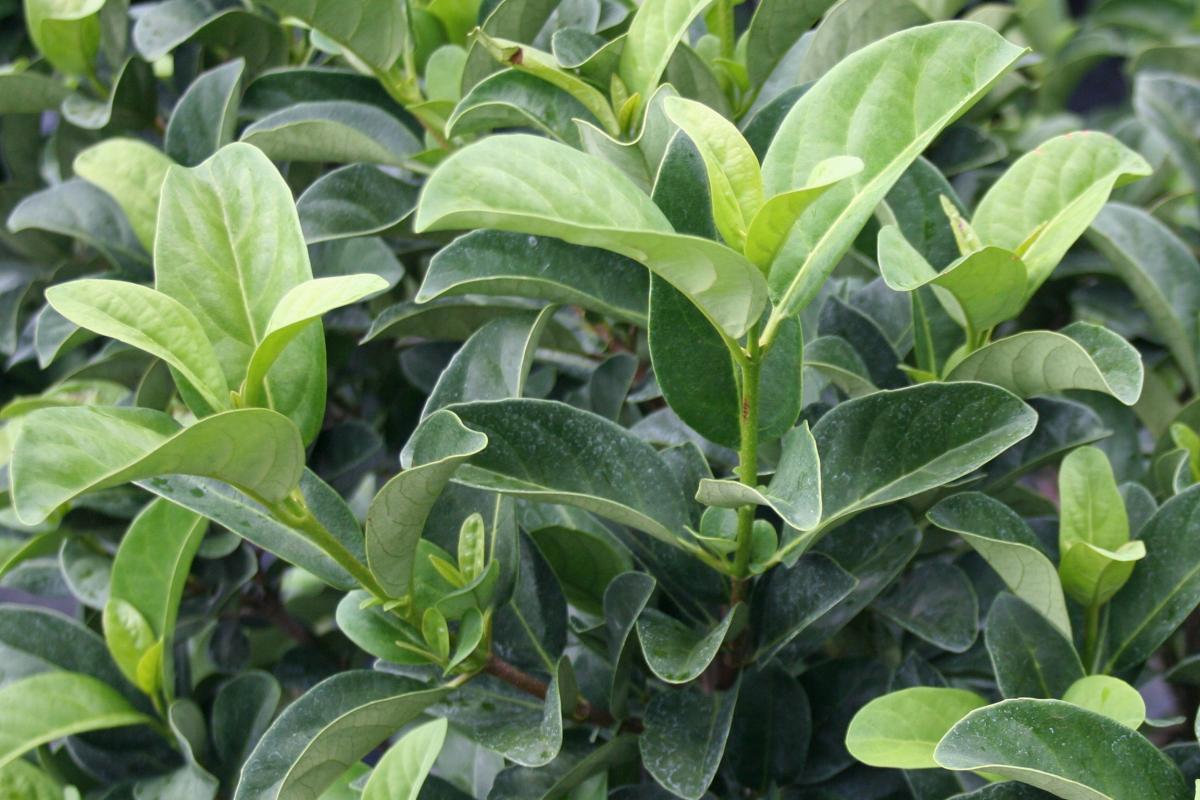
Sweet Viburnum is fast growing and for full sun locations.
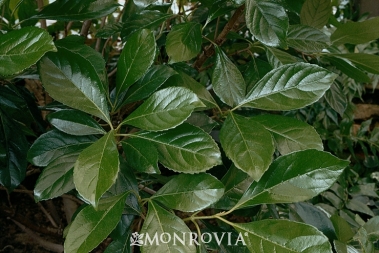
'Emerald Lustre' viburnum steals the show with large, shiny, dark green leaves.
'Emerald Lustre' VIBURNUM:
Viburnum odoratissimum var Awabuki
forms a dense, evergreen hedge; broad leathery but glossy leaves with shiny / waxy, lustre appearance to the leaves;
very durable plants; does best in full sun; tolerates partial shade --- but does best with at least 6 hours full sun daily.
Not as fast growing as many other hedge options. Grows 6-12' tall but can be kept trimmed. We used to call it "Emerald Lustre" or "mirror leaf" viburnum.
PODOCARPUS
Podocarpus macrophyllus
Podocarpus macrophyllus or Podocarpus as it is called, is a compact, upright-growing, evergreen conifer that does well in Florida's harsh sun. It is a native to southern Japan and is one of many plants referred to as Japanese Yew. While sometimes grown into a beautiful tree specimen, podocarpus is more likely shaped as a hedge.
Podocarpus is a slow growing, low maintenance hedge, but will require some shaping to maintain its density. It typically grows 15-20'tall and 6-8' wide within 10 years. It can reach heights of 30-40' and 20-25' wide eventually making a nice windbreak, but that takes years. It is often shaped and sheared into a well kept hedge at 6-7'.
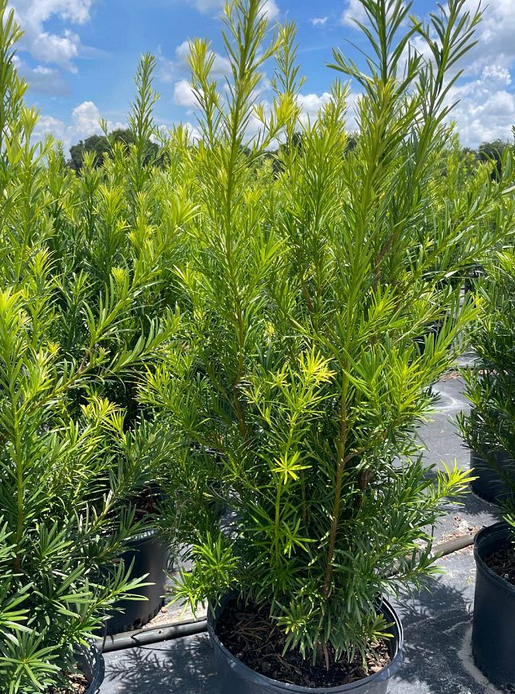
15g podocarpus bush
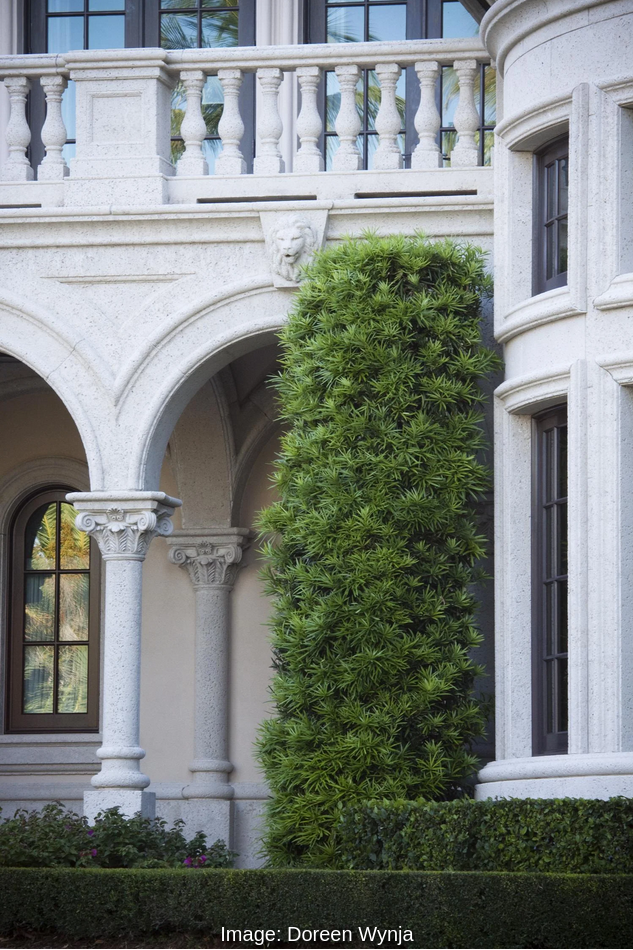
single bush shaped as a column
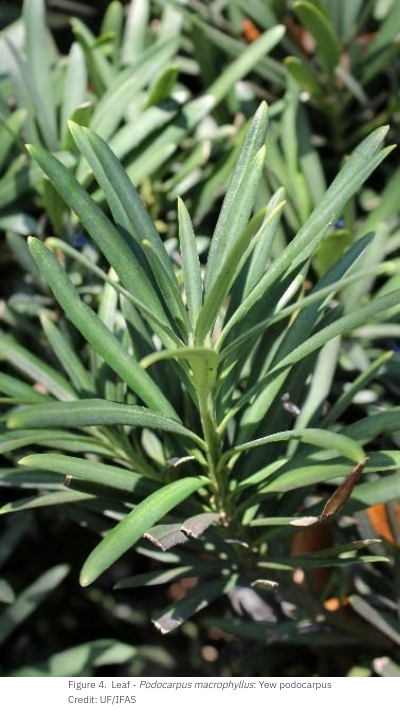
podocarpus leaf stem
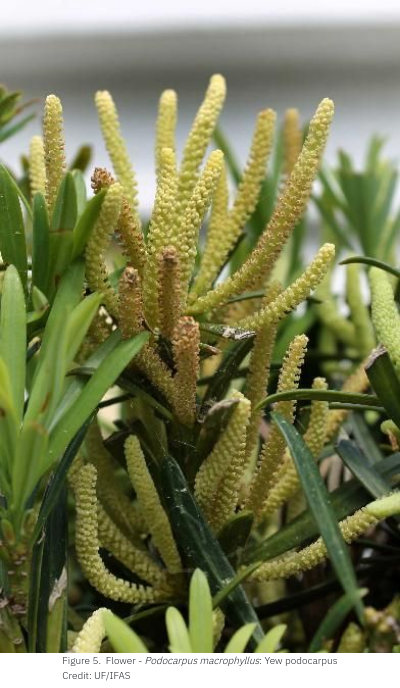
podocarpus flowers
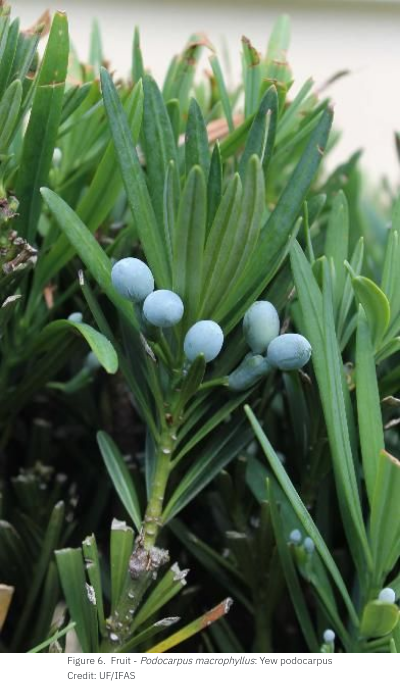
podocarpus berries
Fine textured hedge:
Narrow, soft-leathery 1/2" wide leaves are 1-5" long, and make for a fine textured hedge. The soft foliage is a pleasure to garden next to.
And it is deer-resistant, though it does produce a small, purple berry on female plants that feeds the birds. Not edible for people: mildly toxic poisonous for humans.
Growing conditions:
Podocarpus prefer slightly acidic, well-drained soil. Frequent watering the first few years helps develop a deeper rooting system so that it will tolerate some drought later on. In FL, that means daily drip irrigation for 20 minutes minimum when temps are over 75° and there are no rains.
Podocarpus does best in full sun or partial sun. It does not grow as dense in shady conditions, though it will tolerate some shade. Quite salt tolerant. IFAS says it is suited to zones 8b-11.
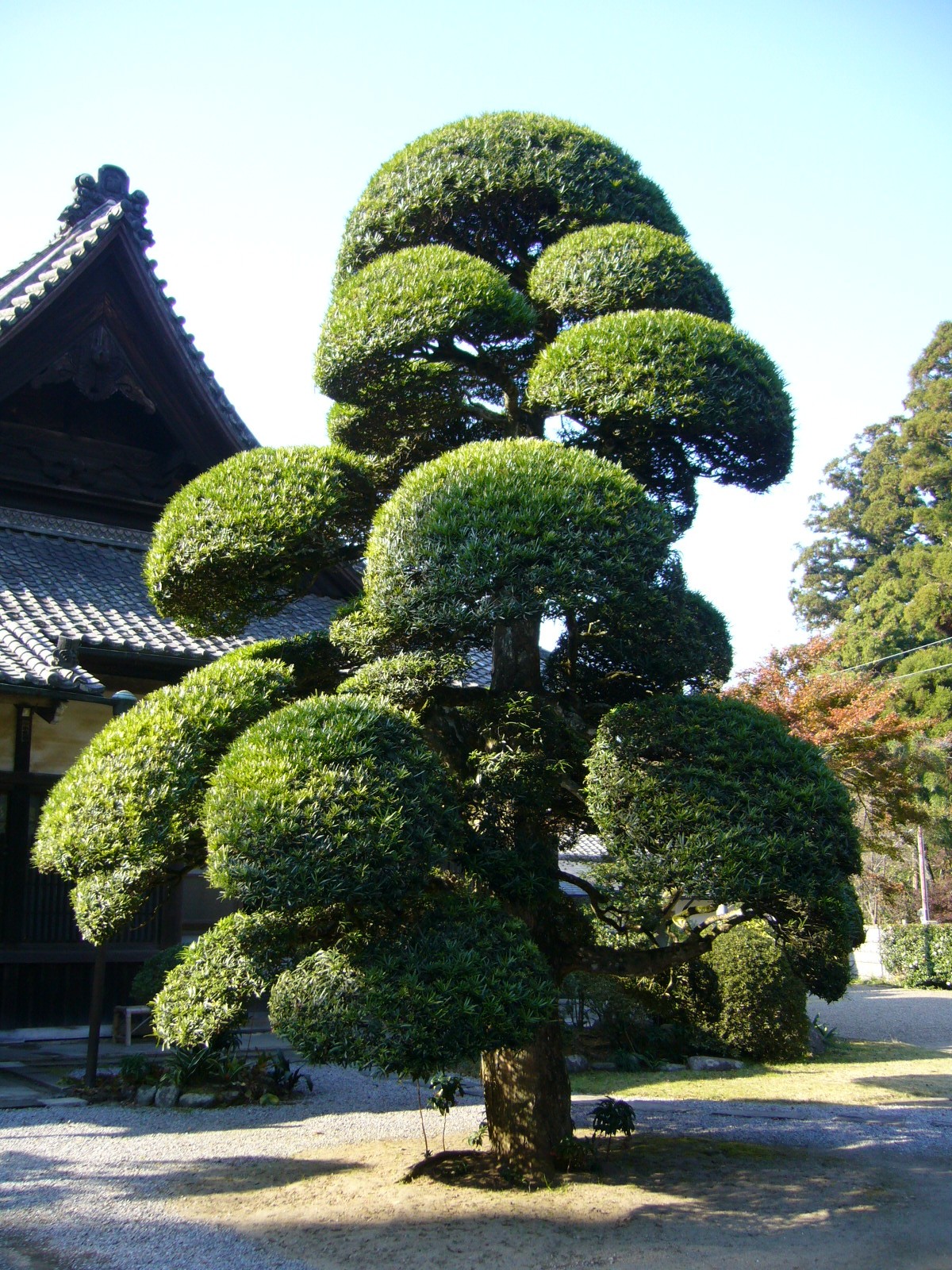
photo courtesy of wikipedia
podocarpus topiary: Katori City, Japan
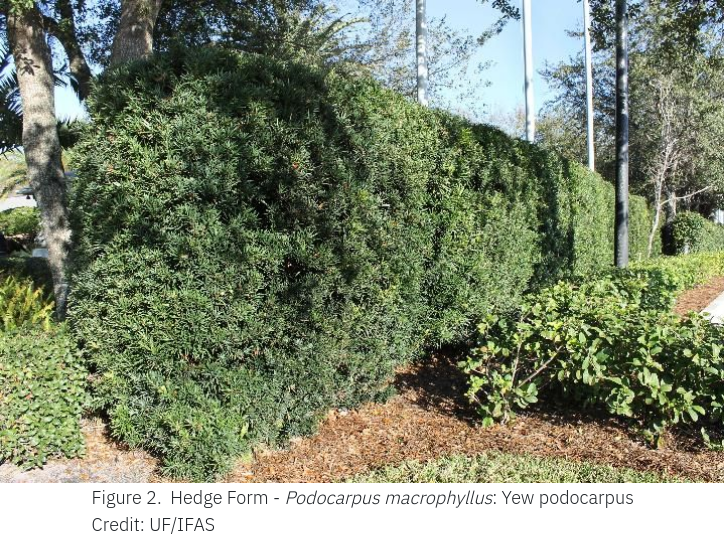
Above: podocarpus as a mature, 10 year old hedge
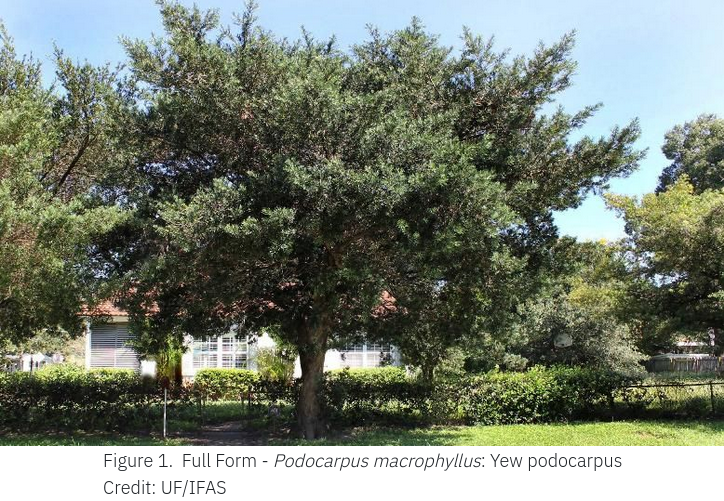
Above: a mature 50+ yr old podocarpus tree
LIGUSTRUM: privet hedge
Ligustrum japonicum
Wax Leaf Ligustrum is probably one of the toughest evergreen hedges for Florida you'll ever plant. Shiny, dark green leaves followed by profusely fragrant blossoms in the spring, ligustrum does well in all types of lighting: super sunny to mostly shady. It is one of the oldest reliable hedges planted in the South.
Ligustrum is a tough, hardy, adaptable hedge for zones 7 through 11. Fast growing to 8-10' tall by 4-6' wide. Needs trimming probably twice a year at least to maintain tight shaping. Overgrown hedges can be cut to half height, looking like a mess of bare sticks, and within 3 months it'll be lush again.
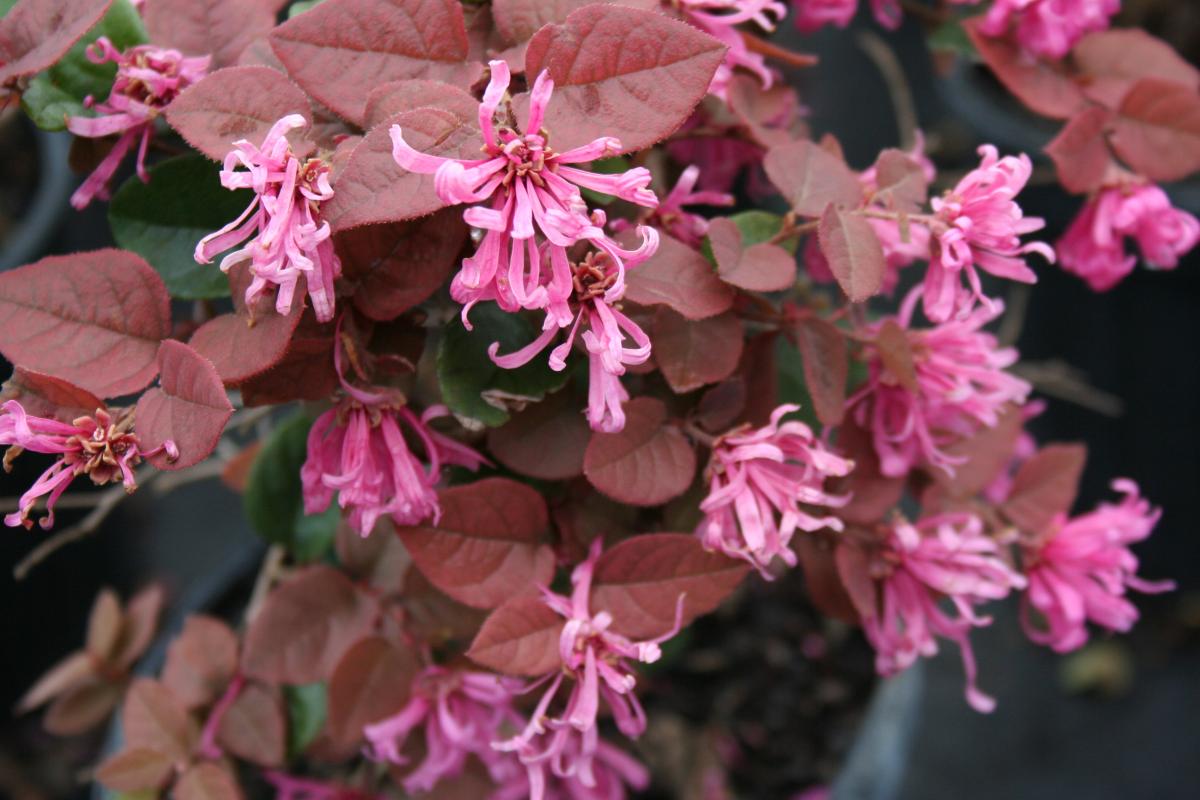
Ruby Loropetalum flowers
'Purple Daydream' is a very dwarf type that only gets about 2-3' tall. The rich purple foliage make a pretty landscape statement, but not a tall hedge.
LOROPETALUM CHINESIS
Loropetalum aka Chinese Fringe Tree are a small shrubby plant in the Witch Hazel family of plants. They stay relatively compact and need little trimming.
There are at least 3 kinds of hedge sized loropetalum, each useful for a different purpose in the landscape: 'ruby', 'plum' and 'zhuzhou'.
'Ruby' Lorepetalum -- grows up to 6' tall and has brilliant pink blossoms on new growth;
'Plum' Lorepetalum -- prettiest when kept trimmed to 2.5-4' tall; Blossoms on this cultivar are a deep purple.
'Zhuzhou' Lorepetalum:
grows up to 10-12' tall if untrimmed; fast growing; rich pink blossoms on new growth -- nearly the same color tone as the 'ruby' loropetalum; total fertilizer hog; can be shaped into a small tree with multiple trunks and a canopy nearly as wide as it is tall if desired; Also makes an attractive privacy hedge.
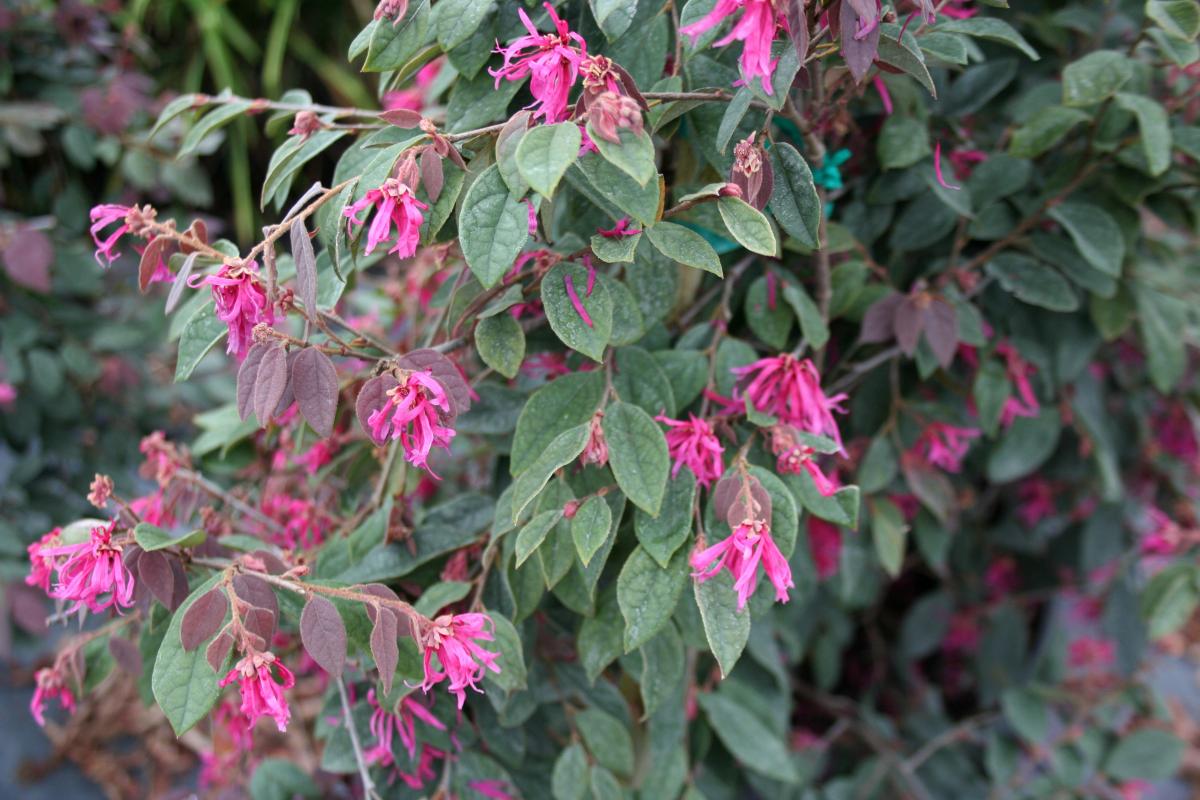
Zhuzhou loropetalum: at 10-12' tall this is the tallest growing variety
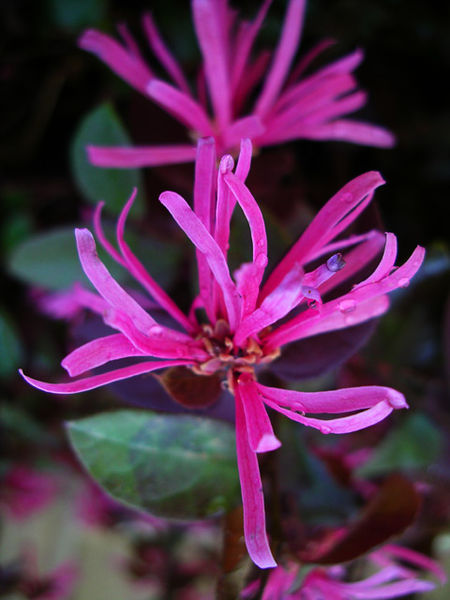
ruby loropetalum up close
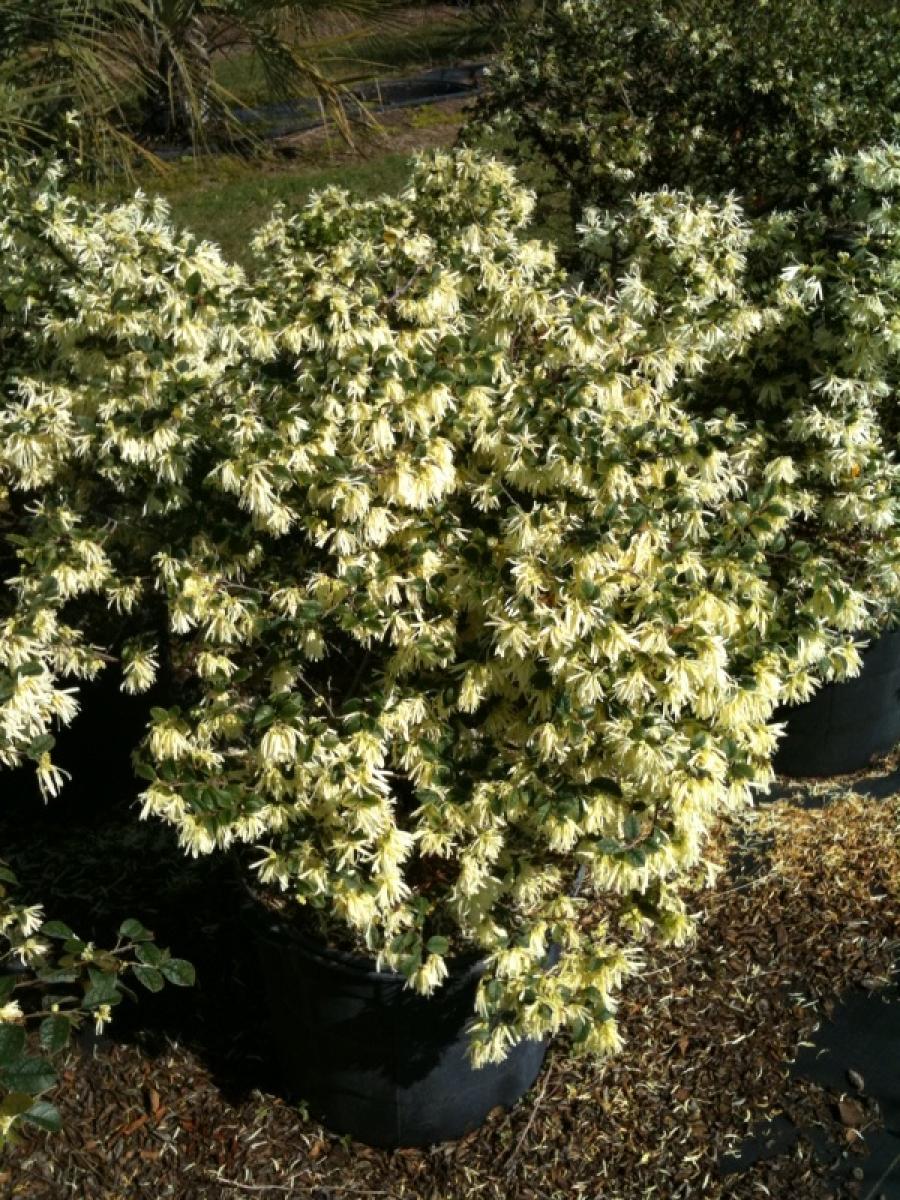
white loropetalum
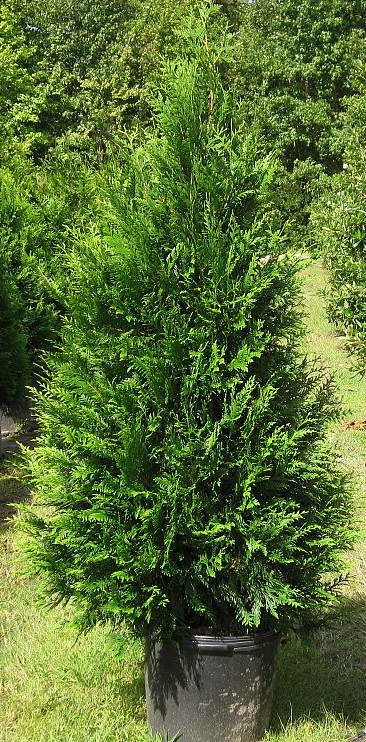
Thuja 'Green Giant'
Thuja 'Green Giant' is deer resistant, and has very little pest or disease issues.
It's sap and oil are used in aromatherapy as well as for a homeopathic burn ointment.
HISTORICAL
Thuja 'Green Giant' is a cross between Japanese arborvitae (Thuja standishii) and Western Red Cedar (Thuja plicata), developed in 1967. It thrives in USDA zones 4 through 8, though it can grow easily in zone 9 with consistent water and a little organic plant food. There are many propagation nurseries in all of zone 9 Florida growing Thuja!
Thuja 'Green Giant'
aka Arborvitae "Green Giant"
Thuja standishii x plicata "Green Giant"
suited for USDA zones 4-8b, maybe 9
Thuja 'Green Giant', a member of the Arbovitae family, is a rapid growing evergreen, pyramidal-shaped bush or rather tree, that can make a tidy, dense hedge. It is ideal for a privacy screen or a dust and noise barrier and can be used alone or mixed with other shrubs for an attractive backdrop.
We see many suggesting this plant for zone 9. But it doesn't do as well in the summer heat for zone 9 as it does in zone 8b and colder. Highly susceptible to fungi in zone 9: growers have to use a lot of anti-fungal sprays to cope.
But if you live in the Florida Panhandle, or anywhere near the I-10 corridor and north, this should make an excellent choice for a dense hedge.
GROWING CONDITIONS
Thuja loves full sun, tolerates a little partial shade. They perform best in well-draining loamy soil, that is slightly acidic with a pH of 6.5-6.8.
They grow rapidly to approximately 40-60', though can reach as high as 100' in northern grow zones.
Leaf branches are full and lacy, and become a dark luscious green as they age. New growth produces a beautiful mixture of light and dark foliage. They can be left to grow pyramid-shaped, or they can be trimmed and shaped into a flat-topped hedge.
And while we're not huge fans of fresh bark mulch because of fungi issues it creates, a Thuja hedge is one planting that benefits greatly from (real) mulch around the base of the plants, just not w/in 6-8" of the trunks.
GROWTH RATE
Thuja generally take at least one season to adjust to their new home, and grow more rapidly in the second year, once roots are well established. Growth rate is typically 3 feet per year (after the year of planting), though it can be as much as 5' under ideal conditions.
So if you start with a 7g pot specimen that is typically 3-3.5' tall planted height, expect a full 7-8' privacy hedge in about 3 years: one year to settle in plus 3' of growth for each of the next 2 years. (I'm not counting the top 1-1.5' in the 3rd year, because new growth is typically thin and wispy at the very top.)
WATER
Consistent water, such as from a soaker hose stretched out the length of your hedge, will give you a more dense and luscious looking hedge. They especially need water in the summer months in Florida. Lack of water causes the needles to turn yellow or brown. Too much water causes drooping branching and discoloration.
LEYLAND CYPRESS
Cupressus × leylandii
for zones 5-10
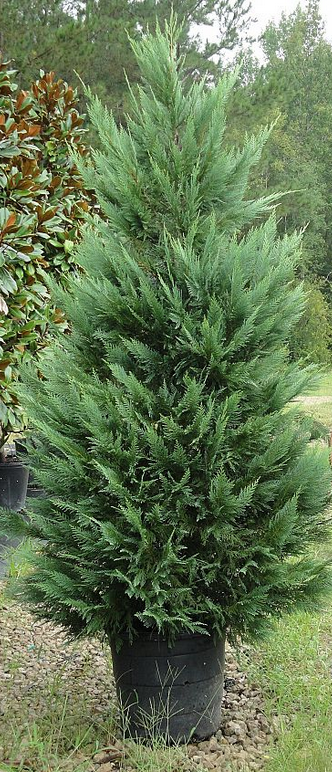
Leyland cypress are a popular landscape tree in the South: a vigorous hybrid cross between two Pacific Coast species: the Monterey cypress (Cupressus macrocarpa -- zones 7-10) and the Alaska cedar: Nootka false cypress (Chamaecyparis nootkatensis -- zones 4-8).
Leyland cypress is a rapid growing evergreen, pyramidal-shaped bush or rather tree, that can make a tidy, dense hedge. It is ideal for a privacy screen or a dust and noise barrier.
Just like the Thuja, it prefers full sun, rich loamy soil, slightly acid pH, consistent water until well established, and can be trimmed or not, however the homeowner desires.
DIFFERENCES BETWEEN LEYLAND & THUJA
The first difference to meet the eye is color: Leyland cypress is a dusky blue-green, and Thuja is a mix of light to rich, dark evergreen green.
Both average 60'mature height, though Thuja can grow taller to 100' hgt in colder climates. Both are rapid growing, approximately 3' per year, but Thuja has been known to grow as much as 5' in one year.
Both are pyramidal in shape, but Leyland is thinner and branches are 10-15' wide, whereas Thuja can reach 20' wide. Both respond well to shearing or severe pruning, i.e. shaping into a hedge shape.
Both can thrive in zone 9, but Leyland can ultimately take more heat than Thuja, except for the disease issues. Leyland is slightly more drought tolerant than Thuja in the deep South.
However, Thuja has no significant pests or diseases, while Leyland are increasingly susceptible to new fungi issues, causing significant loss of foliage at the base of the plant. Where privacy is the main objective, the loss of bottom foliage can be problematic.
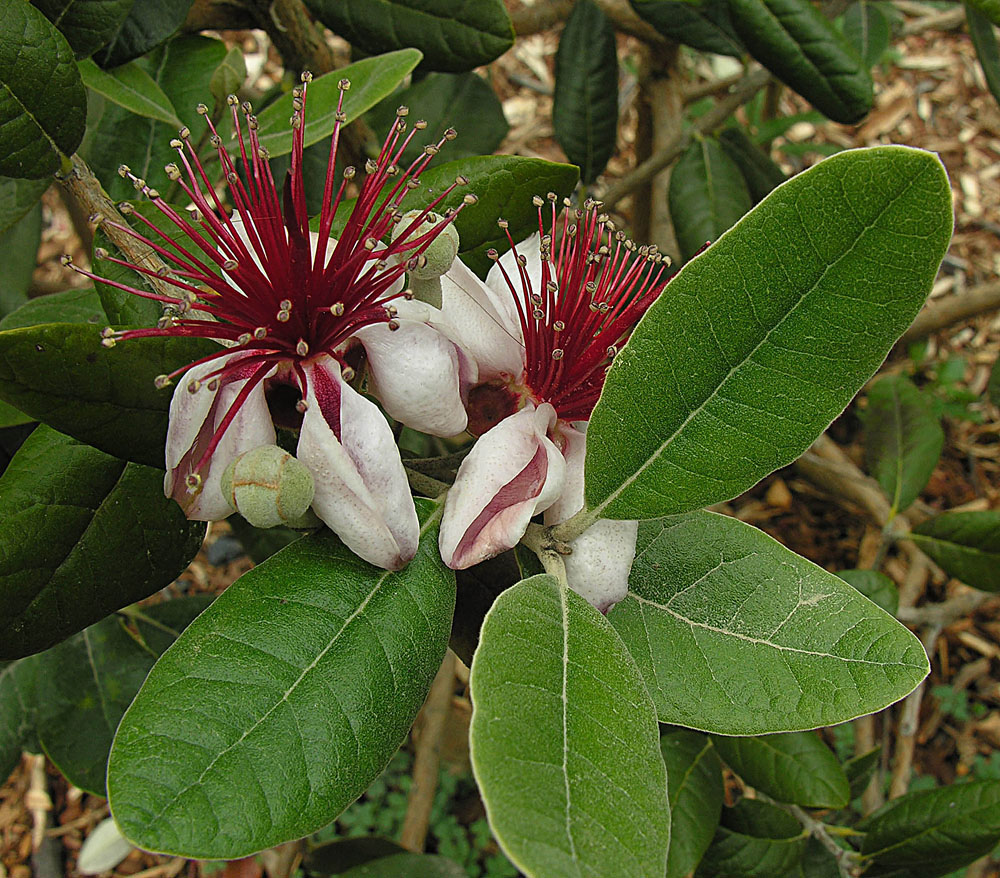
Pineapple Guava is NOT a member of the guava family of plants: it is neither a pineapple nor a guava. It derives its name from the flavor of the fruit.
PINEAPPLE GUAVA
Acca sellowiana syn : feijoa sellowiana, Myrtacées
The Pineapple Guava makes an interesting edible hedge plant for North and Central Florida. Mature size is 10' tall and 8' wide. Somewhat slow growing.
It requires cool winter temperatures in the 20's to 50's for successful flowering, and blooms in April & May. This drought tolerant plant is an evergreen shrub with leathery green leaves and silvery undersides.
Sweet, edible green fruit with a pear-like texture ripens in the fall: August to October. It has a sweet fragrance even before it is fully ripe. Flavor is something like a cross between pineapple, guava and mint.
Size of fruit varies from small kumquat size to kiwi size, depending on soil and growing conditions. To serve, cut the fruit in half and scoop the pulp out with a spoon. Pineapple Guava is slightly self fertile, but planting two or more significantly increases yields on each plant.
Drought tolerant and can also be grown in pots. Prefers full sun, and does not grow compactly in even partial shade. More fruit will set if grown in full sun. Must be 5 years old or more to begin flowering. Prefers slightly acidic soils.
BOTTLEBRUSH
Callistemon
No worries about the cold on this one!
It has dense foliage, a fast growth habit, and flowers from spring into fall. Plants grow 10-15' tall at maturity.
Bottlebrush prefers full sun to mostly full sun, and well drained moist soil rich in organic matter and nutrients. Pruning is optional, but trimming up to a third of the foliage first thing in the spring will encourage more blooms.
Plants are deer and insect resistant.
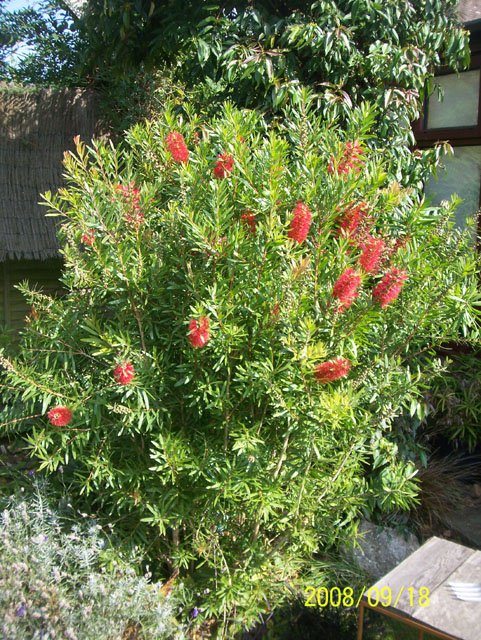
Bottlebrush can be shaped into a bush or a tree
PARTIAL SHADE
While most of the hedge plants that prefer full sun will tolerate a little partial shade, these varieties below MUST have partial shade to thrive, and do not fare well in Florida's full sun.
GARDENIAS
Gardenias like full sun to partial/filtered sun: just not in Florida. "Bright shade" is probably a more optimal description of lighting conditions for gardenias grown in Florida 9a and up.
Full sun would be good in the cooler areas of the state such as zone 8b or even 8a, but in 9a or 9b, bright shade is more desirable in the summer heat.
And they love extra nitrogen --- so heap on the composted chicken manure for best performance.
Gardenias are acid-loving plants that grow best in a soil pH of 5.0 to 6.0. If soil pH is higher, you'll need to amend with a little extra iron, because under more alkaline conditions the iron may not be available to the plant, causing yellow leaves.
And don't forget to put a sprinkler hose under the line of plants if you don't have formal irrigation!
With dark green evergreen foliage, Augusta Mystery stays pretty all winter and produces fragrant, double white flowers. Hardiest of the gardenia varieties.
Most 1g size are about 12-14" tall; 3g are usually 22"x16".
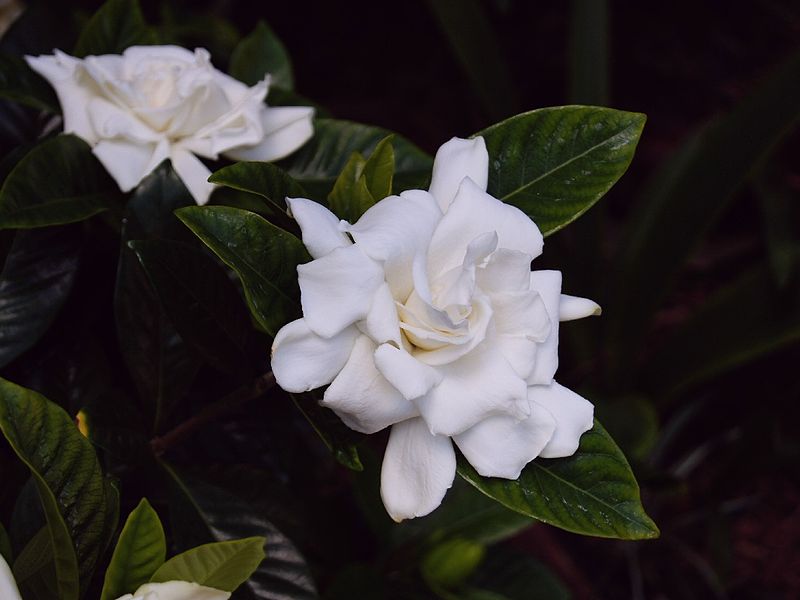
Double flowering gardenias
Photo courtesy Wikipedia
Double Mint: new patented variety -- a bit scarce;
grows 3' tall; produces 2.5-3" flowers;
Aimee: grows 5-6' tall; cultivar of choice when shaping into "standard form", i.e. a single-trunked tree shape. Easiest to find for sale in late March and April.
Most of the other varieties can be found for sale in the cooler months of the year, such as January-March.
TEA OLIVES
Osmanthus fragrans 'Fudingzhu',
O. fragrans 'Nanjing Beauty'
Tea Olives are a delicate evergreen that can be grown as either a shrub or a tree. Average mature height is 10-12', though some reportedly reach 25' after 15 yrs. Somewhat slow grower at 6-10"/yr.
Beautiful smooth, dark green leaves, are smothered in small, super fragrant flowers that bloom from fall to spring. The flowers of the 'Fudingzhu' are white and larger than the traditional Osmanthus. Tea olives can be pruned and shaped to whatever size and shape fits your space.
Few pests or diseases bother this plant.
Adapts to a wide range of soil types, but thrives on adequate drainage and can be grown in pots quite successfully. Though they can be drought tolerant, rich soil and plenty of water will make them grow much faster. Adequate water and food are essential to get them established.
Plant in part sun or part shade -- as full sun in Florida will give way too much wilting and die back unless super great with your watering..
Deer resistant; poor to slight salt tolerance. Beautiful hedge if you have the right climate for it. Otherwise, it is quite delicate as hedges go.
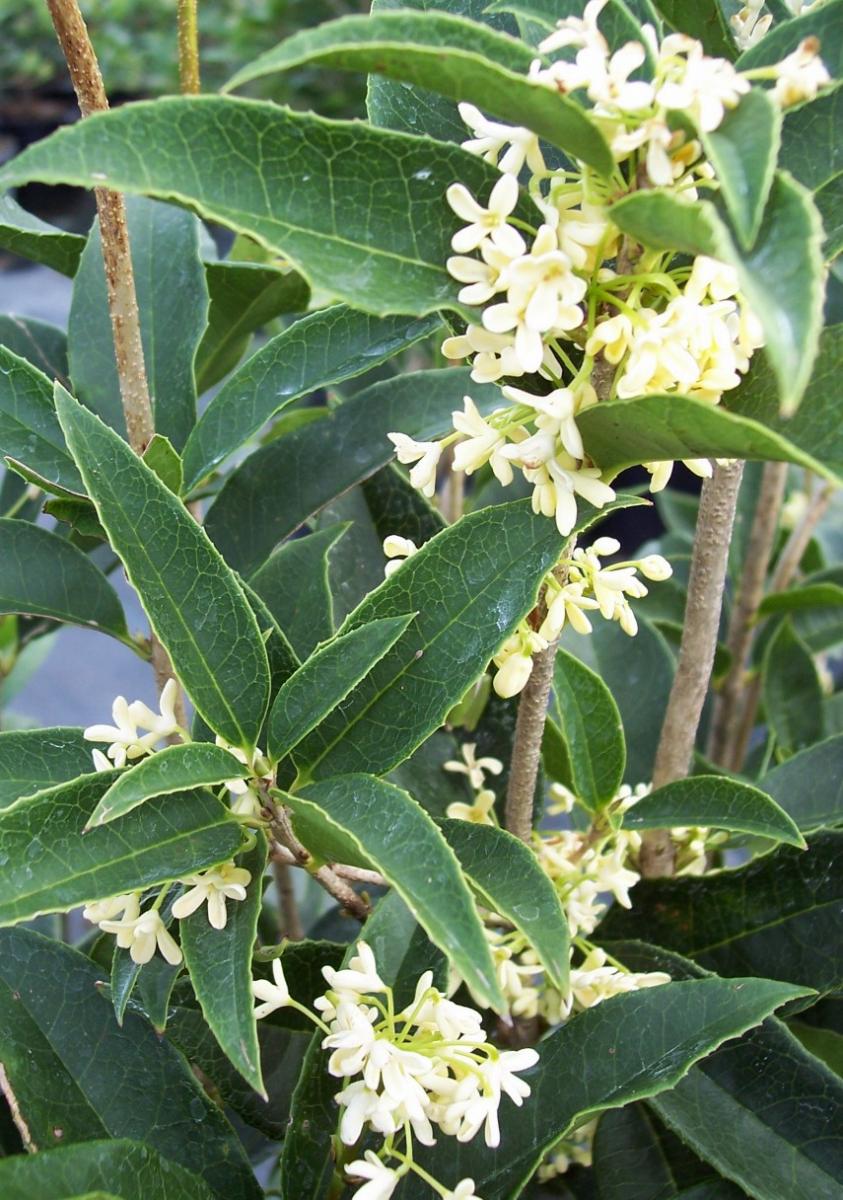
Leaves are used to make a tea, and flowers are used in Asian cooking for their apricot flavoring.
SHADE LOVING
Many hedge plants that call for 'shade' or 'shade loving' really still need some filtered sun. The varieties listed below are the least demanding of sun.
VIBURNUM SUSPENSUM
This viburnum is a native of Okinawa, Japan, and actually does quite well in full shade. Tolerates 'part sun' too.
Grows 6-12' tall and equally as wide if untrimmed. Plant it on 3' centers for a quick hedge. V. Suspensum likes it moist --- so water well.
Much smaller leaf than the viburnum awabuki shown above.
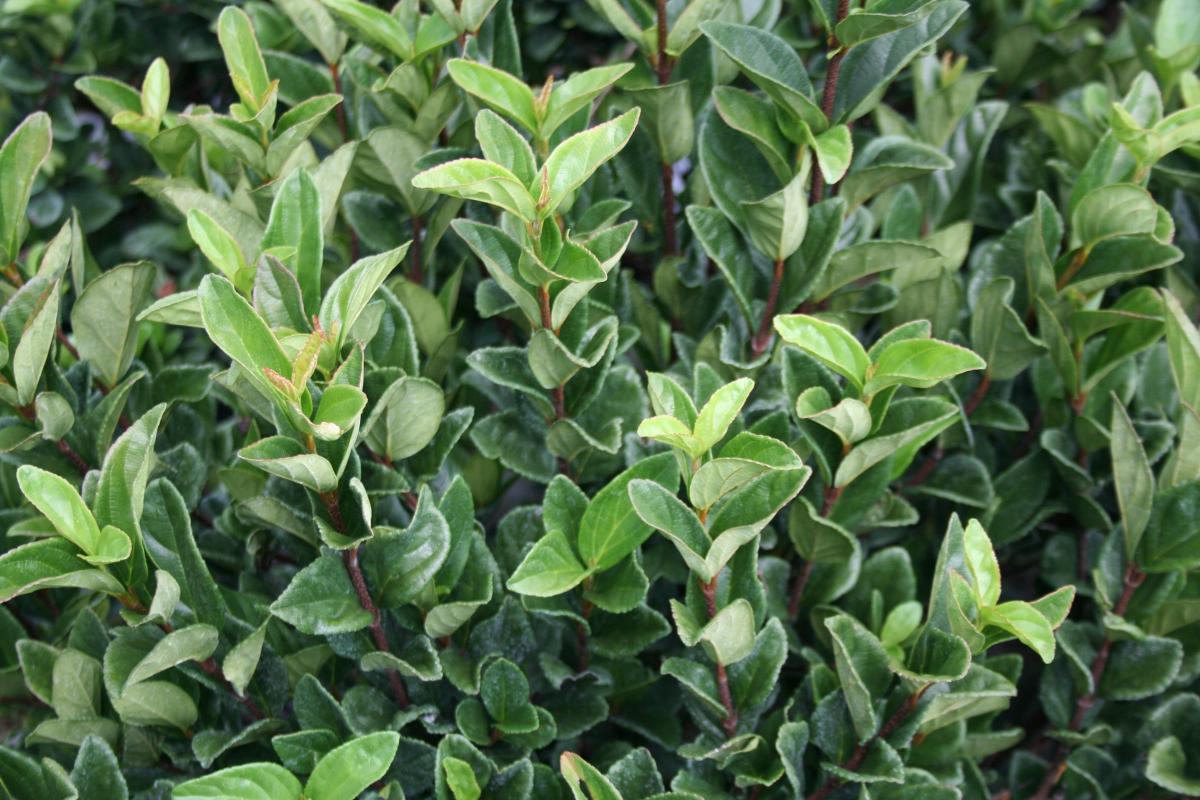
Viburnum suspensum: most shade loving of all
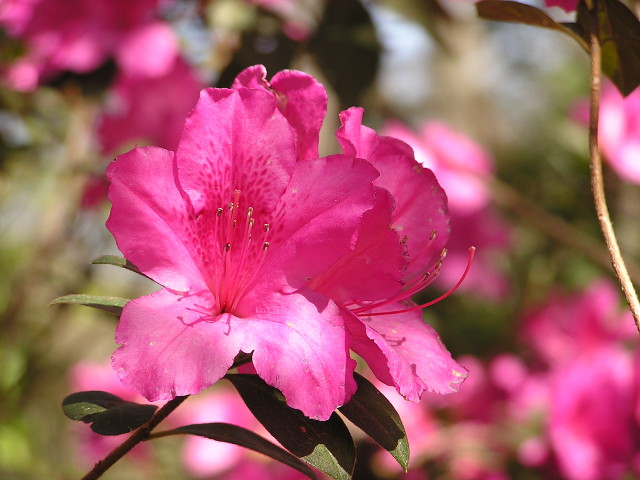
'Southern Charm' azalea
AZALEAS
Azaleas come in so many colors and sizes, there's a variety for every purpose!
Azaleas love partial shade -- too much shade often means less flowers. However, summer pruning will promote profuse flowering in February even in full shade conditions. Do not prune after Labor Day.
Some varieties like Southern Charm & Formosa Red will even thrive in full sun IF they are watered daily -- really soaked as in a soaker hose or irrigation.
SILVERTHORNE ELAEAGNUS
aka Thorny Olive or Silverthorne
Native to Asia, including China and Japan, the silvery, grayish green Silverthorne is a dense branching shrub that can reach 23' tall by 13' wide.
Silverthorne is a very fast growing, evergreen hedge, forming a shrubby dense thicket that needs very little trimming. Not the kind of hedge to trim into a sharp, boxy shape. More suited to a rural setting with it's floppy, shrubby look, rather than an HOA.
Silverthorne will thrive in all kinds of lighting from full sun to full shade. It sends out long canes that quickly branch, layering on top of each other to form a dense thorny thicket. And deer generally leave it alone. Salt tolerant.
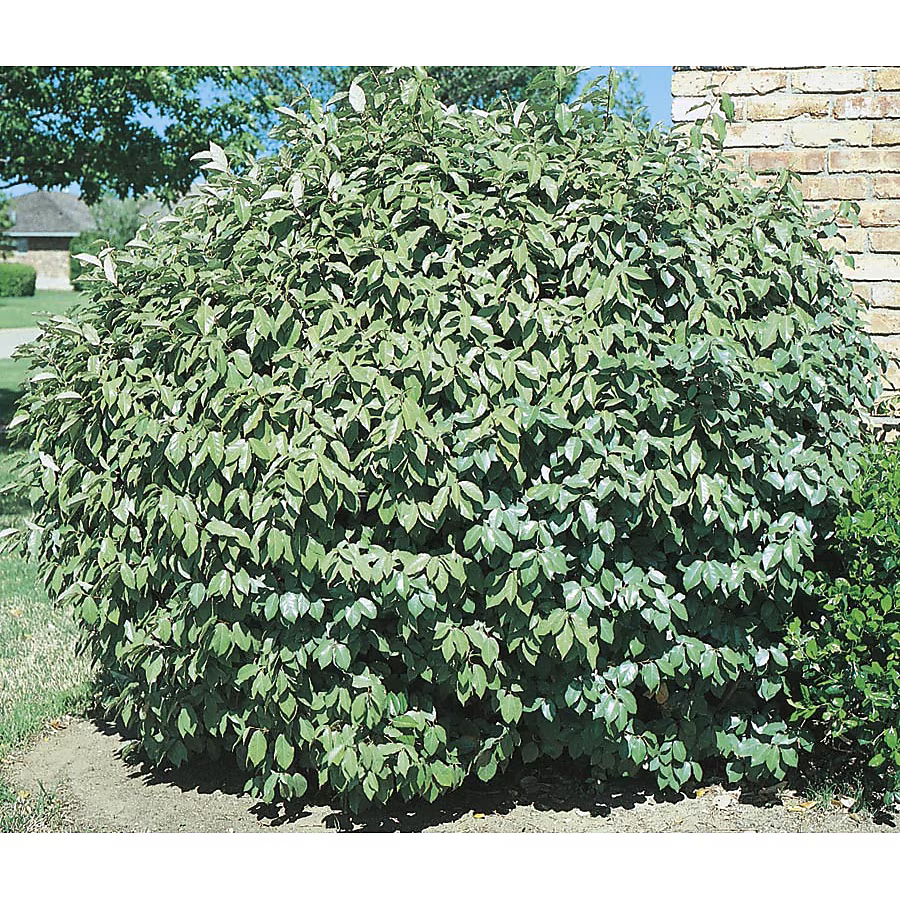
single trimmed Elaeagnus bush
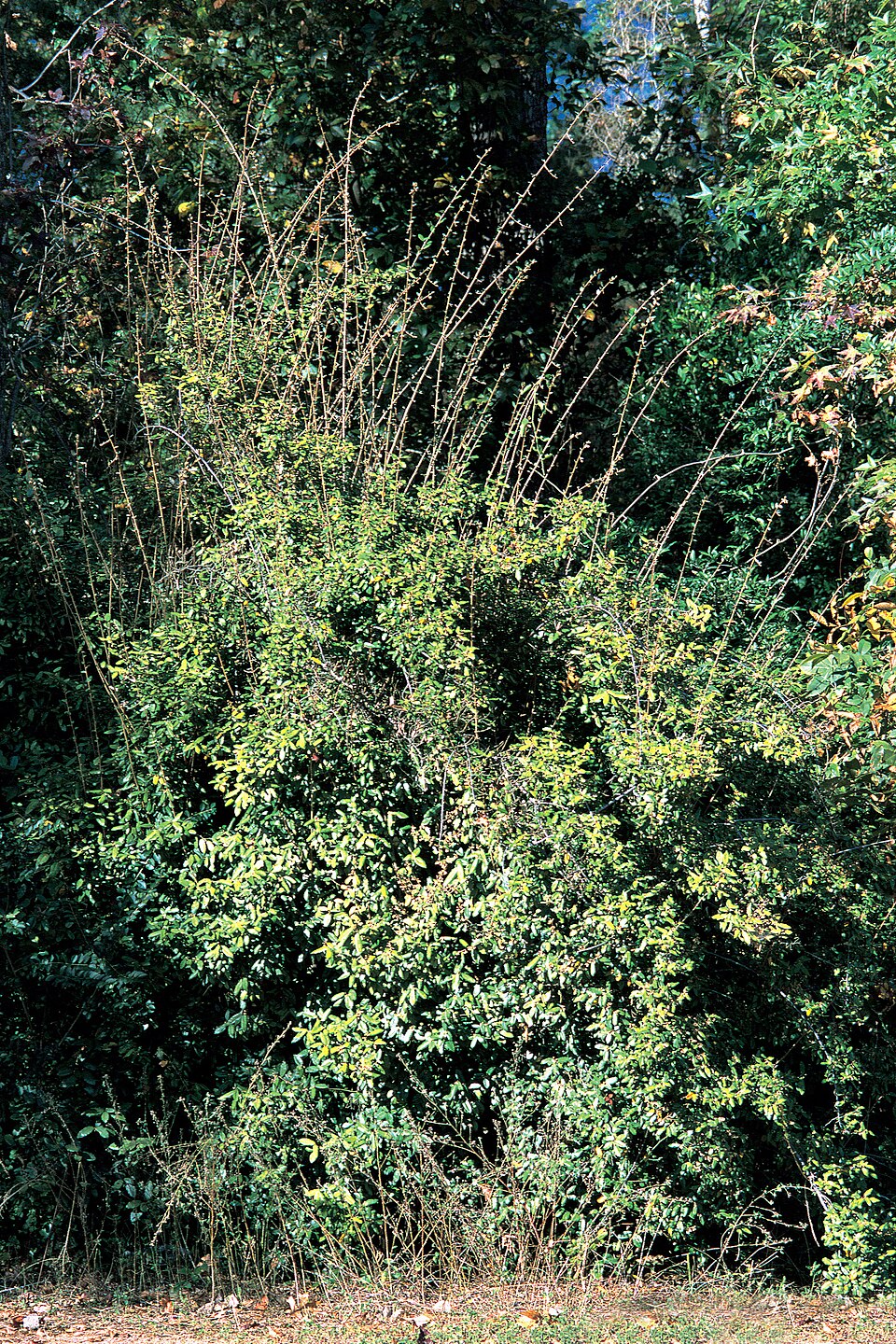
explosive spring growth w/ new canes emerging
photo courtesy wikipedia
Silverthorne was introduced to the US in the 1800's, and works well in zones 4-9. It tolerates low water once established.