
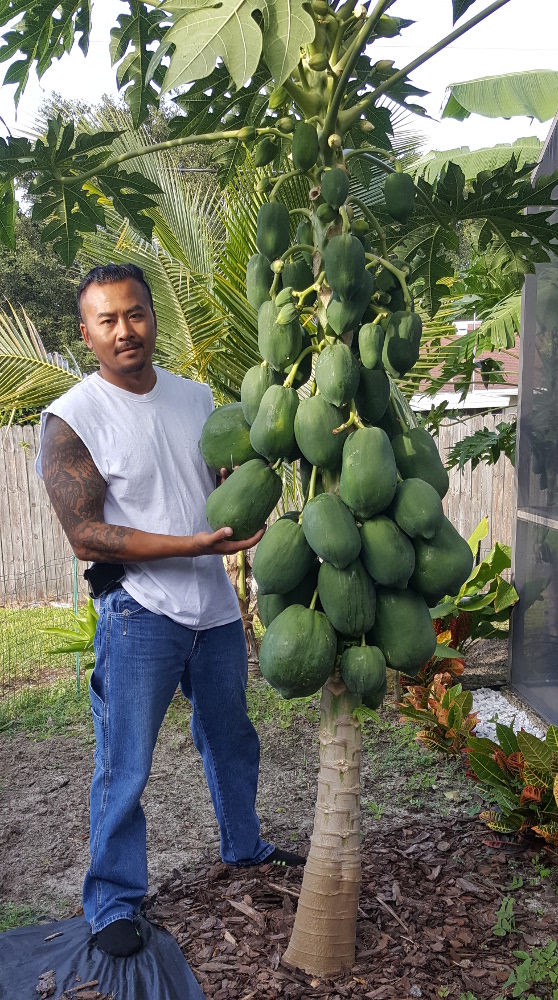
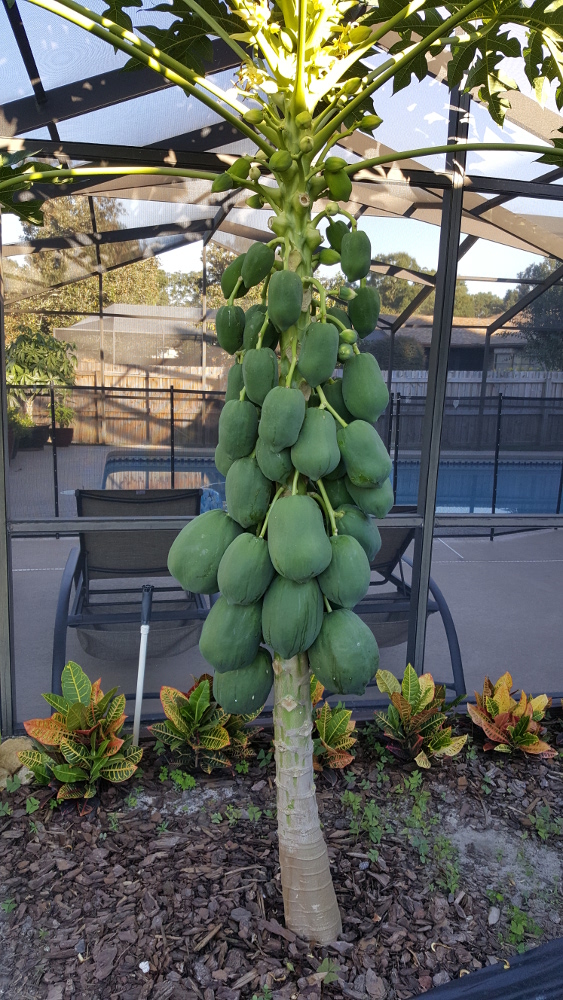
Lance in Tampa really knows how to grow a papaya tree !
Tropical Papayas
Tropical Papayas can be grown as a perennial in areas without frost or as an annual in areas with mild frost. Papaya trees are actually not trees but herb plants whose leaves last only 4-6 months. Plants bear well for 2 yrs and then should be replaced.
Trees will only set this much fruit when grown in a tropical area. When grown further north as an annual, don't expect a thick fruit set like you see here.
Papayas come in 3 sexes: male, female and hermaphrodite.
Male flowers do not produce fruit, though they do bear pollen that can pollinate either of the other 2 sexes. Female flowers must be pollinated by either a male or a hermaphrodite. Hermaphrodite flowers contain both parts necessary for pollination, and are self-fertile.
According to the International Tropical Fruits Network, there are 6 different known types of papaya flowers, and at least 15 different named forms of flowers. It gets complicated. If you'd like the details, read more here.
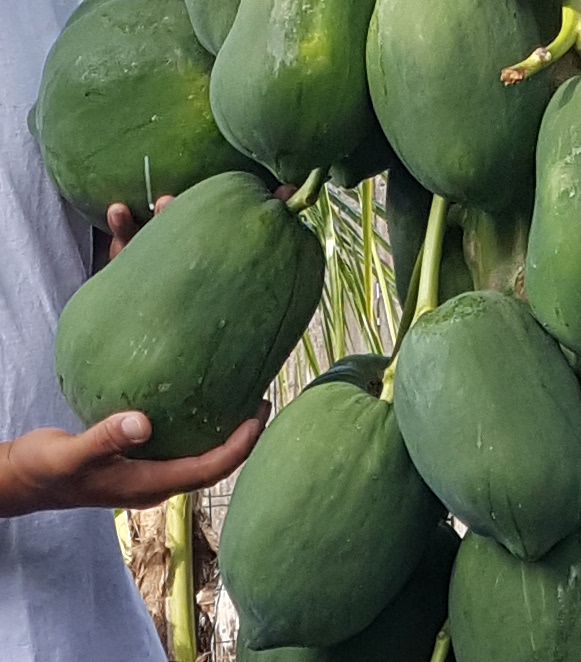
fruit is nearly ready to pick
Why It's Usually Best To Grow More Than One:
Some varieties of papayas are known to have more of one kind of flower than another. If you are growing a known self fertile variety, then one plant may be enough --- maybe.
But most papayas will set and produce far more if you grow them with a buddy or two. So it's helpful to understand the difference between the male, female, and hermaphrodite flowers to ensure you will have good pollination between your trees. You may even want to cull the non-productive male plants.
Another reason to have an extra plant: when a papaya perceives stress, what was producing hermi flowers yesterday may start producing male flowers tomorrow! We explain below.
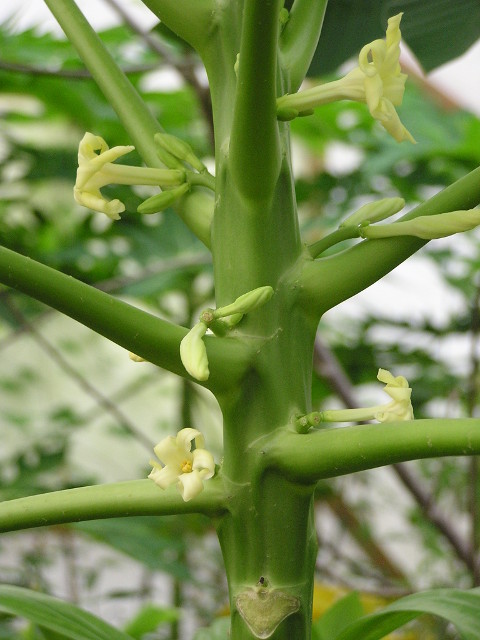
Here's a simple video
that illustrates
the difference between
male & female papaya plants:
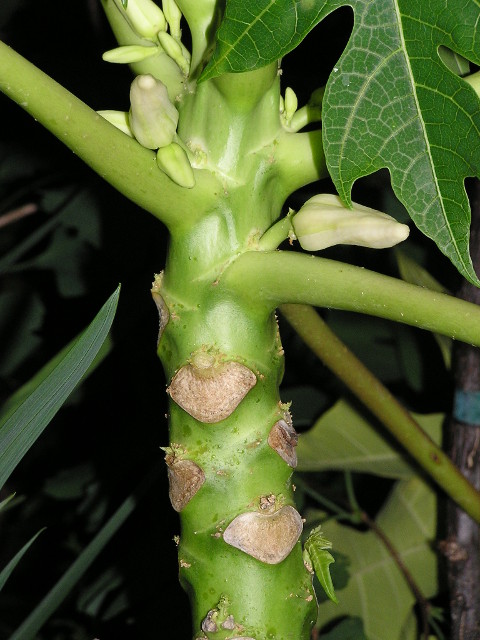
Hermaphroditic papaya plants are even more complicated. They can have male, female or "perfect" flowers --- all on the same plant.
And male flowers on the Hermaphroditic plants are not on such a long raceme (the "stalk" or "stem" from which they are attached to the plant) as the male flowers are on a true "male" plant.
That said, Hermaphrodite plants can be "unstable" under certain conditions and subject to "sex reversal", leaving you with a female plant. Cool weather or high soil moisture can lead to a shift toward femaleness. (Papaya plants need good drainage but consistent water to thrive.)
The best way to ensure fertilization of your papaya plant is to avoid having just one plant in the area.
Varieties
We currently have 2 varieties of papayas for sale, subject to seasonal availability: Red Lady & a new hybrid that matures more rapidly, bred to produce large fruit earlier in the season.
Papayas can grow as tall as 20-30', but dwarfs are just 10-12' hgt. and fit well in the home landscape.
UPDATE 2025: no papayas this year; our grower for these is taking a break, so we've paused this plant until we find the right replacement.
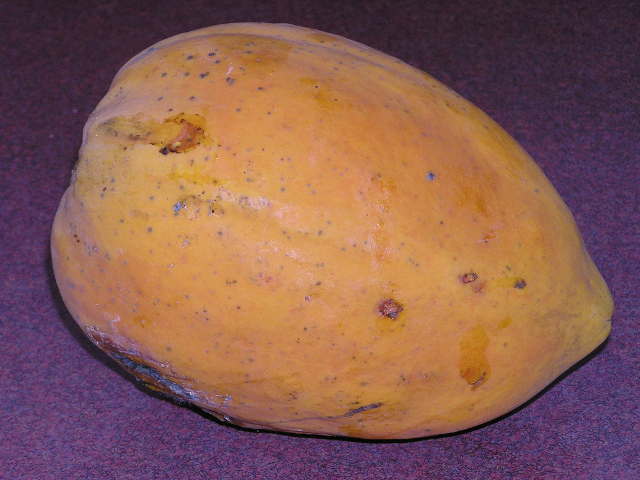
Our first ripe papaya from the 'King George' -- yum!
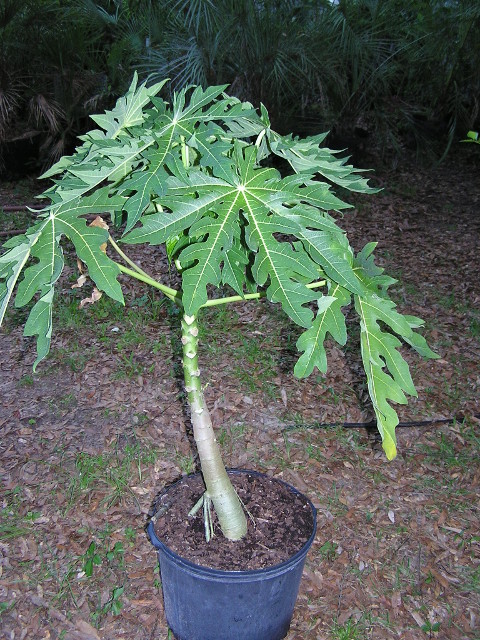
7g King George papaya
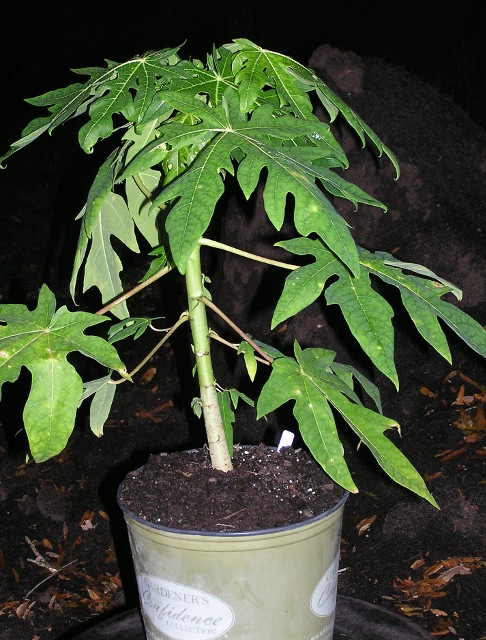
3g Red Lady papaya
Red Lady
Red Lady is a well known dwarf, semi-self fertile variety that can fruit the first year but definitely the second year. Fruits are oblong, 3-5 lbs and orange-red. Generally grows 10-12' tall and begins fruiting at about 4' height.
But the sooner your papaya fruits, the more likely you are to get a crop in North Central & Central FL, due to the comparably short growing season (compared to the tropics). Hence our new hybrid:
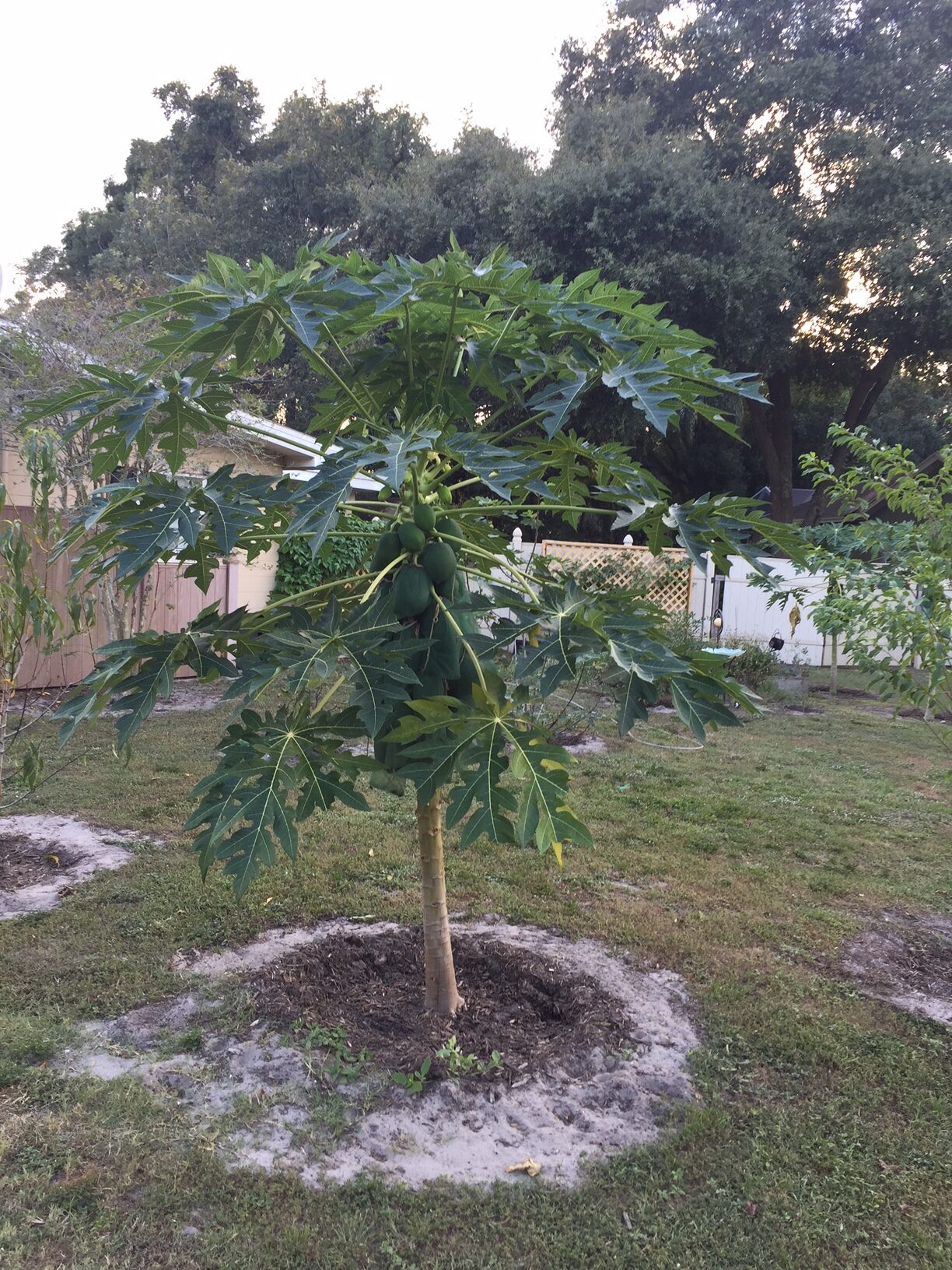
Frank's (Tampa) magnificent 6' tall 'King George'
New Hybrid dubbed 'King George'
We also have a new dwarf hybrid bred to produce earlier in the season at just 2-2.5' tall. It has a higher frost resistance (hardy to short spells of 30-32 degrees), and larger fruit on very short stocky plants.
Short / fat = 'king george' -- get it?
This variety produces a thin-skinned, orange-red, sweet papaya 2-4 lbs with good PRSV (Papaya Ring Spot Virus) resistance. Fruit is a very tender, sweet and tasty combination. Grows 10-12' tall and produces fruit when only a few feet tall.
King George produces hermaphodite plants 60% of the time. So planting one gives you a 60/40 chance of fruit; planting 2 gives you an 80/20 chance of fruit; and 3 give you a 96-98% chance of fruit.
This would be the better variety to grow in the northern half of zone 9 that has a shorter growing season than south Florida.
Lance's (Tampa) magnificent fruiting 'King George'