
Just What Is a 'Shiranui'?
While it is hard to imagine an orange or tangerine that could be any sweeter than our beloved Ponkan Tangerine aka Chinese Honey Orange, the 'Shiranui' is so low in acid content that it is promised to be many times sweeter.
Shiranui is a seedless, sweet variety of mandarin orange. It's sweetness is best described as "in a class all of its own". It was just recently introduced to the United States in 2005.
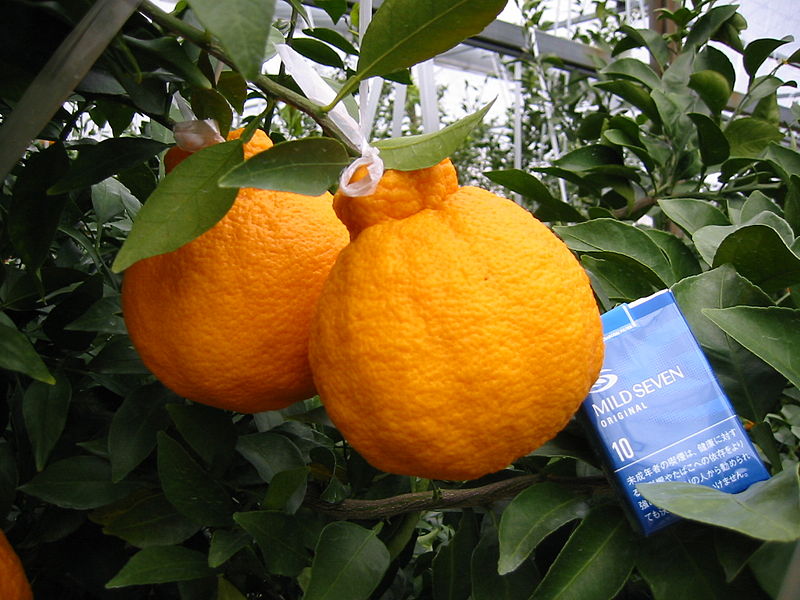
Shiranol or 'Dekopon' on the tree
photo courtesy Wikipedia
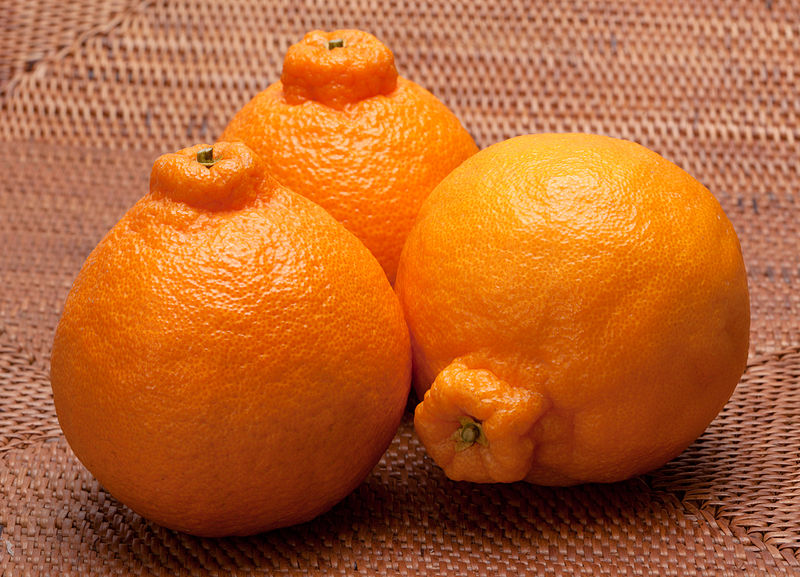
Shiranui is sometimes marketed under the trademark 'Dekopon' or the trademark 'Sumo Mandarin'
photo courtesy Wikipedia
HYBRID INFORMATION
'Shiranui' is a Japanese hybrid (1972) between a Ponkan Tangerine and a Kiyomi. Kiyomi is a cross between a Trovita and a Satsuma. So officially, Shiranui is a hybrid of Ponkan, Satsuma and Trovita (another sweet orange in Japan).
Shiranui is a generic name for the fruit, and what many FL growers are using as the name for this tangerine. 'Dekopon' is a genericized trademarked name for 'Shiranui'. 'Sumo Mandarin' is another trademarked name for 'Shiranui', exclusive to growers in CA. In South Korea, it is called 'Hallabong'. In Brazil, it is known as 'Kinsei'.
Shiranui / Dekopon was imported as budwood to California in 2005, and eventually made it to the CA fruit tree market in 2011.
It peels like a tangerine, but is considered the most sweet orange available in the States. It is so sweet, that Japan now has chewing gum with Dekopon flavor, also called 'Dekopon'.
GROWTH & FRUITING HABIT
Shiranui is distinguished by its super sweet taste, large fruit and the large protruding bump on the top of the fruit (see pictures).
Fruits are harvested in the US generally from February to May, much later than the Ponkan or the Satsuma.
In Brazil, 'Kinsei' is harvested from May to September.
Shiranui citrus is not nearly as cold hardy as Ponkan, however. Damage temperature for the valuable fruit is reportedly at 32 degrees, so growers protect the entire plant from frost at all costs.
The tree itself is most likely more cold hardy, but there doesn't seem to be a lot of documentation for it yet. Our personal orchard trees have had no winter damage since 2020, with recorded temperatures in the area being as low as 21°. Our nursery however is quite wind protected and never sees the extreme lows that occur around us even a mile away.
Growers also say the Shiranui is a more temperamental citrus to grow, that it is not as hardy as some of our other cultivars. So should you decide to try one, be prepared to take some precautions.
Of personal note: we found the first 3 transitional years from the chemical nursery environment to our organics to be quite challenging. And we lost one of the original trees to the process. But once we had them thriving organically, the fruit tastes wonderful and the trees are now quite hardy.
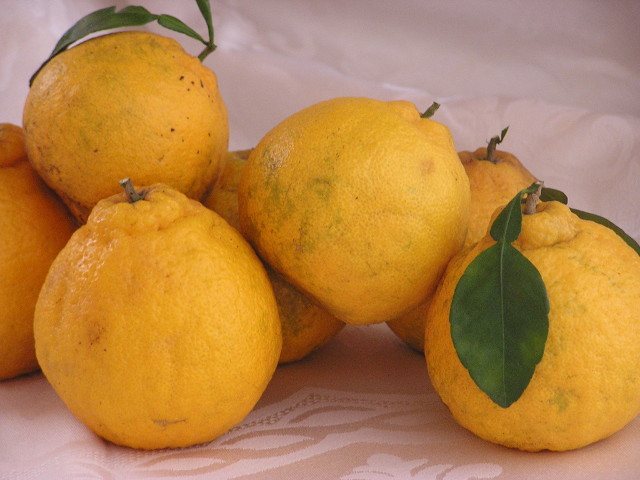
our harvest of Shiranui on year 4 had more 'top knot'
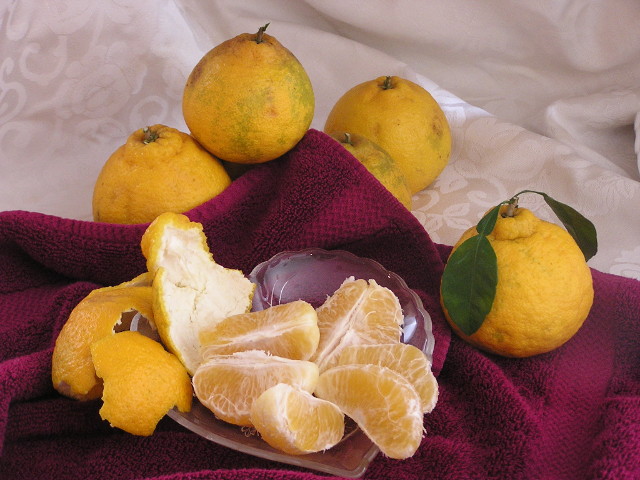
connective tissue in the plugs is very soft, not course