.st0{fill:#FFFFFF;}

Sapodilla Cultivars 

 August 5, 2016

By  GreenGenie

Sapodillas trees range in size from 6' tall to as much as 100' in the tropics!

Manilkara Zapota

DAMAGE TEMPS: 30°F (zone 10a)
  • Mature trees have been known to withstand several hours of temperatures at 24-26°,  though young trees can be killed at 30°.
  • Fruits mature 4-6 months after flowering.
  • Likes consistent water, but good drainage is essential.
  • Trees require very little pruning, unless you desire to keep it smaller than natural heights.

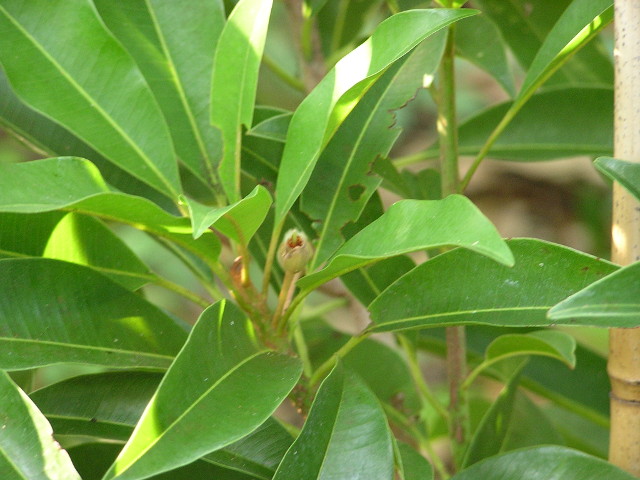
Sapodilla flowers just beginning to open

Here's a comparison of the most popular sapodilla cultivars:

NOTE:   All our Sapodillas will be grafted trees !!!

SILAS WOODS -- South FL selection;

Our most popular because of size & flavor.
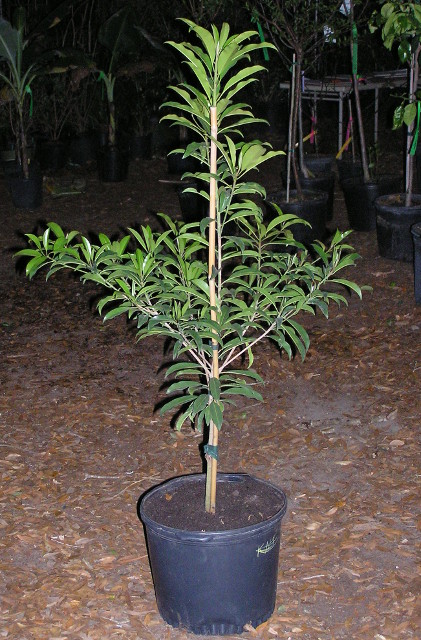
  • Dwarf tree: 6-10' tall;  perfect for a container plant.
  • Mature trees have been known to be cold-hardy to 26°F
  • Ever-bearing, very prolific, heavy producing;
  • Small fruits:  9oz;  2-3" diameter;
  • Super sweet:  tastes like brown sugar
  • Fine texture:  white flesh

7g Silas Woods (dwarf) $125 when available
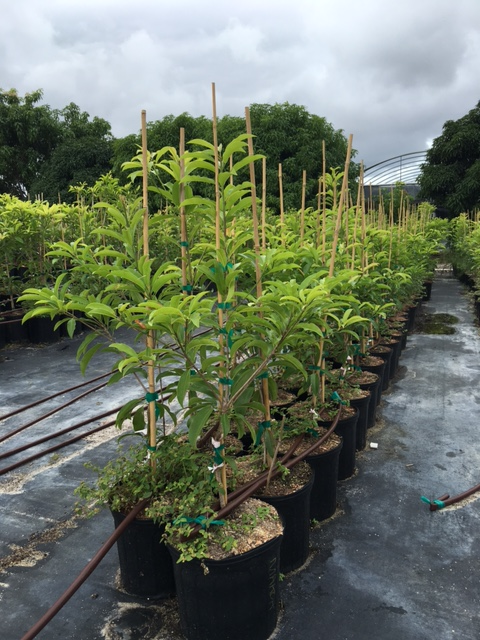
7g Makok growing in the nursery environment

Thailand varieties

ALANO -- #1 Thailand variety;

(#1 fav on the East coast of FL)

  • Small tree:  25-30' tall
  • Ever-bearing,   heaviest production Nov-June
  • Small fruits:  9oz;   same size fruits as Silas Woods;
  • Super sweet  /  ultra fine texture;

MAKOK -- Thailand variety; new to FL;

  • Small tree: 20-25' tall; ripens May-Nov;
  • One of the best tasting;
  • Pulp is smooth & brown w/ a sweet aroma;

Central American varieties

HASYA -- #1 commercial variety in Mexico

  • One of the bigger cultivars:  13oz fruits
  • Ripens Nov-June
  • Elongated / football shaped;  more flesh / less seeds
  • Color:  yellowish-reddish
  • Texture:   finer texture than Morena
  • Common So FL favorite amongst the Mexican var.

MORENA -- Mexican variety

  • Trees grow to 20' tall
  • Ripens Feb-April
  • Hardy producer; produces as much as the Hasya & Molix
  • Up to 12oz fruits;   exceptional flavor
  • Less seeds:  1-2 seeds total
  • Color:  half red / half caramel

MOLIX -- Mexican variety; ripens Feb-May;

  • Very tall trees
  • Fine texture:  13oz fruits
  • Ripens Feb-May
  • Exceptionally sweet;  only one that is less red;
  • Similar in color to the Mamey sapote

Other Florida varieties

TIKAL -- Central American seedling 

  • Named at the Homestead Ag Experiment Station
  • Tends to grow very tall;  can be kept trimmed to 12'
  • Prolific producer,  small elongated fruits
  • Fine texture

PROLIFIC 

  • 1941 seedling released by the Ag Research Station in Homestead.
  • Mostly round, w/ smooth pinkish-tan flesh
  • Early bearing
  • Consistent, heavy producing

OX

  • Developed at the Ag Experiment Sta in Oxkutza,  FL
  • Very different tree from all the rest:  straight leaves, flattened edge on fruit, light colored speckled skin.
  • Small crops:  i.e. small number of fruit sets
  • Huge fruits:  up to 1 pound !

related posts:


Growing Blueberries in FL Made Easy


To Mulch or Not To Mulch?


Controlling Citrus Leaf Miners

How To Start A Successful Orchard In Florida's Sandy Soils


Get this  Free  4-part email series:

Includes our 'magic mix' soil amendments recipe:  mix it yourself and save $$$