
Atemoya:
'Pineapple Sugar Apple'
(Taiwanese nickname)
Annona atemoya
Atemoya are a hybrid cross between sugar apples (A. squamosa) and Cherimoya (A. cherimola). They were developed by P.J. Wester, horticulturist at the USDA, in Miami in 1908.
"Atemoya" name is derived from "ate", and old Mexican name for sugar apple, and "moya" from cherimoya.
Growing Conditions
Atemoya can reach up to 25' tall in their native environment. However, they typically only grow 10-15' tall in Central Florida, Spacing 15-20' apart is ideal. Trees can be kept trimmed to 6-10' if needed.
Atemoya are more cold tolerant than the sugar apple (A. squamosa) and at the same time tolerate tropical heat better than the Cherimola.
They are hardy to zone 9b. Atemoya can tolerate a light freeze, maybe even to 25-27°, if a very short duration.
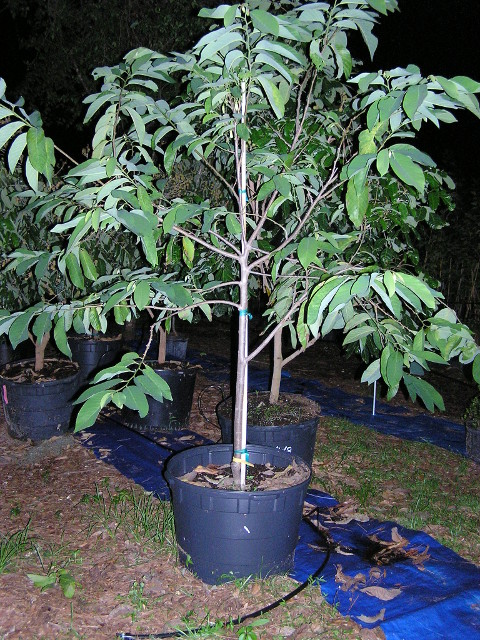
25g Geffner
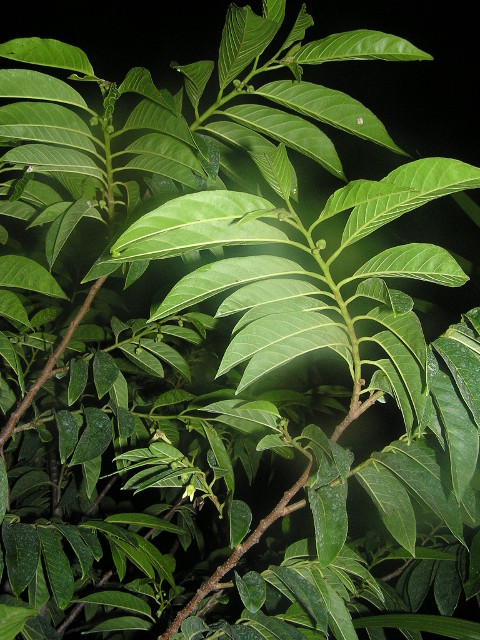
flowers almost hidden under the foliage
Soil Conditions
Like sugar apples, they tolerate many soil types, but do best in rich, loamy compost conditions and reasonably consistent watering.
They require full sun to partial shade. Soil pH should be neutral to mildly alkaline (6.6-7.8pH).
Pollination:
Atemoya bears protogynous, hermaphroditic flowers meaning self-pollination is rare, except for some of the newer named cultivars. The flower, in its female stage, opens between 2-4:00pm, and between 3-5pm on the following day converts to its male stage.
Hand pollination when necessary almost always yields superior quality fruits. Without pollination assistance, the resulting fruit can be misshapen or underdeveloped on one side, or not get pollinated at all.
New cultivars are now being bred that are stronger, self pollinating varieties, leaving no need for hand pollination.
Fruits
Fruit is quite juicy and smooth tasting, and sweet-tart like a vanilla flavored pina colada -- hence the nickname "pineapple sugar apple". Snowy-white flesh is of a fine texture, and no grit.
Atemoya are quite high in Vitamin C, containing about half the daily recommended amount per individual fruit!
Pulp has fewer seeds than the sugar apple and the flesh is not divided into segments. The seeds of course are poisonous, just like the other members of the Annona family of fruits. Fruit can be as large as 5 lbs if nourished properly.
Atemoya fruits typically ripen in the fall in Florida, from August to October. Sometimes they run late into December and January if no early frosts.
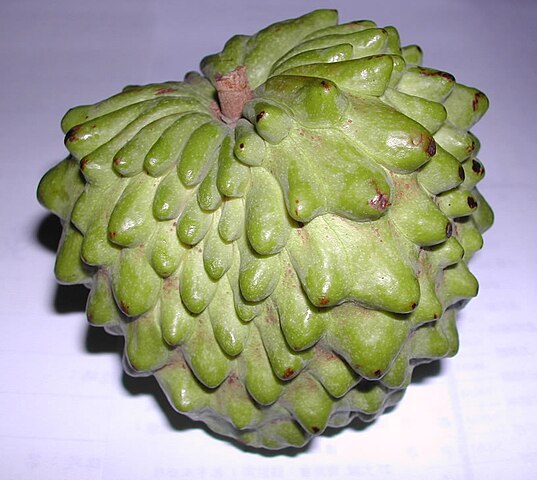
photo courtesy of wikipedia
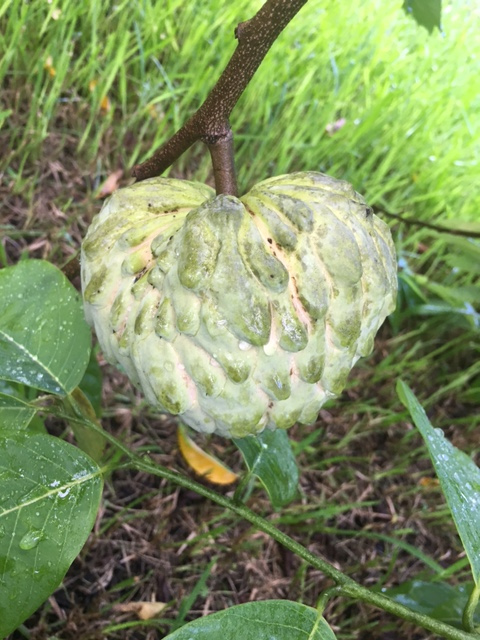
'Australia" atemoya: a large white fruit
Cultivars
'Geffner' is very nice, sweet and highly productive. Geffner is one of the few Atemoya to self pollinate prolifically.
'Lisa' is a soft pink fruit on the inside, some say not as productive as the 'Geffner', but reportedly has outstanding flavor and texture. Zills nursery says the 'Lisa' is just as productive for them, and an excellent, dependable producer.
'Aussie' is a new introduction from Australia for 2017. It was brought to Florida as a seed around 2005 by Fruitscapes.
Aussie is a dependable, heavy producer of large white fruits, inside and out, every year to date since its maturity. It is a prolific, self pollinating Atemoya, with fruit that is sweeter and bigger than the Geffner.
please inquire before ordering any
in the annona family: shortages are real!
Update 2025: We source annonas as you order them: Make sure our expected delivery date is agreeable to you.