
Ruby Sweet Grapefruits
Citrus x paradisi 'Ruby Sweet'
There are currently 3 popular varieties of pink/red grapefruits commonly called 'Ruby Sweet' that are easy to grow in Florida, and not gmo.
Ruby Red
Ruby Red is sometimes called 'Redblush' or even just 'Ruby Sweet'.
Ruby Red is the most well known of the pink grapefruits, since it was discovered in Texas in 1929. It is thought to have been a limbsport of the Thompson seedless (Marsh Pink) variety of grapefruits.
The early season fruits are the reddest, fading to pink by mid-season and nearly white by spring. First citrus variety to be patented (1934). RIPENS OCT / NOV.
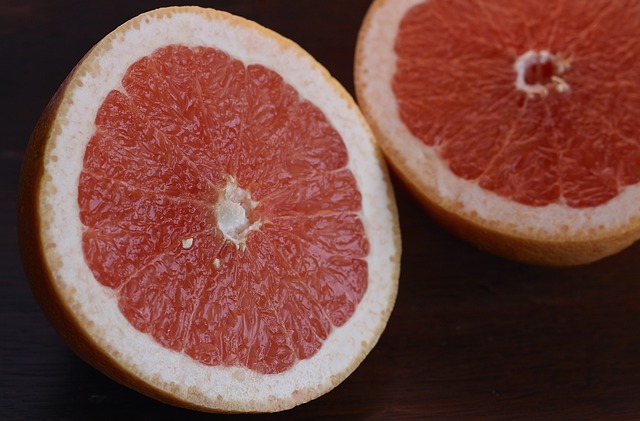
Ray Ruby
Ray Ruby is an improved hybrid of Ruby Red: a useful mutation of the Ruby Red discovered in a Texas grove in 1970.
Flesh color and exterior blush is more red than the Ruby Red, has good fruit size and shape, and excellent yields -- very comparable to the Ruby Red.
Often has less seeds than the Ruby Red. Holds the red flesh color longer into the season than the Ruby Red.
Released for sale in 1986.
RIPENS JAN / FEB. (after Ruby Red)
Flame Grapefruit
Flame is another Ruby Red descendant, originally from a seedling, also found in Texas. Much more cold resistant, down to approx 18 degrees. Ruby Red is usually good to about 21°.
Quite sweet, more red than Ruby Red.
Flame trees appear to be a bit more vigorous growing than the older varieties. Perhaps because the budwood resources are younger trees and not as chemically damages?
RIPENS OCT / NOV, same time as the original Ruby Red.
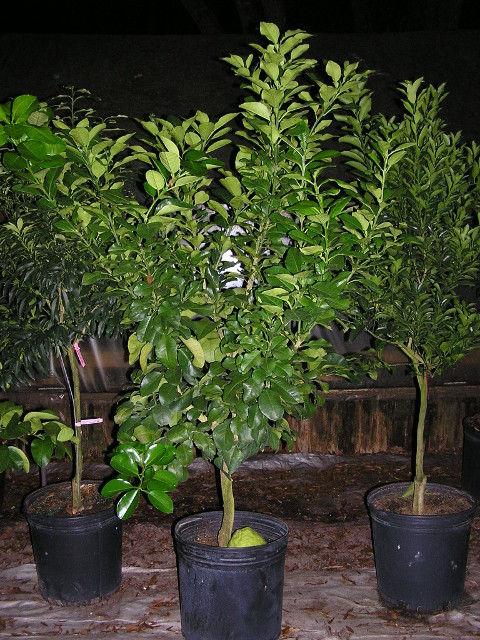
Pink Pummello in 10g oversized
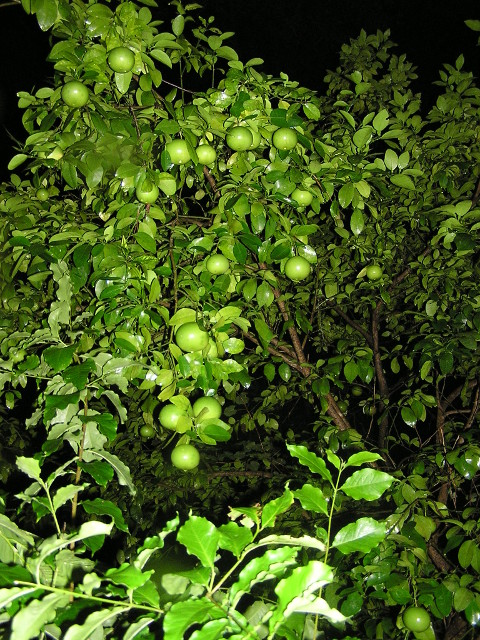
Ruby Red set a lot of fruits
Other Red Grapefruits
Star Ruby
Star Ruby is sweet and the reddest of the red grapefruits. Sometimes called "Sunrise" or 'Jaffa Sunrise'.
Not as hardy as the other two: needs steady heat and humidity but not too much heat, and is less vigorous growing. Fruit is smaller, but has a low acid content, so it is much sweeter as grapefruits go. Ought to do well in 9b.
Update 2022: Star is 'bred' using radiation treatments on the budwood. We will not be carrying this variety.
Rio Red
Also developed using irradiation treatments on the budwood to alter the genes artificially.