
A CONCENTRATE OF FRACTIONATED,
TEXAS RED CEDARWOOD OIL (85%)
blended with an organic carrier, ethyl lactate,
made from organic, non-gmo corn (15%)
a ready-to-use formula for use in a hose end sprayer;
average dilution rate: 4oz conc + 28oz water = 1qt RTU
(1qt conc. makes 8qts RTU: use a hose end sprayer
to further dilute to ~ 80 gal applied product)
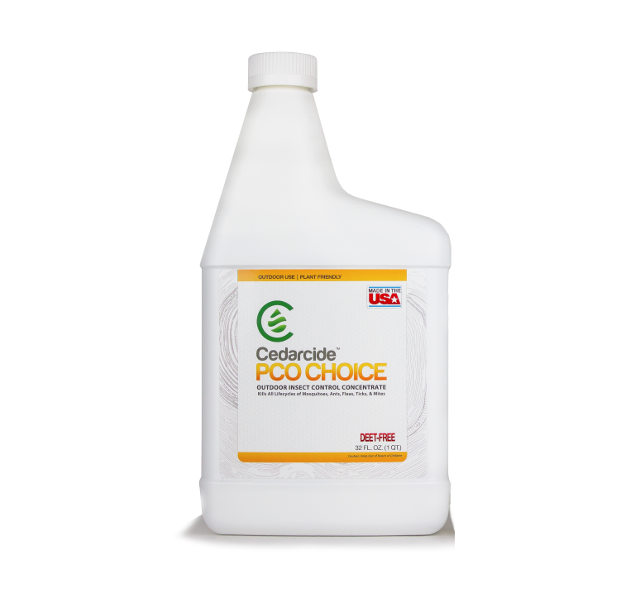
. . . our go-to for all bugs and fungi
Order Here:
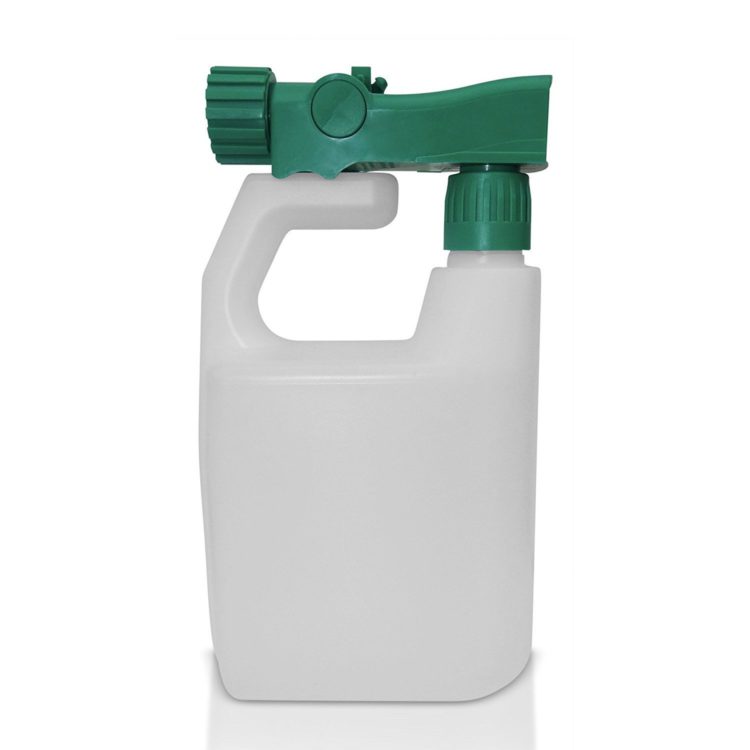
1qt sprayer pre-set to proper dilution rate: $10
1qt concentrate: $85
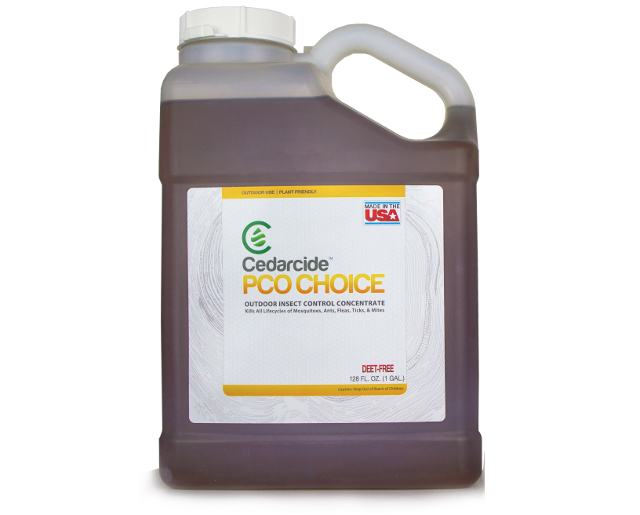
1 gal concentrate: $225 limited availability
If you need the quart sized conc shipped USPS, please use this button to add $10:
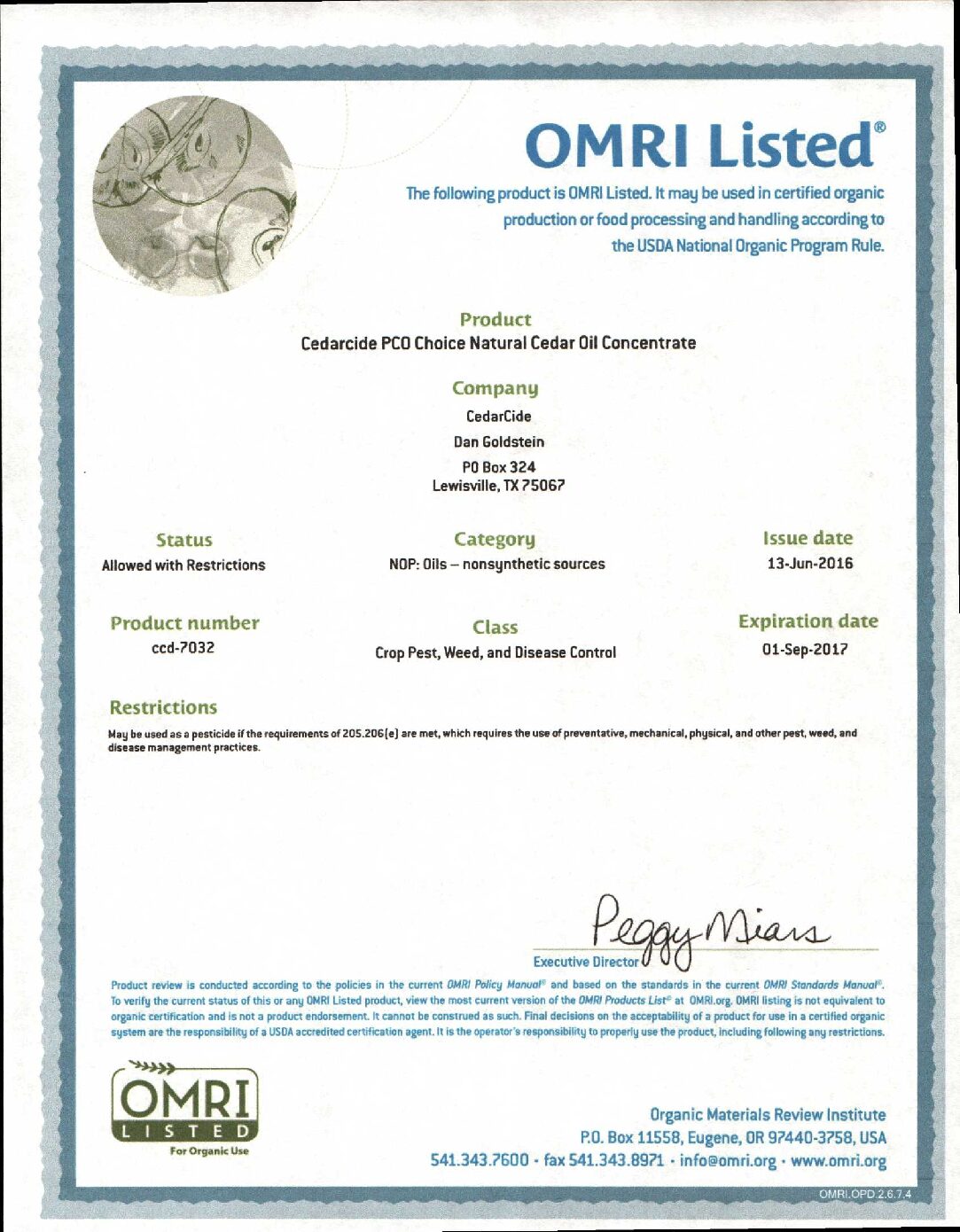
original 2016 OMRI listing
SAFETY PRECAUTIONS
PCO CHOICE is considered safe to children and pets, and has no effect on beneficial insects such as lady bugs, butterflies, bees and amphibians such as frogs and toads when used as directed.
DO NOT USE on or spray around exotic birds or rodent pets, barnyard fowl, or pet reptiles or rabbits. DO NOT SPRAY directly on beneficial insects and bees: high dilution ratios may cause harm if sprayed directly on bees.
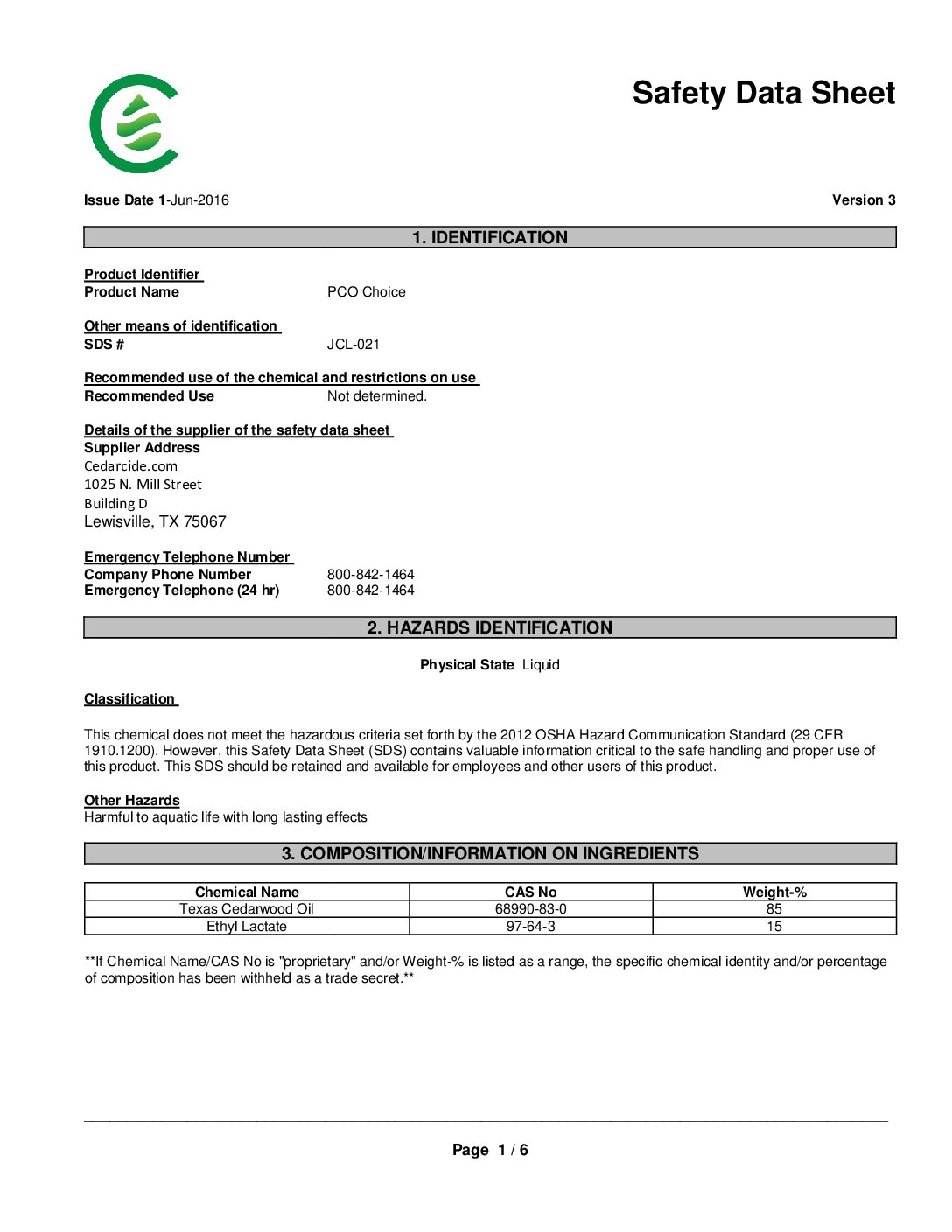
click to download MSDS info
FAQs: What to know:
What Is PCO Choice concentrate?
A safe and natural solution for all your outdoor insect problems -- including natural outdoor mosquito, flea and tick control.
How Does It Work?
From the manufacturer: "... we blend fractionated Red Texas Cedar oil with an organic (made from corn) carrier called ethyl lactate, and water. The ethyl lactate helps the cedar penetrate the insect's shell and also helps dissolve insect eggs, which prevents future generations from hatching."
What Insects Will It Control?
From the manufacturer:
"It controls aphids, scale, mites, ants, stink bugs, fleas, ticks, scales, mealy bugs, spiders, mosquitos, chiggers, scorpions, moths, Japanese beetles, grubs, squash bugs, chinch bugs, mole crickets, pill bugs, palmetto bugs, spider mites, webworms and a whole lot more. It even repels most snakes!"
What About Fungi?
Though not advertised as such, we have observed this cedar oil to stop all fungi we've encountered at our nursery.
How Long Will An Application Last?
From the manufacturer:
It depends on the level of infestation. For light problems, you may go up to 2 months between spraying.
What About Nematodes?
"Cedar oil products are proven to eliminate nematode damage in all applications tested" stated Malcomb Beck, founder of Garden-Ville Fertilizer Co, & world renowned organic scientist from San Antonio, in attendance at a special USDA meeting on cedar oil (2000). (quote at bottom of pg2)
How does YARD SAFE kill insects?
PCO CHOICE is not a poison, but it destroys bugs in 3 ways:
Contact killer
PCO CHOICE cedar oil kills many if not most non-beneficial insects on contact, within as little as 45 seconds or less
pheromones
Cedar oil is a natural essential oil that provides a pheromone interruption agent that impairs the insects mental capacity (fries their brain).
penetrant
The ethyl lactate helps the cedar oil to penetrate the insect’s shell and also helps dissolve insect eggs, which prevents future generations from hatching.
FAQ: Is YARD SAFE / PCO CHOICE BEE Safe?
“Safe for Beneficial Insects, Bees & Butterflies (unless directly sprayed)”
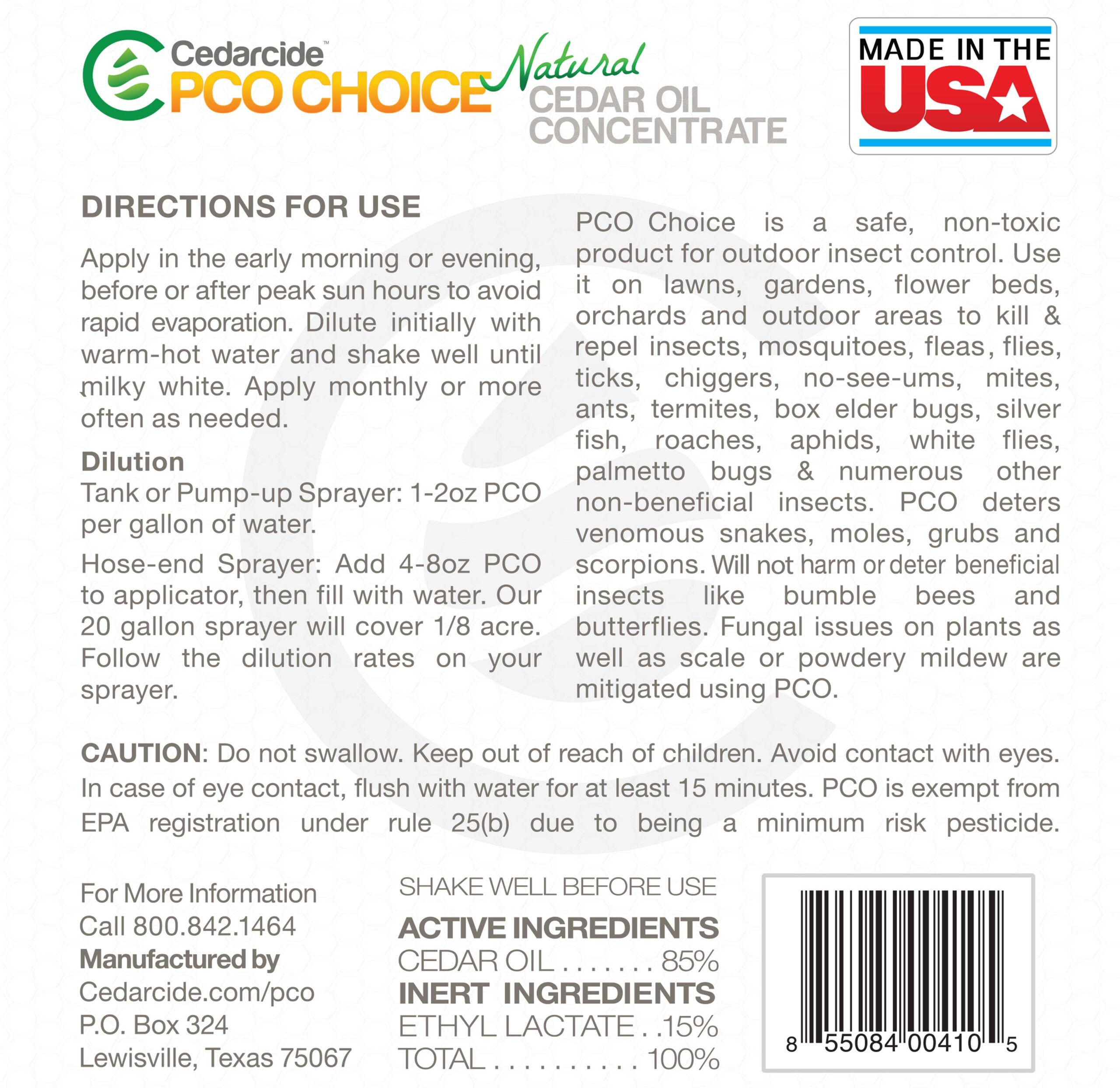
"It has no effect on beneficial and pollinator insects such as butterflies or bees which are sight driven. It will not hurt any of the amphibians or lizard family but will deter snakes from the treated areas."
// . . . found on the PCO Choice' label
"If bees are in the area, they are actually smart enough to fly away."
"If you directly spray a bee, it will potentially kill it, depending on the dilution ratio, but it takes a pretty high dilution ratio to kill a bee, wasp, or hornet. If you are spraying and bees are in the area, they are actually smart enough to fly away. Bees do not use pheromones or chemical trails like ants, but rather have a sensory mechanism that will deter them from harm."
// . . . from the PCO Choice manufacturer
Order Here:
1qt sprayer pre-set to proper dilution rate: $10
1qt concentrate: $85
1 gal concentrate: $225 limited availability
If you need the quart sized conc shipped USPS, please use this button to add $10:
Your source of cedar oil matters:
According to nih.gov, the species of cedar used for oil extraction matters:
“Cedarwood oils are extracted from several members of the family Cupressaceae, which includes true cedars, junipers, and cypresses. In the US, cedarwood oil is harvested mainly from Juniperus virginiana (Eastern red cedar or Virginia cedar), Juniperus ashei or mexicana (Texas cedar), and Thuja plicata (Western red cedar).”
And according to Table 1 (pg 5): Texas cedar is much higher in thujopspene, an important ingredient for insect control.