
If there's only room for one tree,
and you live here in Zones 8a to 10a >>>
then we recommend:
Scarlet Beauty Plum: Prunus "Scarlet Beauty"
. . . one of the best self-pollinating plums for our mild climate.
That means you can have fruit with just one tree.
The Scarlett Beauty is a very early blooming, low chill, Japanese style plum with bright red skin and scarlet streaked flesh. It has medium sized fruit with excellent flavor and softens rapidly. Very heavy bearing.
When grown organically and with drip irrigation, it has excellent flavor and is very juicy. Generally this is a sweet-slightly-tart fruit. If allowed to fully ripen on the tree, fruit becomes wine colored, and flavor turns exceptionally sweet. While many of the fruits are about 1.75-2" in diameter, we've seen some mature to 2.5" in size when given enough food and water in the weeks leading up to harvest.
And while it is truly a self pollinating variety, it generally produces even more if cross-pollinated. Another Scarlett Beauty or even the native Chickasaw plums make good pollinators.
It requires only about 150 chill hours and is well suited to zones 8a-9b, and even zone 10a. (Some nurseries also include zone 7, but that's a bit too cold most winters.)
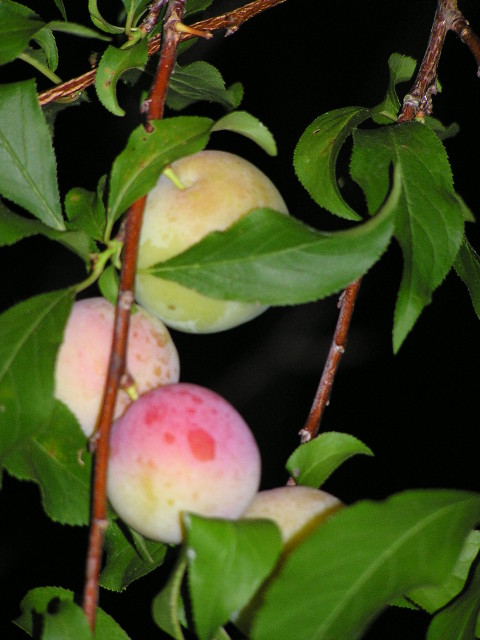
Here's proof from our gardens! This is what the fruit looks like in April, about 2-3wks b/4 it's ripe.
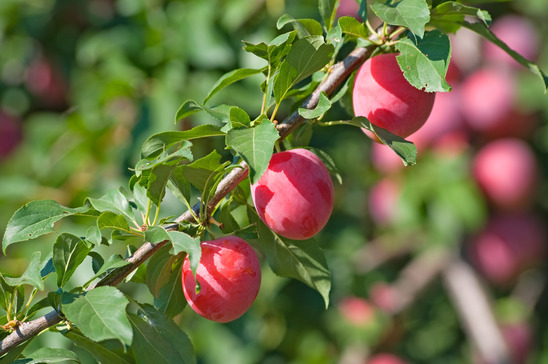
Scarlett Beauty sets fruit prolifically.
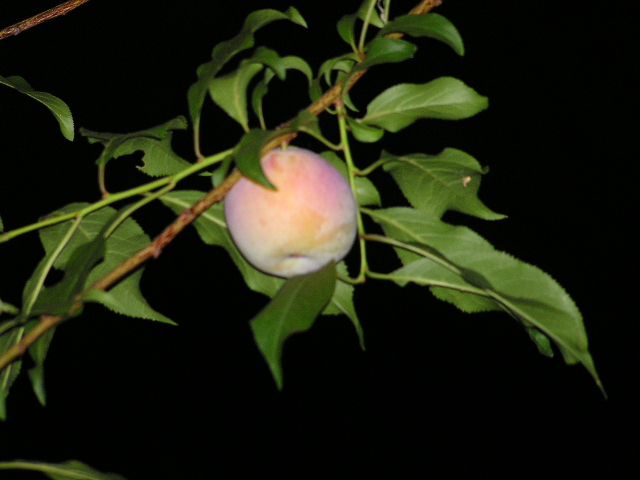
# 2
Scarlett Beauty is one of the first plums of the season to ripen, approximately early May. It will ripen late April if you live in zone 10b, and late May if you live in zone 8a.
And remember, the ultimate flavor is determined by how you feed it: organic soil amendments that are high in trace minerals (70+) will produce the most depth of flavor.
# 3
Planting more than one variety of plum trees can extend your harvest period for 3 to 4 months, depending on your zone. We carry several choices of Japanese plums as well as some interesting new Chickasaw heirlooms.
These are all excellent choices for Florida, but some have geographical limitations within the state, as noted in the chart below.
While some of these varieties are said to be partially self fertile, most varieties require a pollinator from another variety and all will show increased harvests from having a second (different) tree nearby.
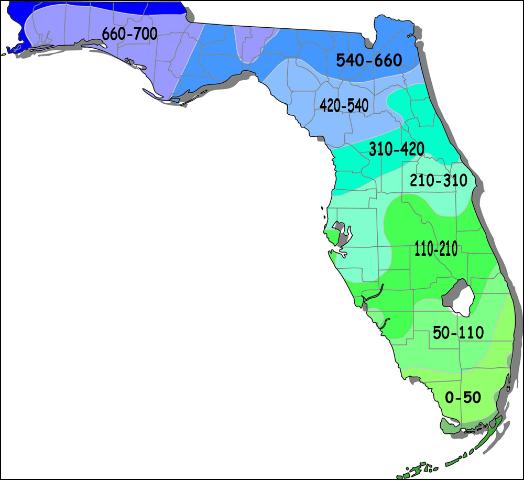
IFAS chill hours map
For all of zones 8a, 8b, & 9a:
(includes south of Gainesville to north of Ocala & Brooksville)
Japanese plums:
Prunus salicina
Japanese plums are a development of the breeding programs initiated by the famed botanist Luther Burbank from Santa Rosa California. As a general rule they do much better in warm climates than their European counterparts. Most require 700 to 1000 hours in the chilling range to trigger blooming, but here below are a few that are perfectly suited to Florida in the range of 100 to 500 chill hours.
low chill
Japanese plums
125 to 400 chill hours
SCARLETT BEAUTY
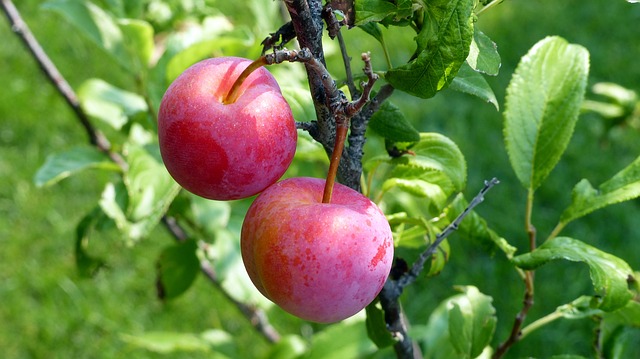
Scarlett Beauty is a very early blooming, low chill, Japanese style plum with bright red skin and scarlet streaked flesh. It has medium sized fruit (1.5"-2.5") with excellent flavor and softens rapidly.
Fruit is sweet-tart when still bright red, becomes fully sweet when it develops a wine blush.
Very heavy bearing.
Developed in lower 9a zone by plant breeder Ronald Lambert of Wachula, FL; a close friend of Dr. Robert Dunstan.
Ripens late April to mid-May
chill hours: 125 - 150
for zones 8a, 8b, 9a, 9b & 10a
LARODA PLUM
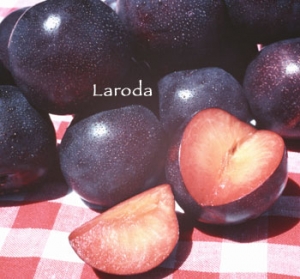
Laroda is a large, firm, purple-black plum with an amber colored flesh streaked with red. Its sweet, wine-like flavor makes it one of the more highly favored of the Japanese plums. Very juicy.
While it is freely pollinated by Santa Rosa in CA, we observed our Laroda to be pollinated by Scarlett Beauty (2019). The Laroda, in turn, served as a pollinator for our Bruce, as it was still blooming when the Bruce began to bloom.
Laroda was developed in Winters, CA at the California Agricultural Experiment Station in 1943, and released in 1954.
Ripens end June through July
chill hours: approx 250-400
for zones 6-9a
CATALINA PLUM
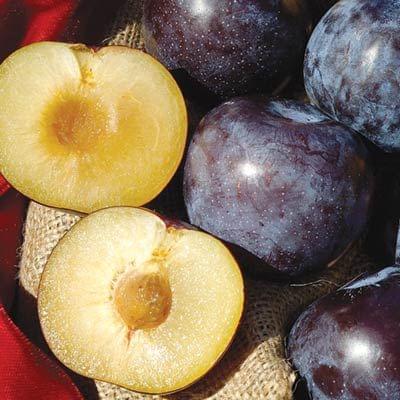
Catalina is another large, firm, purple-black plum for fresh eating. Sweet, very juicy, white flesh, with very little tartness to the skin.
Catalina is somewhat self-fruitful, and is often used as a pollinator for Laroda in CA. It very well may be a good choice as a pollinator for the Laroda in Florida.
Requires approx 250-400 chill hours.
Harvest dates from mid July to early August. Vigorous, high yielding tree.
zones 6-9a.
Ripens mid July to early August
chill hours: approx 250-400
for zones 5-9a
GULF BEAUTY
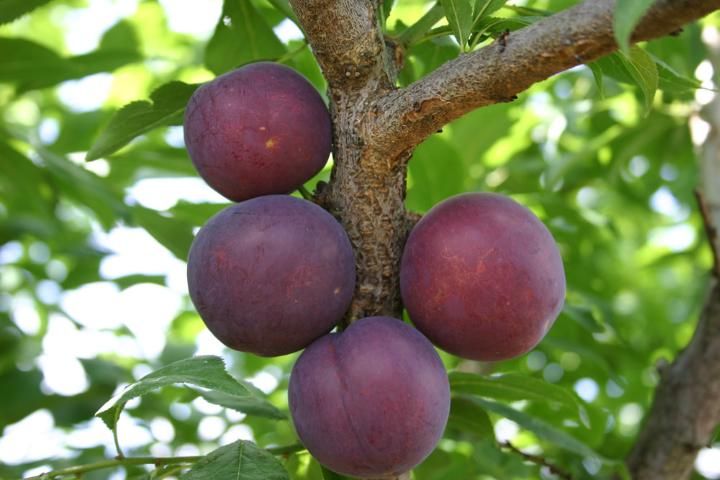
Gulf Beauty (UF 1998) is a medium sized tree, 12-15' tall x 10+' wide, with a semi-spreading habit.
Partially self fertile, but sets more heavily if cross pollinated.
Almost 2" plums are quite juicy and firm. Mostly sweet, slightly tart fruits are a deep red to wine-purple outside, yellow inside.
This plum is "chill hour adaptable" meaning it breaks bud variably according to where it's planted. Per IFAS, it breaks bud at 150 chill hr in Immokalee, but as late as 400 chill hr in Tallahassee.
Ripens late April to mid-May
chill hours: 125 - 150
for zones 8a, 8b, 9a, 9b & 10a
HOLLYWOOD PLUM
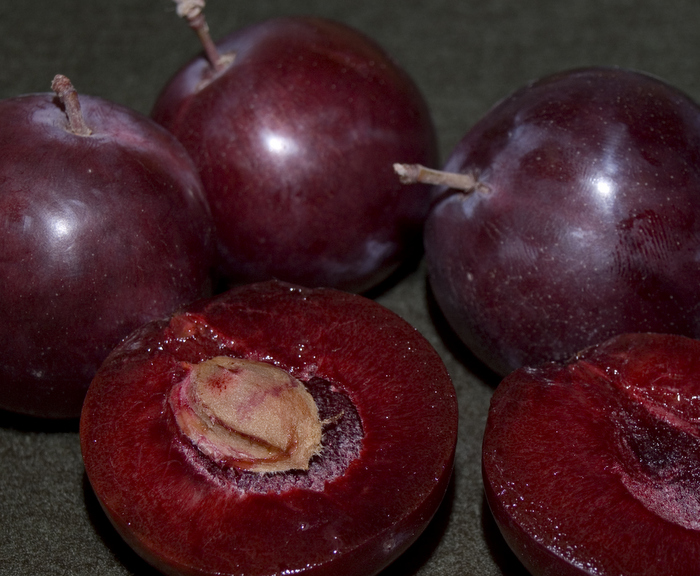
Hollywood is a delightfully sweet, mid-sized plum (2.5-3"), with a deep maroon red flesh and skin. Fruit holds well on the tree longer than many others in Florida.
All new growth on the Hollywood emerges a deep wine red which then fades to a dark green after a few weeks.
Hollywood was introduced commercially in 1936 in CA. Commonly found on grocery store shelves for that reason.
Abundant producer, self fruitful.
Ripens late June to mid-July
chill hours: 250-400
for zones 5-9a
BURGUNDY PLUM
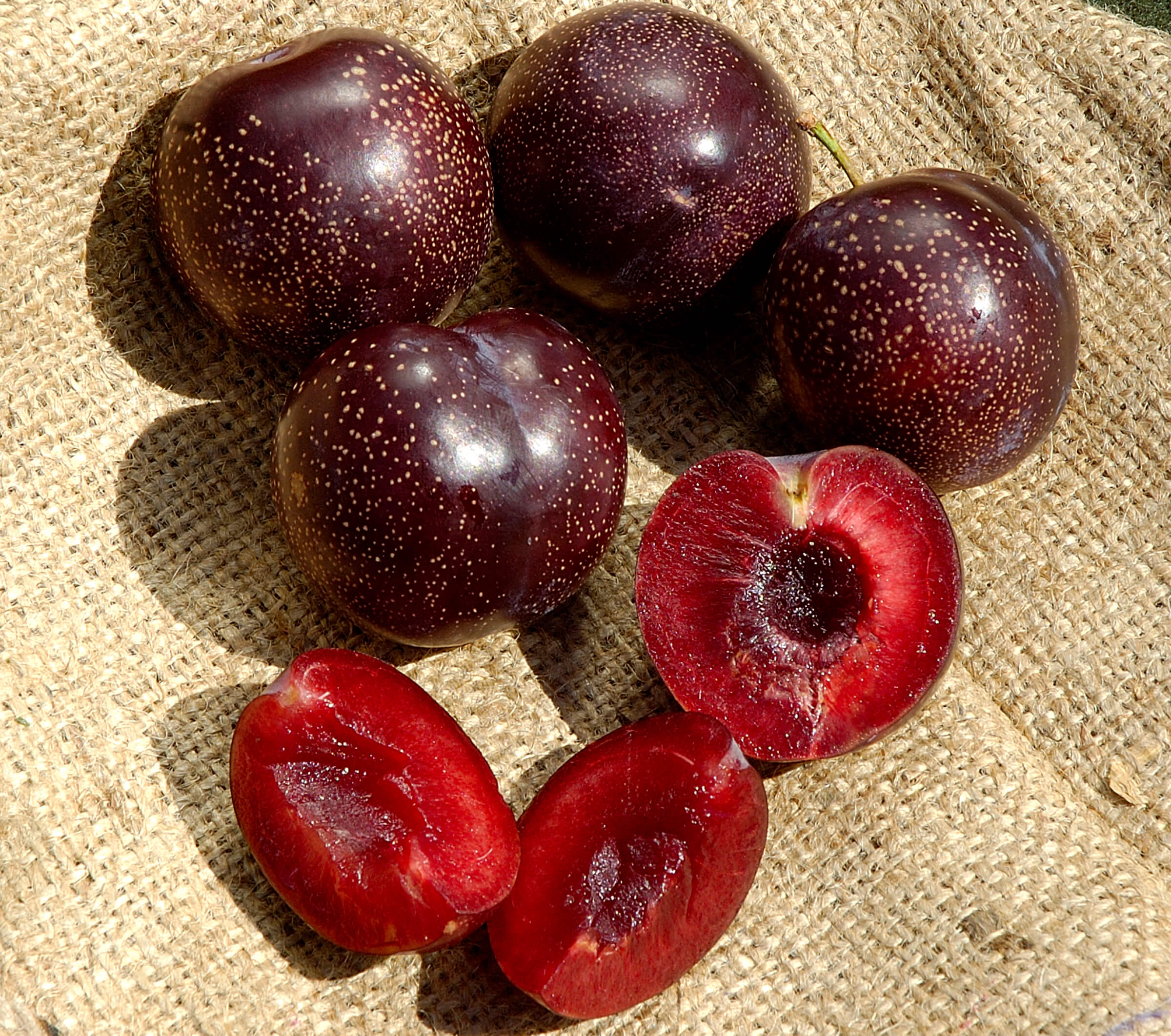
Burgundy plum has both a deep maroon colored skin and flesh. Fruits are quite sweet, with very little tartness. Winner of many taste tests in CA.
Vigorous growing trees with deep green foliage with very upright growth habit and nice branching.
Prolonged harvest from mid-July to mid-August. This is the latest ripening of all our plums.
Vigorous, high yielding tree.
Ripens mid-July to mid-August
chill hours: approx 250-300
for zones 5-9a
HYPOLUXA

Hypoluxa is a little known variety of Japanese plum that does well throughout most of Florida, especially zone 9b.
At just 125-150 chill hours, Hypoluxa is perfect for even zone 9b, and is found as far south as Immokalee and WPB.
Very prolific.
It is a purple-red skinned, medium sized plum that is generally one of the first plum of the season to ripen, very early in May. Red flesh with lots of juice and quite sweet tasting.
Ripens Mid to late April
chill hours: 125 - 150
for zones 8b to 10a
BRUCE PLUM
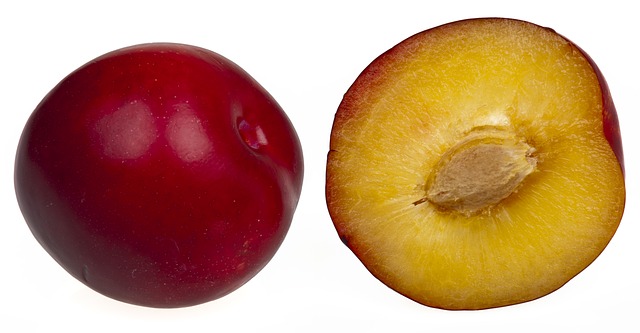
Bruce Plum is a prolific producer of large, very juicy, wine-red fruit, on a medium sized tree -- approximately 12' tall at maturity. It is actually a hybrid of a Japanese variety and our native Chickasaw plums.
Plums are juicy-sweet enough to eat fresh from the tree, and yet firm enough for canning. Bruce requires about 400 chill hours.
Note: our winter 2019 registered only 406 chill hours, and the Bruce plum trees set fruit easily; it appears to have cross-pollinated with the Laroda black plum.
semi-freestone
Ripens mid to late June
chill hours: 400
for zones 7b - 9a
SANTA ROSA
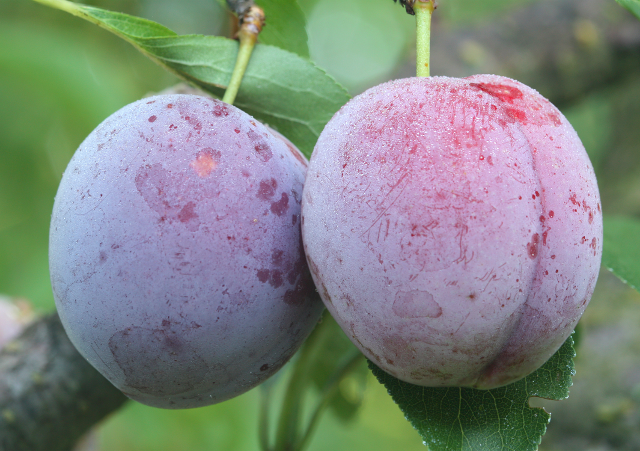
This extremely popular Luther Burbank original is one of the later ripening varieties for North FL.
It generally ripens closer to mid July, maybe even as late as early August. It is semi- self pollinating, but it produces a much more reliable and bountiful harvest when paired with either the Bruce plum or the Burgundy plum.
Medium to large sized, freestone, reddish-purple, with firm red flesh. Santa Rosa plum trees grow to about 12 feet tall at maturity.
Ripens early to mid-July
chill hours: min 400
for zones 5-9a
For all of zones 8a-9a, and some of 9b:
Chickasaw plums:
Prunus augustafolia
Typically, our native Chickasaw is a 1/2" sized fruit that is somewhere between sweet-tart and very tart. It makes great jams, though eating it fresh is "for the birds". It can be useful as a pollinator for some of the Japanese plums when found in the nearby woods, as is the similar native Flatwoods plum. Below are 2 recently found heirloom varieties that produce sweet, 2" fruits! Enjoy!
new
Chickasaw plums
NATIVE CHICKASAW
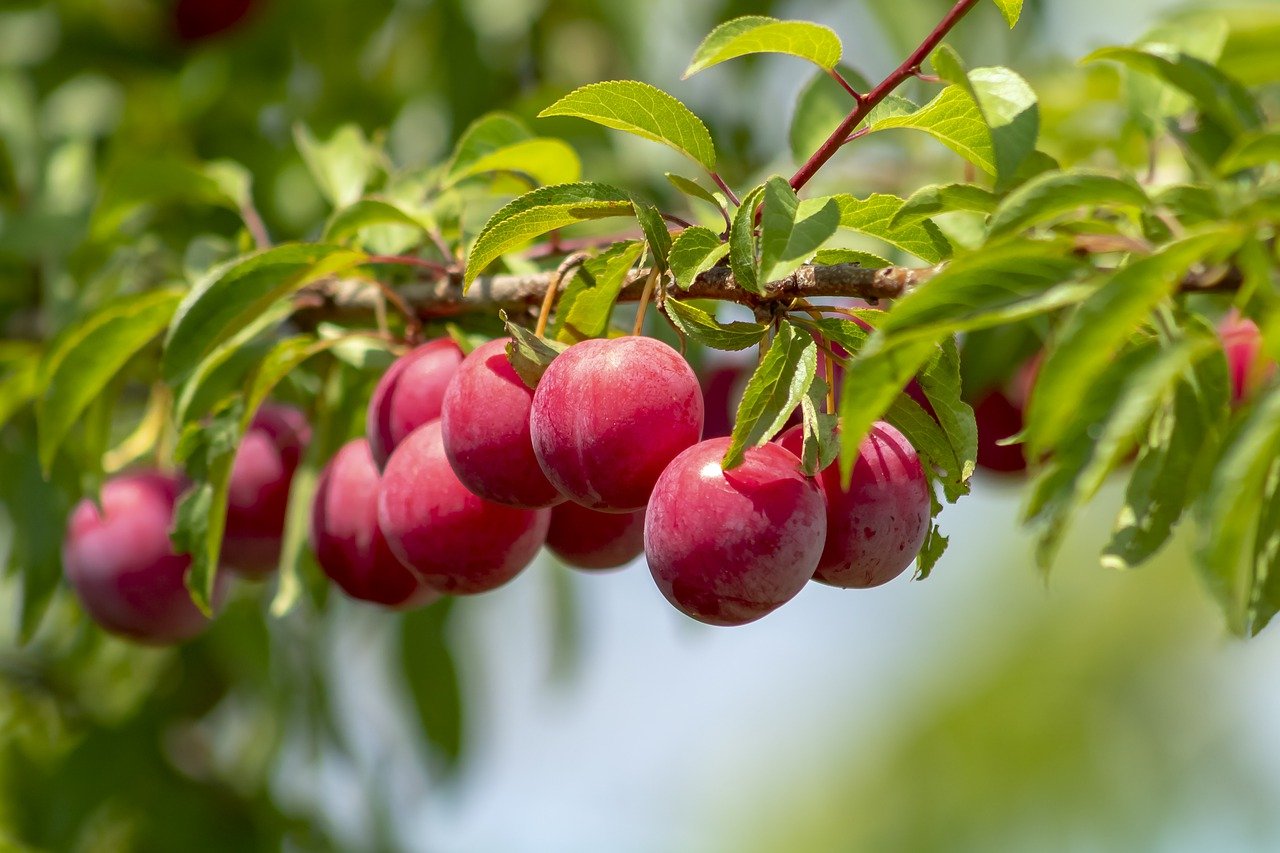
Chickasaw plums are one of the first to bloom in spring, yet the small 1/2" to 3/4" yellow-red fruits don't ripen until June in Florida. Fruit flavor ranges from mildly sweet-tart to sweet, and is often either used in jams and jellies or left for the wildlife.
The small leaves are quite slender and easily confused with the native Flatwoods plums. Chickasaw need about 200 chill hours and so are found in North Florida and parts of NW Central Florida, but stop short of I-95 on the east coast as a rule, and just shy of Tampa on the west coast.
Flatwoods (Prunus umbellata) are found throughout the state, even to the southern tip. Though they look very similar, Chickasaw leaves will have a slight yellow or red tinge in the margins of the leaf, not so on the Flatwoods. And the fruit of Flatwoods will be black or yellow, and continue to ripen into late summer and fall, with more range of flavor from extremely bitter to sweet.
Native Chickasaws tend to grow as a multi-trunk bush, or in clumps like a thicket. Flatwoods tend to grow a single trunk and are often found growing individually.
Ripens June to early July
chill hours: approx 175-200
for zones 5-9a
LEE'S RED
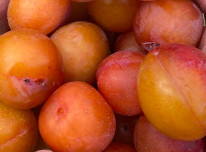
Lee's Red is an improved Chickasaw heirloom variety found in North Florida. It flowers abundantly in early spring, beginning right after the Scarlett Beauty. The sweet, 2" fruits ripen in late June to July and are a bronzy-orangish color with a beautiful red blush.
Like the native Chickasaw, Lee's Red is strongly self pollinating.
If propagated from cuttings, the trees will naturally sucker and form a bush habit. They also tend to send runners underground and "sprout" from the roots. Our trees are grafted to encourage a standard form of growth. Cutting grown specimens will take several years to fruit. Grafted trees are already fruiting in our super 7g & 15g sizes.
We estimate Lee's Red to need about 200 chill hours to fruit, much like the native Chickasaw, though we'd like to see those limits tested. While this is a new introduction for us (2021), it could prove to be a helpful pollinator for other low chill varieties.
Ripens late June to mid July
chill hours: approx 175-200
for zones 5(?)-9a
LEE'S YELLOW
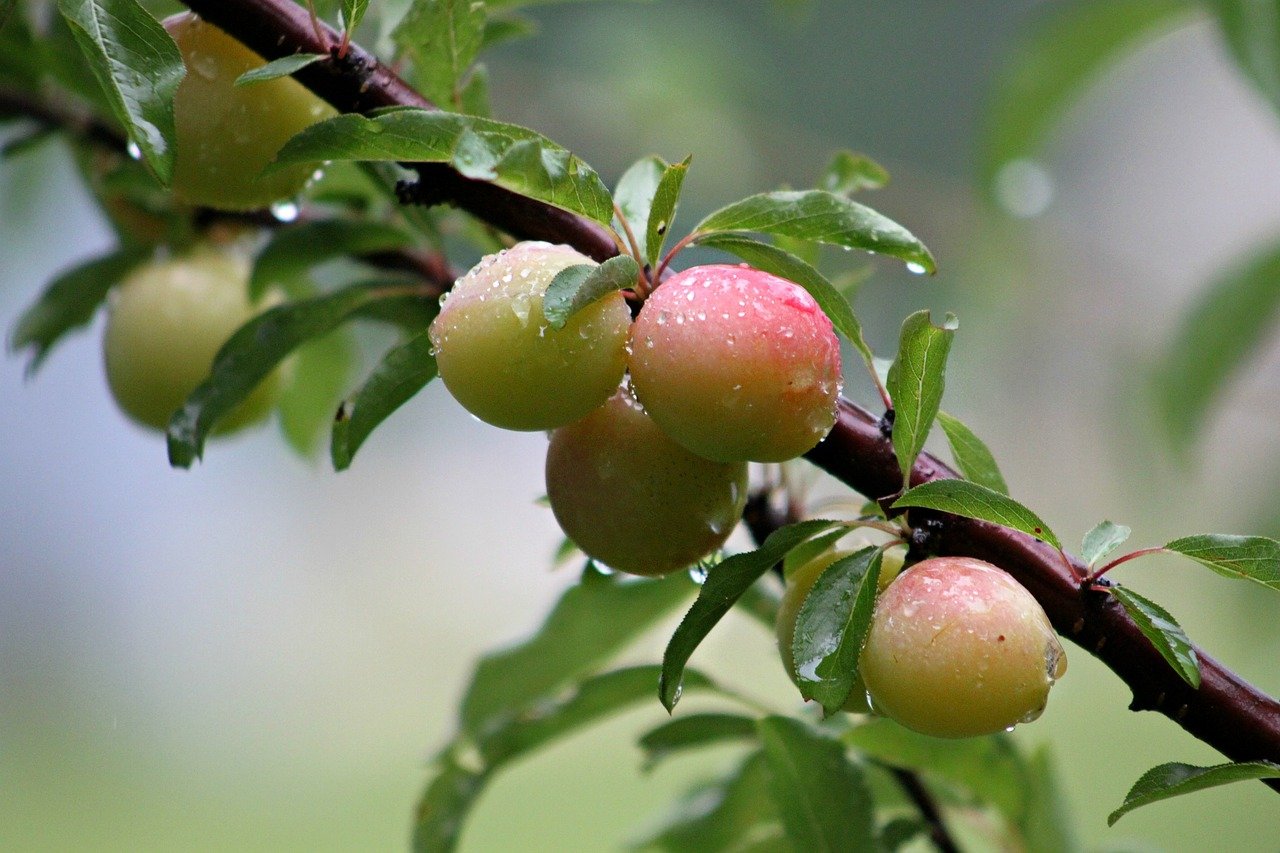
Lee's Yellow is also an improved Chickasaw heirloom variety found in North Florida. Showy white flowers in early spring blanket the bare trunks like snowflakes. And just like the native Chickasaw, Lee's Yellow is strongly self pollinating.
The sweet, 2" fruits in late June to July are a deep yellow with a pink blush.
Typical of a Chickasaw, Lee's Yellow natively grows multi-trunks and freely sends up new trees from the roots, 5-10 feet away from the parent tree. For this reason, we have grafted trees so that they are easier to maintain in the home landscape as standard form fruit trees.
Overall height at maturity is estimated to be 12-15' on average.
Until proven otherwise, we estimate Lee's Yellow to need approximately 175-200 chill hours to fruit.
Ripens late June to mid July
chill hours: approx 175-200
for zones 5(?)-9a
Call us to order or
Order online below:
not all varieties available in all sizes:
please call or email to check availability before ordering
NO TEXTING!
Beginning Bearing Age in 7gal >>> REG 7G $49 & X-LG 7G $69:
see specs in chart below
Want a serious orchard size tree now?
order 15gal / $99 & X-LG 15G $135
15G: 7'-8'+ /4-5' wide / 1.25"
super 15g: 9-11' tall / 6'-7' wide / 1.5" trunks
best availability is in Jan / Feb each year
update Fall 2025: no Santa Rosa or Bruce;
and no Native Chickasaw or Lee's Yellow this season;
most plums available as 15g, some super 15g, a few super 7g;
heights & widths adjusted below for plums:
plums are short and fat when young, compared to peaches and nectarines
4 gal
1-2 yrs+ to fruit
5-5.5' tall / after trimming
$
29
/ea
we are no longer stocking this size: most common size at many nurseries;
7 gal
beginning to fruit
approx 5.5-6' tall
$
49
/ea
ltd availability
super 7 gal
good fruiting age
approx 6'-6.5' tall
$
69
/ea
ltd availability
15 gal
heavy fruiting:
Orchard-ready trees
some have already had fruit
7-8' tall / trimmed
$
99
/ea
super 15 gal
serious bearing age
9-11' tall / trimmed
$
135
/ea
ltd availability: please contact us before ordering
approx sizes pictured below . . .
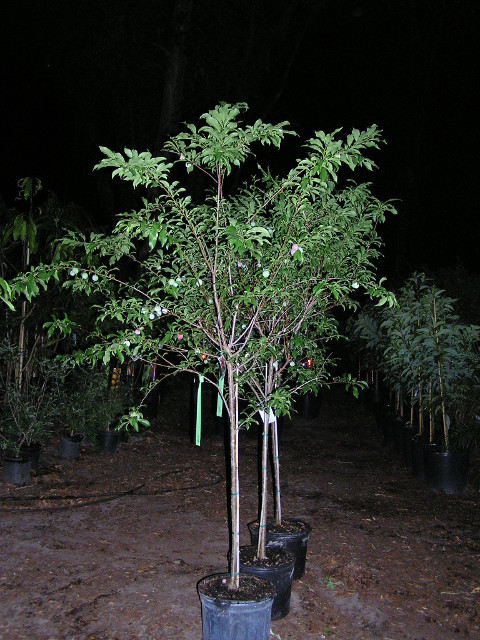
7G = 7 gallon
approx 5.5-6' tall
x 2' wide
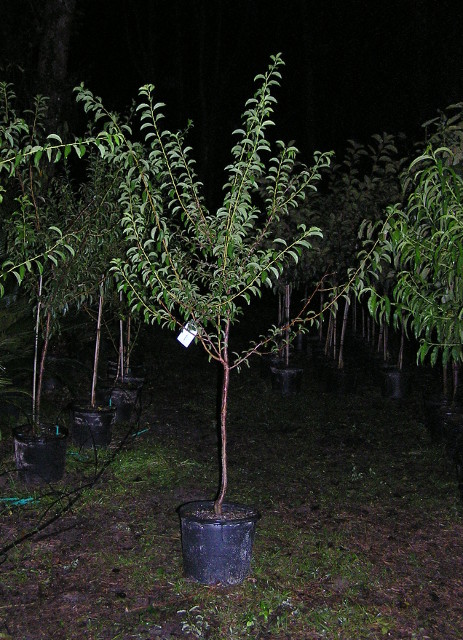
7G
super 7G
approx 6-6.5' tall
x 3' wide
super 7G
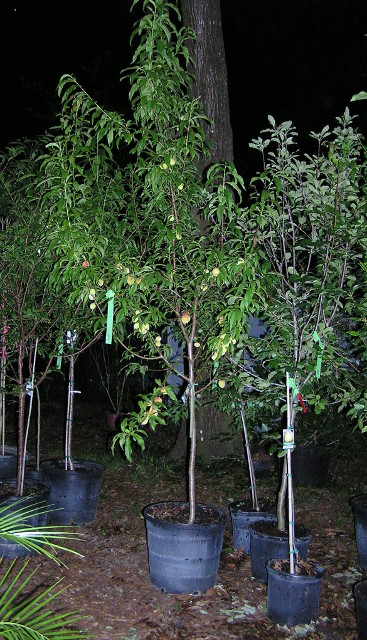
15G = 15 gallon
7-8' tall / trimmed
4-5' canopy spread

15G
super 15G
9-11' tall / trimmed
6-7' canopy spread
super 15G
A few observations:
If you live in Zone 8b, 9a or 9b:
We recommend growing at least 2-3 varieties of plums to accommodate the variety in our winters, and the pollination variances that result. The same two varieties don't always cross pollinate each other here when the frost dates are drastically different from year to year. 3-4 varieties is better.
Milder winters will result in the Scarlett Beauty bearing prolifically, while the Santa Rosa will thrive on much colder weather. In severe winters, the Santa Rosa & Bruce combo will produce a lot of fruit in zone 8b. On a milder winter, Bruce will need Laroda for pollination instead.
With the addition of more low chill and self pollinating plums such as Lee's Red and Lee's Yellow, we hope to solve some of these pollination issues for this part of Florida. We should also have the Hypoluxa ready for Fall 2022.
The reason for all this winter temperature variance is this part of north and central Florida is what you might call a transition zone. It's an area where the cold fronts push in from the the north and northwest, and roll to a stop, equally balanced by the warm fronts rolling north, primarily from the southwest. Where those two forces collide changes with the wind faster than you can blink, and brings us 80 degree days followed by 20 degree nights in the same week at a moment's notice in January and February.
Welcome to Florida!
Understand that young trees will not do as well with the weather extremes as more established trees. You may lose a small Scarlett Beauty altogether if you plant it and get very late, hard freezes the very first year it blooms. On the other hand, a more established Scarlett Beauty will survive quite well, but not have much fruit if at all that year.
But since you also planted a Laroda or a Santa Rosa with your Bruce, you'll have a great crop of plums anyhow!
Good for you! 