
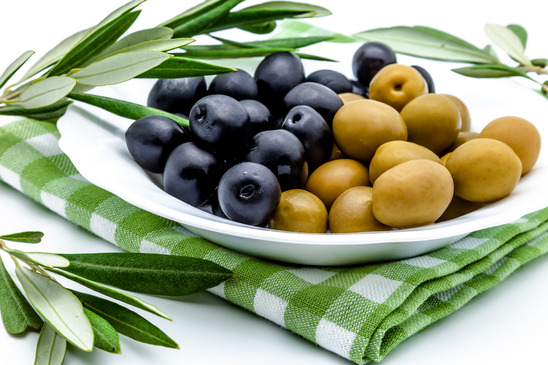
Do I want green olives or black olives?
So you're probably asking yourself, which should I grow? Do I want green olives or black olives?
This one is a no brainer: they come off the same tree, just picked at different times! Green olives are unripe olives, harvested while still green. A black olive is simply a green olive left to fully ripen. Either one is a bit bitter until soaked and fermented to get rid of the bitter elements.
Order your trees below.
Arbequina Olive:
an easy to grow, yummy,
Spanish Black Olive
The Arbequina olive is a small, dark brown, almost black olive that originates from Catalonia, Spain. It is cultivated widely in Argentina, Chile, Australia and more recently, California and now Florida.
It loves long, hot dry summers and thrives best in alkaline soils, though it is highly adaptable to many soil conditions. For best results, don't plant under an oak or pine tree --- that would be too acidic.
Features
Arbequina olives are mostly self-fertile and begin fruiting at an early age. Use the Arbosano for a pollinator to get a more prolific harvest -- but it only adds about 5% to the harvest. Home orchards will do well with just the Arbequina and no pollinator.
They resist frost well, being hardy to at least 22°, and adapt easily to climate changes. They are the most cold tolerant of all the olive varieties. Although they can be grown in zones 7-10 (with some protection in zone 7), it is safer to say zones 8-9 are more ideal.
Plant closer together to protect from heavy freezes, or simply cover a young tree with a blanket. This cultivar should reach about 12' to 15' at maturity here in Florida, and has a weeping form to its branches. Evergreen.
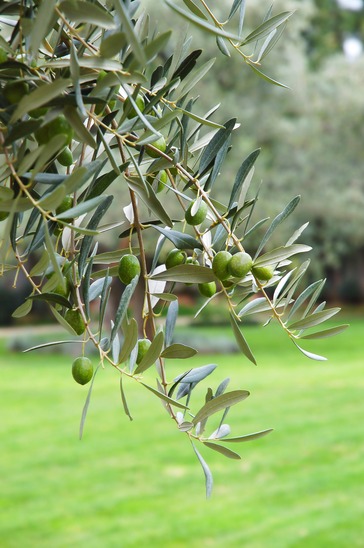
nearly ripe olives on tree
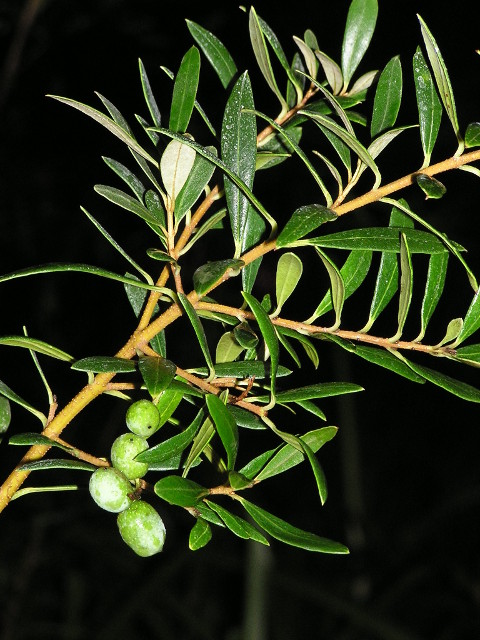
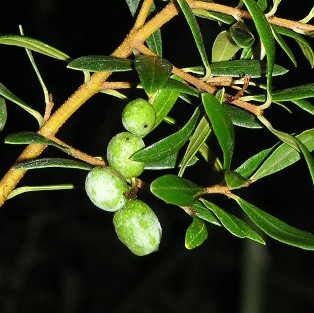
fruit set on an olive tree in our nursery
Oil Content
Arbequina is good both as a table olive and for its oil. At 20-22%, it has one of the highest concentrations of olive oil. It is a very flavorful olive. Fragrant spring blossoms are followed by masses of green fruit in the heat of summer. Olives are picked typically in the winter, as they ripen, from November to March, but in Florida the season of ripening is late August to October.
Pollination
Most growers will tell you the Arbequina olive is self fertile -- and it is. And for most home orchards, no other variety is needed for pollination.
But it is also true that you get an increase in fruit set when you pair the Arbequina with either an Arbesano, Koronieki, or Frantoio. Arbesano is the most often recommended. Cross pollination typically increases the yield by 5%, a significant difference for the commercial grower.
Cold Tolerance
Arbequina is the hardiest in Florida of the 4 varieties mentioned above, and the most cold tolerant. Typically, it withstands hard freezes down to 15-18 degrees. Wind protection at extreme lows is always a good idea. Best in zones 8b to 9b.
A Bit of Trivia:
Nothing says “Mediterranean” faster than the ancient olive tree. The olive tree has long been the symbol of wisdom, abundance and peace.
The olive tree and its olive oil have become one of the basic necessities of life in Greece. It was so precious to the ancients, the Greek poet, Homer, even described Greece’s olive oil as “liquid gold”. Present day Greece is said to have something like 143 million olive trees.
It takes about 6 kilos of olives to yield 1 kilo of olive oil.
The Spanish explorers were the first to bring the olive to the New World in the 1500’s. It thrived in what is now Peru and Chile. By the 1700’s it reached California. The Arbequina Olive is the Spanish variety and is the primary olive oil tree grown in both California and Florida today.
Photo credits: ancient olive tree photographed by Rein Post, courtesy of Channel R
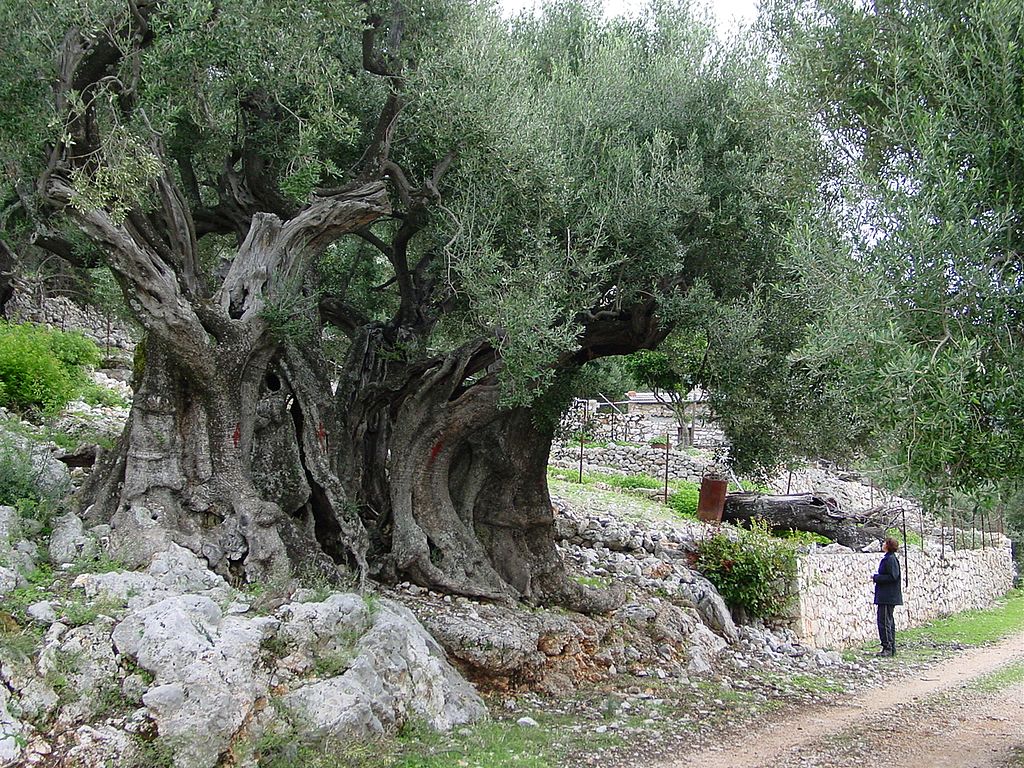
Olive tree in Ithaca, Greece, that is claimed to be at least 1500 years old.