
Almond Trees
Prunus dulcis
Almond trees are a deciduous nut tree in the same family as peaches, nectarines, cherries and plums. Blossoms may be pink or white, and most varieties need a second tree for pollination.
Some varieties are a modest 10-15' tall, many grow to 20' tall. Most almonds love water with good drainage, but do not thrive in a humid environment. Rather, they prefer a hot, dry summer to mature good "fruits" i.e. nuts. However, most are suited to temperature zones of 7-9.
That said, there are a few sweet almonds that have been bred to be self-fertile, and are considered "low chill" varieties, and suited to zone 9 temperatures.
So all this suggests that rainy Florida is NOT suited to growing almonds. Unless of course we'd like to entertain growing some under a hoop house canopy -- depends on how badly you want almonds!
In our quest to find a self fertile, semi dwarf almond that may adapt to Florida otherwise, we've identified several candidates. All seem to be hybrids of almonds crossed with peaches. Thought we would share this information here, since we are constantly fielding the questions about "why not almonds?"
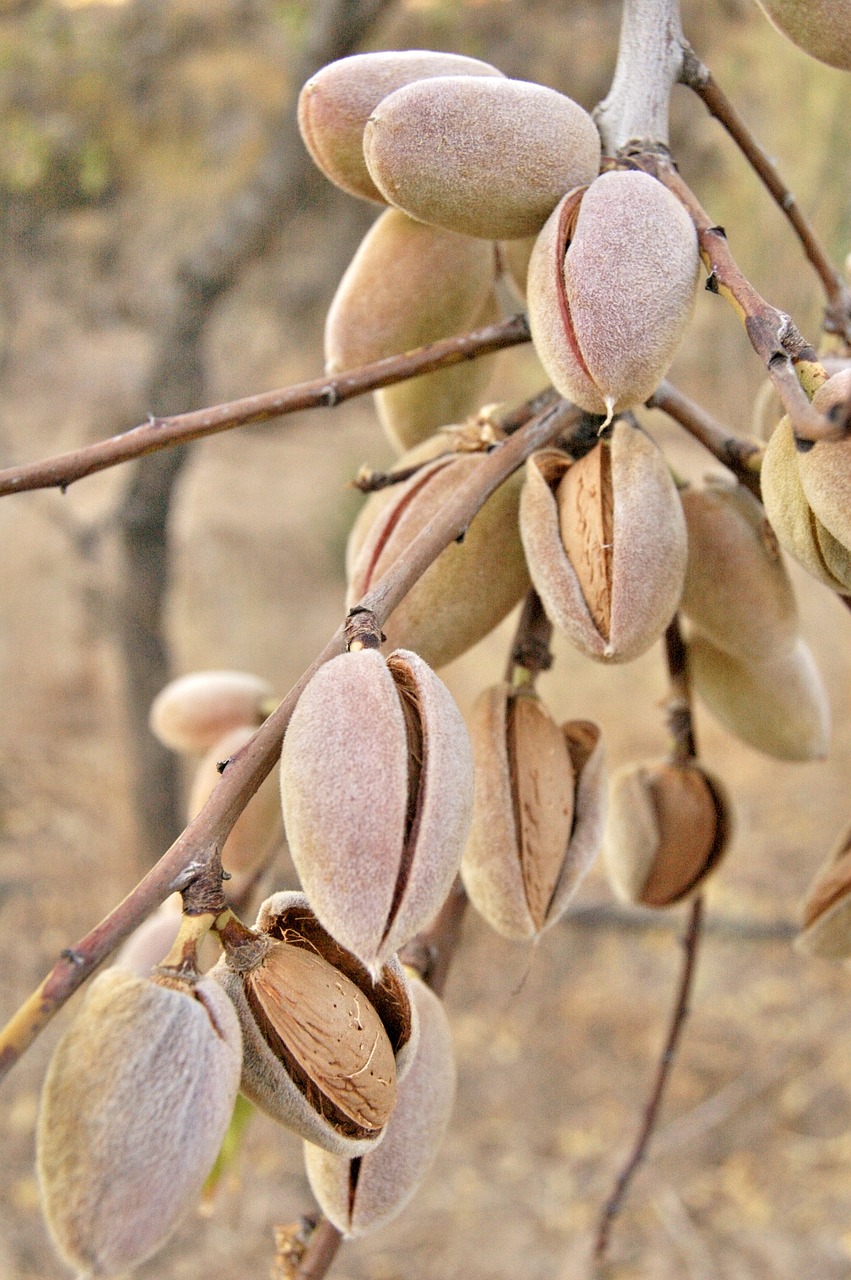
ripe almonds on tree
These first 3 are commercially available only. Not available to the backyard grower, but listed here because the trees exist and they have desirable, amazing characteristics.
Independent®
Prunus dulciss x Prunus persica
Commercial variety: patented 2009 as "Alm-21" by Zaiger et al; read more
n/a to home growers.
Self-fertile; needs 400 chill hours;
Sets a heavy crop of high quality nuts with fewer bees needed.
Nuts ripen nearly all at once, making harvesting efficient as it requires only one shaking.
Ripens early: 2-3 days before Nonpareil: approx Aug 28-Sept 13.
Interspecific variety: hybrid of both almonds and peach: [(Almond x Peach) x All-in-one Almond].
Originally budded on Nemaguard rootstock.
Liberty®
Commercial variety: patented 2021 as "Alm-754" / Zaiger et al; read more
n/a to home growers.
Self-fertile: needs ~450 chill hours;
Sets a heavy crop of high quality nuts without the need for bees: wind pollinated. Very good quality nuts are well sealed, soft shelled,
Vigorous, fast, upright growing to approximately 12' tall. consistent bearer, no alternate bearing. Very similar to Nonpareil, but self fertile.
Ripens later: approximately 5-10 days after the Nonpareil. Sept 1-10th.
Interspecific hybrid, crossed with peach: the result of several such generations. Originally tested on Nemaguard rootstock.
Yorizane
Prunus dulcis L
Commercial variety: dev. by the USDA therefore royalty free; orginally named: "Y116-161-99"
Self-fertile: no bees needed, wind pollination only. Strong self pollination usually equates to a heavy fruit set.
Flavor and nut quality rivals that of the NonPareil, the gold standard of almonds.
Bred to be a tall variety for easy machine harvesting.
When grafted to an almond/peach hybrid rootstock called Bright's Hybrid 5, it produces a vigorous growing tree with the highest yields.
These two varieties are available to the "dooryard" market: that's us, the home owners.
Garden Prince
Prunus dulcis x Prunus Persica
Very compact growing, lush natural dwarf: maximum height 12' tall. If container grown, about 8-10' height.
Self-fertile; needs only about 250 chill hours; best suited to zone 9.
Bears young and heavy. Large, light pink blossoms. High quality, medium sized nuts: sweet and flavorful. Ripens Sept 30 to Oct 20.
We recommend container growing, at least for awhile, to achieve maximum water control. Somewhat slow growing.
Patent expired.
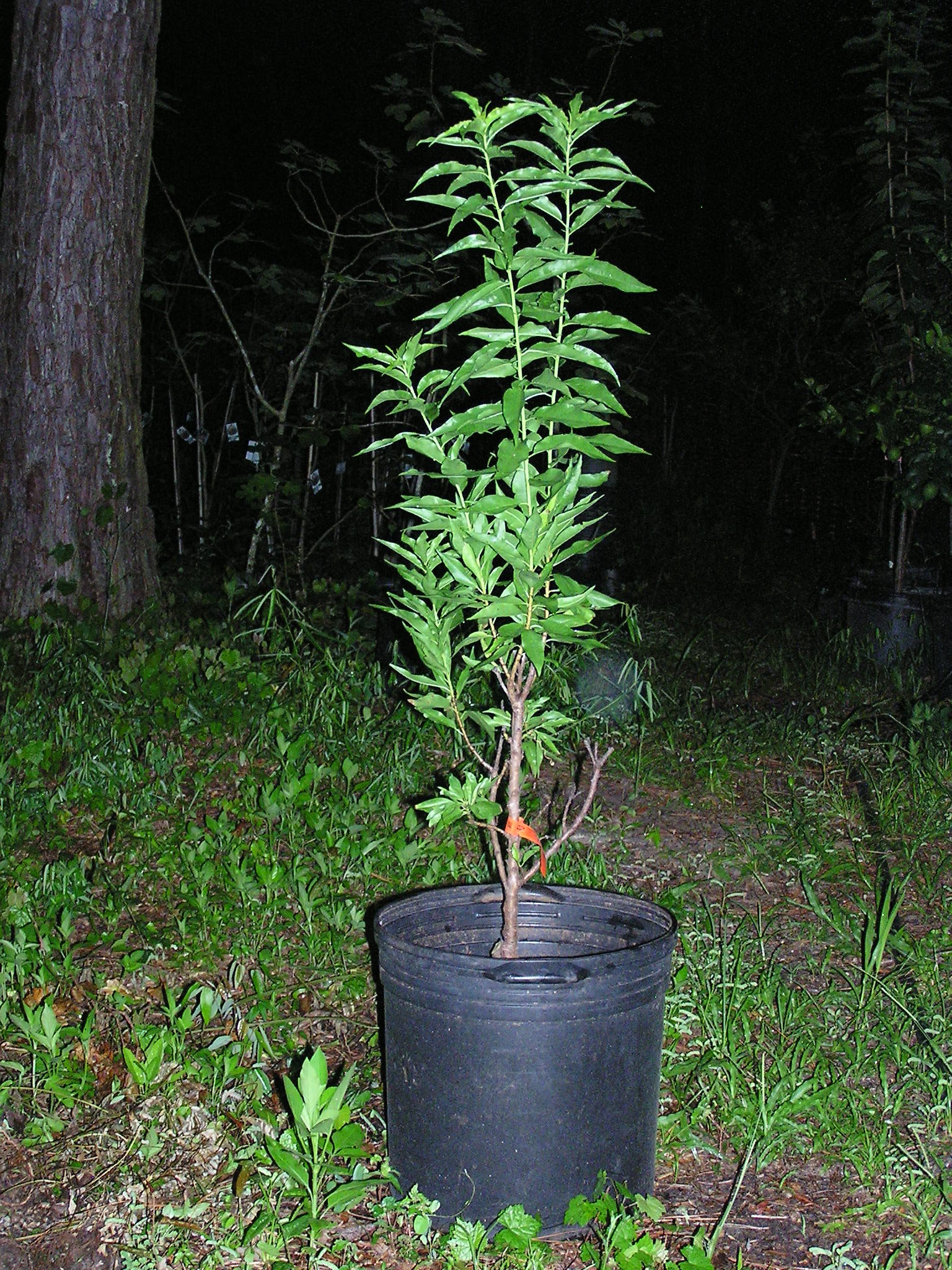
10g Garden Prince: approx 3.5' tall
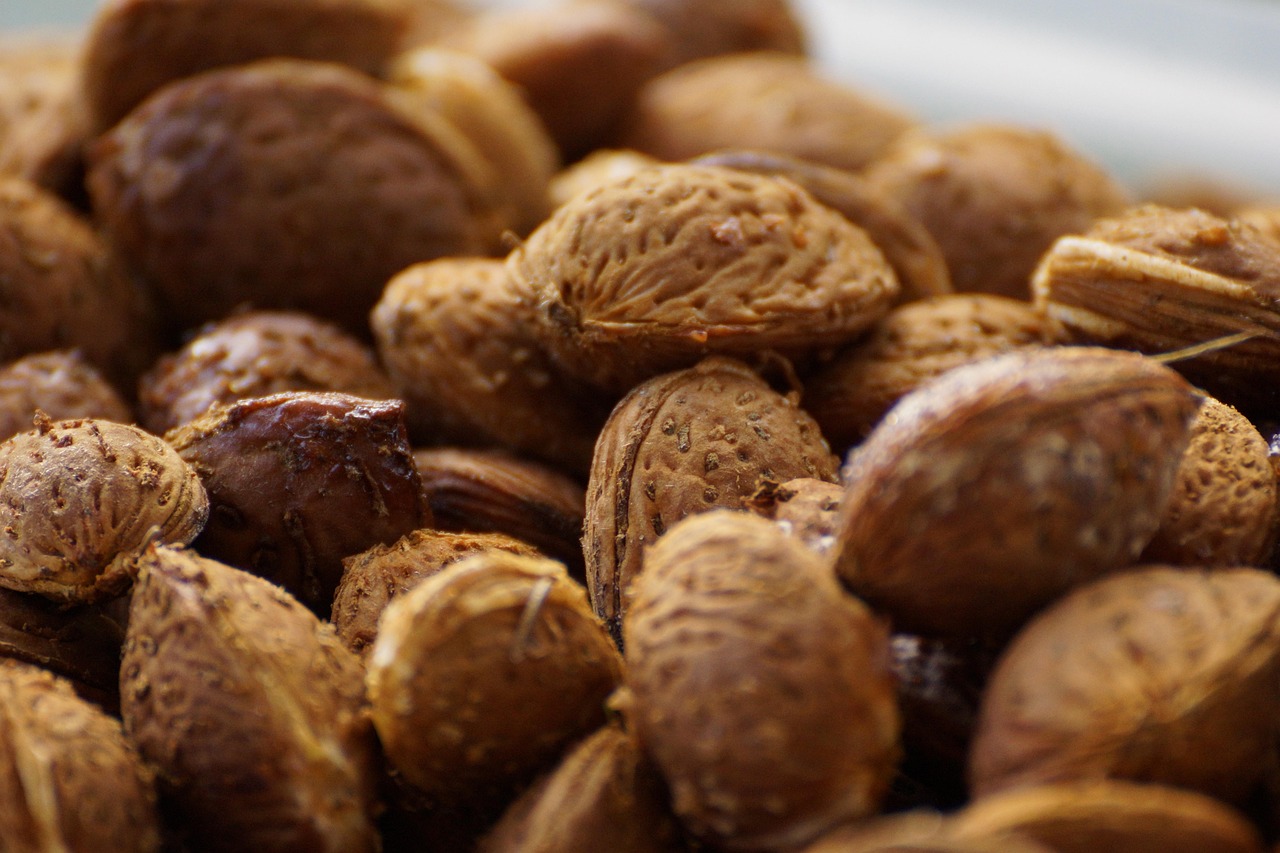
Reliable
Prunus dulcis x Prunus Persica
Fast growing to 18' tall; very upright: Not for container growing!
Self-fertile: needs about 250 chill hours. (zone 9)
Heavy bearer of 'rich and flavorful' nuts.
Ripens "late summer": end of August ?
No inventory yet for 'Reliable': Stay tuned.