
Research has shown that a healthy tree has far more resistance to pests than a stressed tree. That much we know.
But what about Citrus greening?
UF entomologist Michael Rogers is working with industry and the Organic Center to research holistic organic solutions for citrus greening. The Organic Center is a 501(c)3 non-profit research and education organization based in Washington D.C. Their Board of Trustees is made up of a diversified representation of many leaders and educators in the organic industry.
More research into organic solutions needed.
From the OrganicCenter.org:
"Currently, the most common method for controlling citrus greening is by spraying large amounts of synthetic pesticides such as neonicotinoids. These toxic sprays have had only limited success, and have been responsible for large-scale bee die-offs. Other non-organic research has focused on creating GMO varieties of citrus trees resistant to citrus greening."
"Additionally, conventional strategies have not yet proven effective and have contributed to policy decisions that are not compatible with organic management. For example, applications of synthetic pesticides have been mandated as an eradication method in California citrus groves, including certified organic groves, in regions where the psyllid has been detected, but no organic alternatives have been offered as substitutes for these mandatory spray regimes."
There is very little research proving effectiveness of organic alternatives one way or the other. Or providing protocols for the organic farmer to follow. The Organic Center aims to change this:
"The Organic Center has launched a multi-year research project in collaboration with Ben McLean of Uncle Matt’s Organic and University of Florida entomologist Michael Rogers to find holistic organic solutions to controlling citrus greening organically. This project will determine the efficacy of labeled organic pesticides for controlling the Asian citrus psyllid, develop protocols for organic growers struggling with citrus greening, and examine naturally occurring organic trees resistant to citrus greening that can be bred to create non-GMO citrus greening-resistant varieties of citrus."
Chemical sprays are actually making the psyllid population worse.
From the UNFI Foundation.org:
"To top it off, the chemical sprays are killing natural predators of the Asian citrus psyllids. This means that immediately following a spray, levels of psyllid populations dip, but then they rebound to levels above what they were before the spray because their natural predators, like lady bug beetles, are no longer around to keep their populations in check."
Organic fruits start with good soil health.
Two Organic Insect Control Products
that work for us.
Here at our nursery we use only organic methods of controlling pests. Though the Asian citrus psyllid has been found in Alachua County, we have yet to see evidence in any of our trees.
We use 2 approaches to general bug control: topical spray on the leaves as we see evidence, and pro-active soil drench sprays to kill unwanted larvae and more.
Our favorite: CEDAR OIL
Cedar oil is an excellent soil drench product that helps to restore proper soil chemistry. It is water friendly, so use after a rain extends its coverage deeper into the soil. Not all cedar oil products are the same -- read more. We also use on the foliage, but just when you actually see bugs or damage.
It kills the negative fungi and bacteria in the soil, allowing the positive fungi & bacteria to flourish, which in turn nourish the immune system development of the plants. USDA research (Dr Joe Bradford, PhD. from 1990's) shows it effectively kills unwanted nematodes.
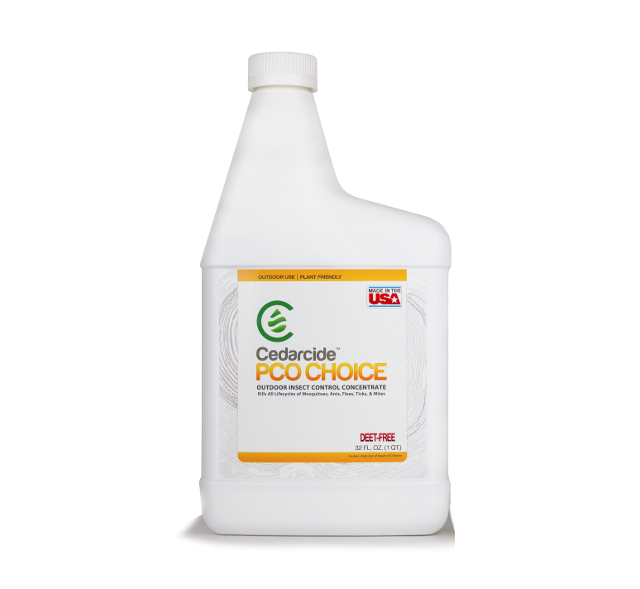
We stock PCO Choice quart sized concentrate for use in a hose end sprayer: makes nearly 80 gallons. Gallon jug bulk refill also available.
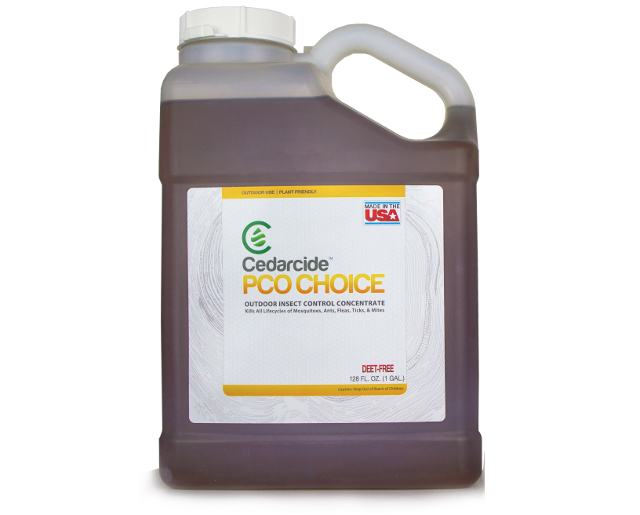
Many of our unwanted insect pests spend part of their life cycle in the soil. Treating your soil in the fall interrupts the bug procreation cycle by killing the larvae in the soil, reducing the bug population the following year. We treat at least 4 times a year for thorough coverage, including mosquito control: ~ Nov, Apr, June, August.
It doesn't just repel mosquitos: it kills them!
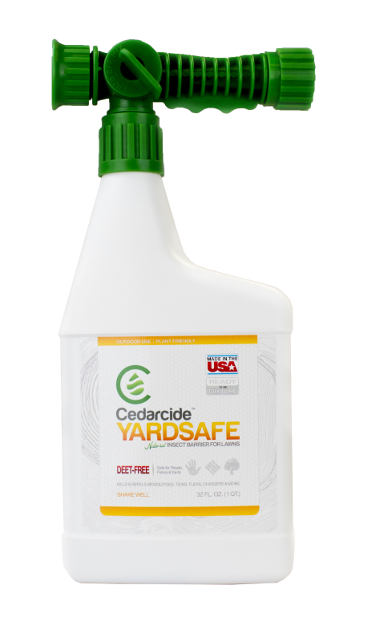
Yard Safe cedar oil is a blend of modified, Texas red cedar oil and ethyl lactate (made from non-gmo organic corn) and water. PCO-Choice cedar oil is the concentrate / refill form of the Yard Safe, and much less costly. Not sold in retail stores: order online or buy it from us before you have the bugs.
2018 update: the spring / summer following our first use of this cedar oil we noticed a marked decrease in the quantity of black aphids and leaf minors on our personal citrus orchard. And plenty of bees, ladybugs etc.
Organocide: the easiest to find in a pinch for spraying the foliage
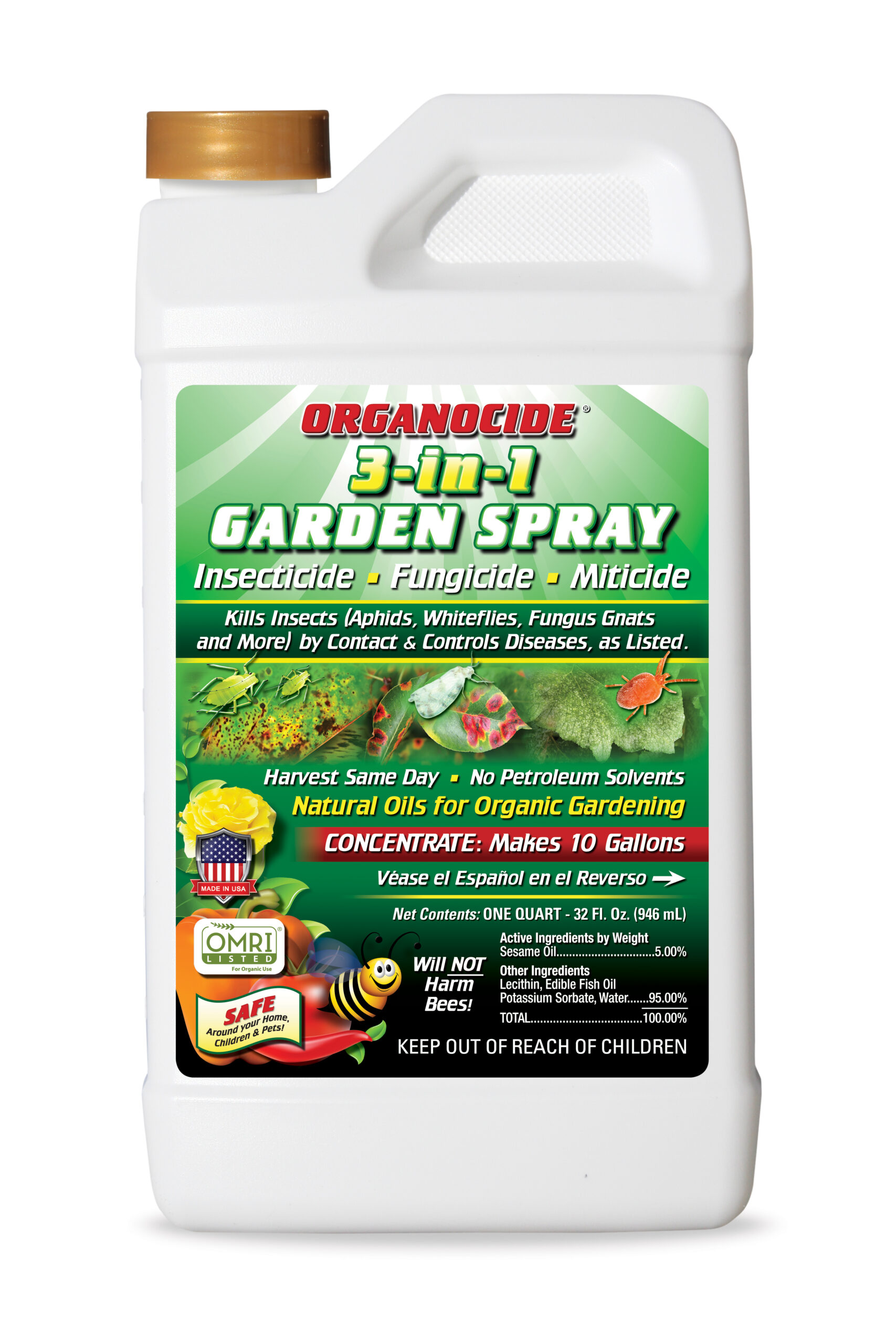
Organocide 3-in-1 is an organic insecticide, fungicide, & miticide that we have used quite effectively at our nursery. Available in retail stores, it is a quick, easy solution for an all-in-one topical pest control.
Organocide 3-in-1 is packaged in concentrate form: one quart conc. makes 20 gallons.
Predatory Insects
There are many predatory insects that attack the Asian citrus psyllid. The ladybug, spiders, hover flies, and lace wings are just a few examples. Using chemical means of controlling pests is harmful to these predatory helpers as well.
We encourage anyone wanting to grow citrus to consider an organic gardening approach. We believe that harmony with nature is the best way to win this war. Nuking the pests with chemicals just stresses the trees that much more, so any pests left behind can have a field day.
Happy Gardening !