
ALLSPICE
Pimenta Dioica
Source of commercial Allspice.
Highly fragrant leaves remain fragrant even when dried.
Very upright tree to about 60'.
best grown in Zones 10 - 12: keep from freezing if in zone 9b. 9a is possible, only if you have a greenhouse.
Folklore:
"Allspice" earned its name in the 1600's by explorers trying to describe the spice's unique, aromatic flavor. It produces a small blackish-brown berry, much like a peppercorn, that smells and tastes just like cinnamon, nutmeg and cloves.
Christopher Columbus's crew thought it resembled black pepper, hence the name "pimenta" stuck, though it is an unrelated species.
Growth habit
In its native tropical environment of the Caribbean (Jamaica) and Central America, allspice can reach between 20-40' tall on average, maybe up to 60' tall, and 15-25' wide. In Florida, expect something more like 15-20'. If grown in a large container, it will be even more dwarfed: maybe only 6-10' tall.
Allspice grows very upright, with little branching as a young tree.
Trees are 'dioecious' meaning they come in male and female forms. Some of the males are actually hermaphroditic, though not all are. There is no way to tell one from the other until they are very large trees and bloom. So growers suggest planting three trees minimum -- that gives you about a 90% chance of having one of each.
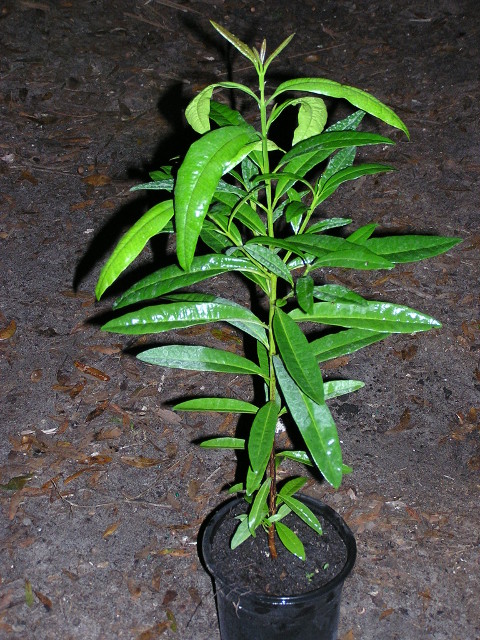
2g allspice tree
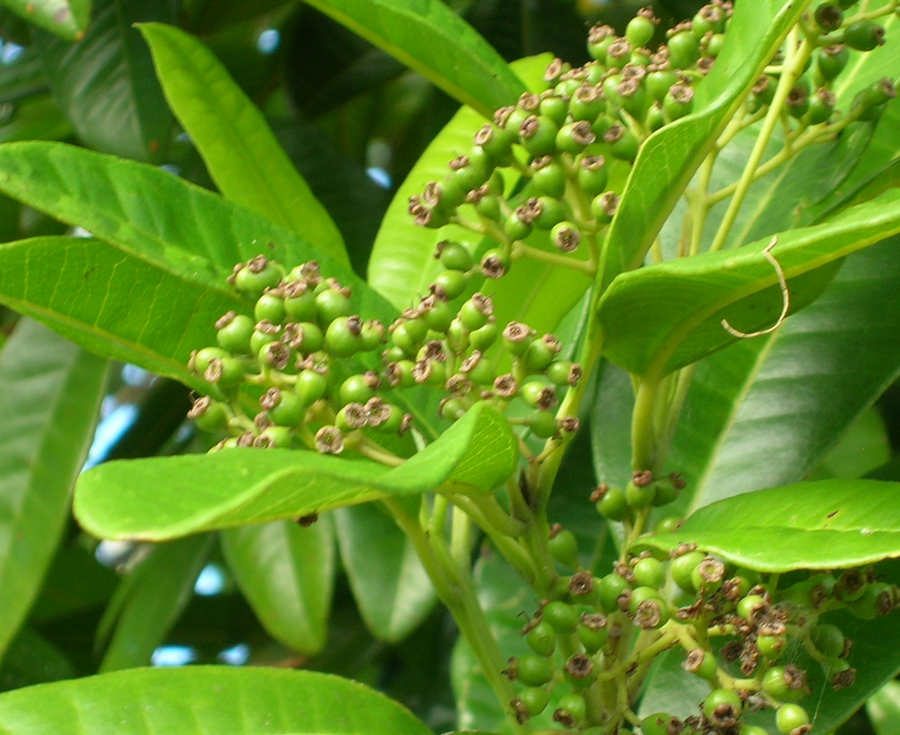
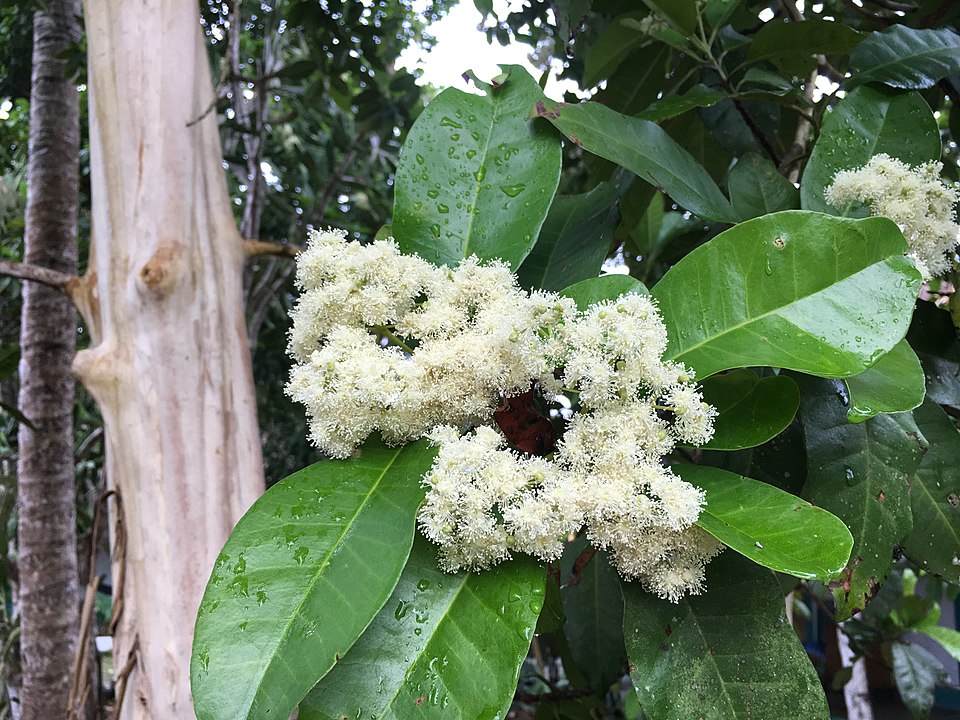
photo courtesy of wikipedia
Clumps of fluffy white flowers turn into bright green berries in mid-summer, if pollinated. Ripe berries turn a reddish-brown color. Some describe it as a purple-ish tone.
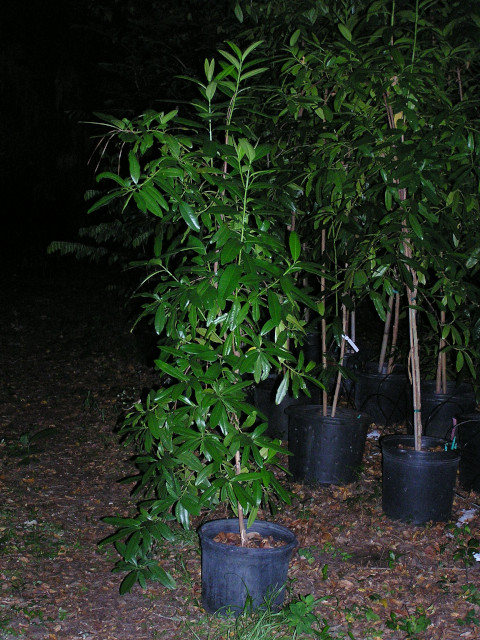
7g Allspice tree
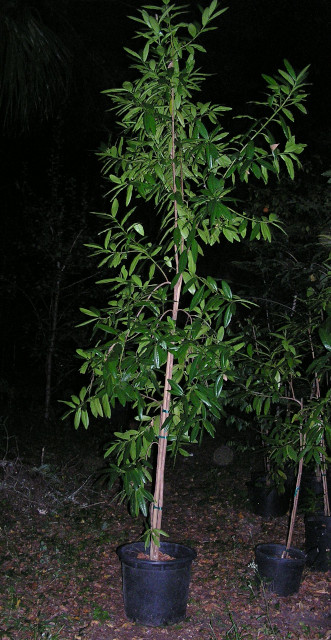
15g Allspice tree
Growing conditions
Allspice prefers full sun to part sun, but will tolerate short spells of partial shade. It does well in high humidity, loves consistent water, but well drained soil. Established trees can withstand 28°F on old growth. New growth is likely to be killed below freezing.
Allspice grows in a wide range of pH conditions: from mildly acidic at 6.1 to quite alkaline at 7.8 pH. As a result, it does well in Florida's limerock rich soils. Allspice seems to moderately tolerate salt spray.
It is sometimes grown as a shade tree to grow coffee underneath it!
Pests
Leaf rust is the most common problem. Fungi, fruit flies, scale and moths are possible. Use your cedar oil liberally and much of these pest issues will be quickly mitigated.
Uses
Berries are often ground into a powdered spice that is used in dessert cooking such as pumpkin pie, mince meat pie and other holiday dishes.
Leaves are also dried and used for their aromatic qualities.